They look endless. They stretch across villages, intertwine between subtropical forests and twist through homes. In Meghalaya, home to the wettest parts of the country, the living root bridges that function as footbridges hold it all together, literally. First, members from the Khasi and Jaintia indigenous communities identify a suitable Indian rubber tree, chosen for its strong aerial roots. Young aerial roots are then guided horizontally across the stream using temporary scaffolding: usually hollowed-out betelnut trunks/bamboo or stone. The roots are tied, twisted and woven as they grow, slowly spanning the gap.
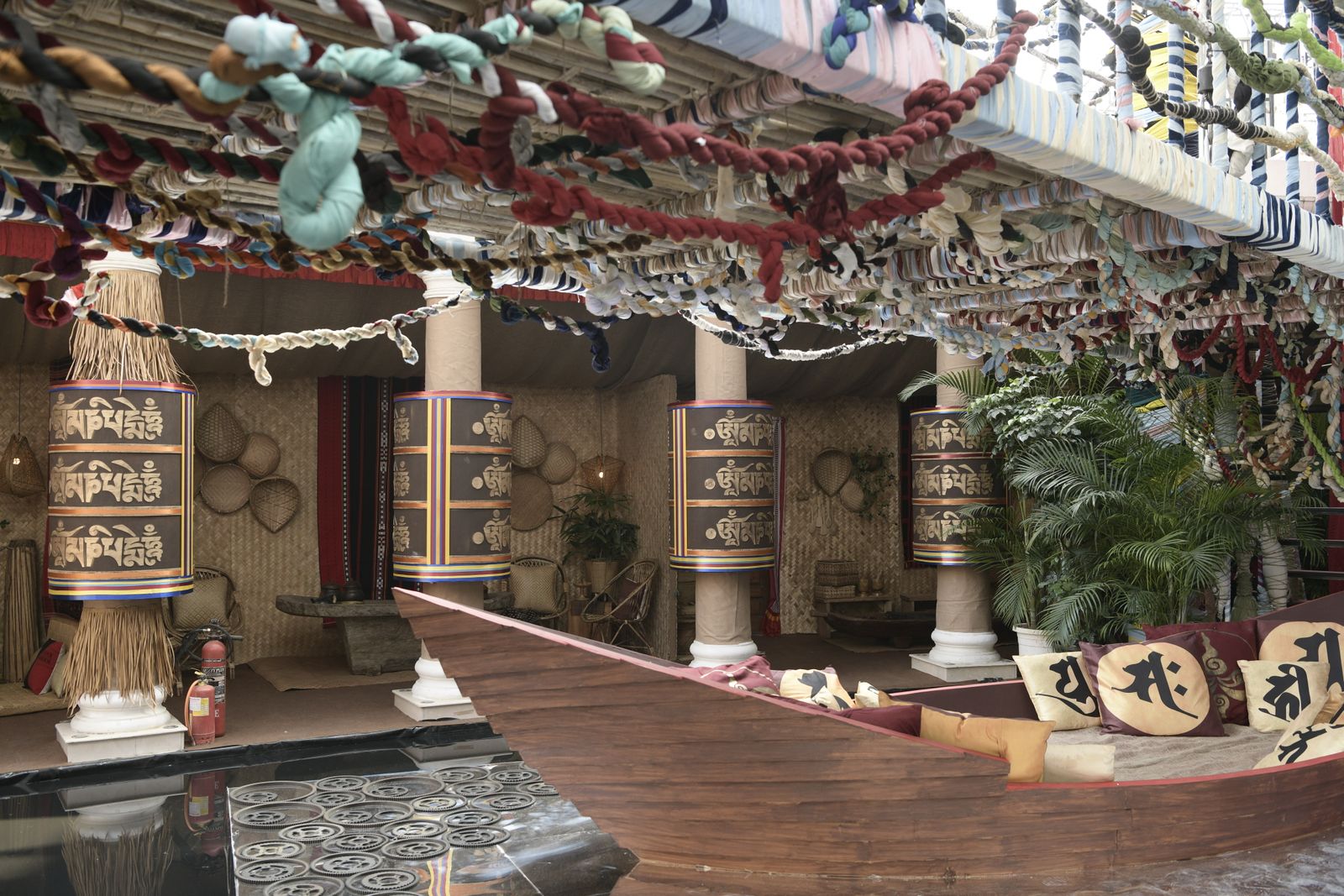
When the artist Sumant Jayakrishnan decided to interpret these root bridges for the Royal Enfield Social Mission’s Journeying Across the Himalayas multidisciplinary festival he knew he had to preserve the awe of first encountering them. After all, the double-decker bridge at Nongriat in Meghalaya still overwhelms tourists: the incredible visual of two living root bridges grown one above the other over a stream, reached via a steep stone-step trek from Tyrna village near Cherrapunji. It is also one of the most photographed root bridges in the state.
“I think anything that has a sense of play and brings out the child in us makes you feel that way,” says Jayakrishnan, whose exhibit, titled Bridges Spaces; Living Roots!, is on display at the festival in Delhi. “To be overwhelmed is something we would all like to be all the time: to be surprised, not to be cynical or jaded. That’s one thing I’ve explored most—to not be cynical, jaded, or feel over-the-hill or ‘been there, done that’, because there’s so much to see and do.”
But how does one imagine the root bridges in the dusty landscape of the National Capital? In Travancore Palace, where the festival runs till December 10, how can these bridges similarly awe people, make them reflect on the passing of time, on what we choose to use and discard? Before embarking on this project, Jayakrishnan made a conscious choice: not to buy anything. He has largely used materials from his and his friends’ godowns, and also dug through his parents’ house to unearth every form and shape of textiles: old hats, curtains and used shirts. Meghalayan Age, a state government company, lent him some of their archives too.
Disclaimer : This story is auto aggregated by a computer programme and has not been created or edited by DOWNTHENEWS. Publisher: vogue.in