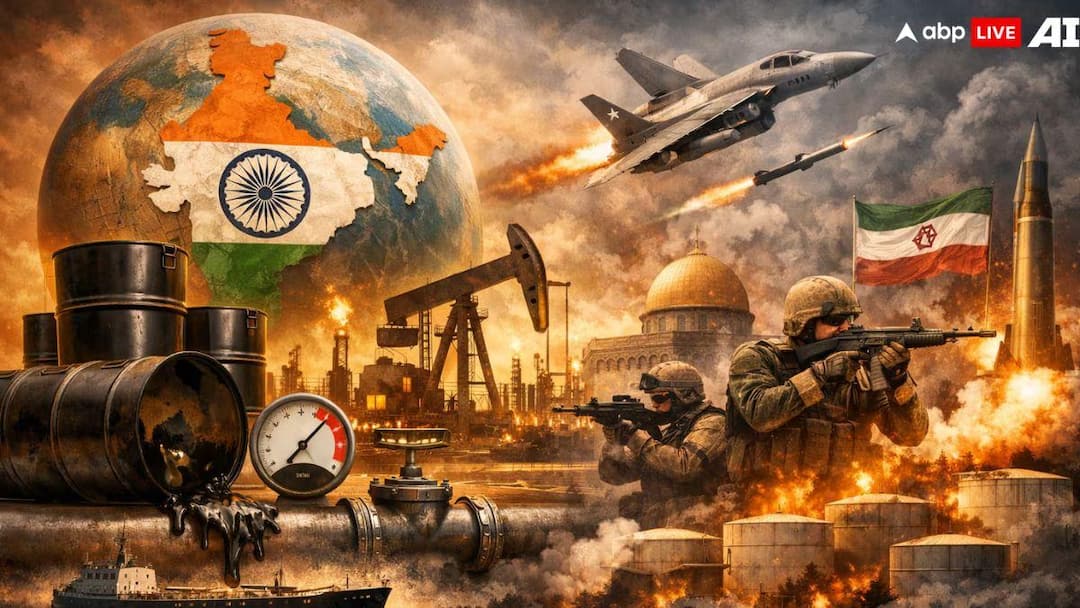
- Fuel price hikes reduced petrol/diesel losses, but daily strain persists.
- Significant LPG losses continue from rising global energy costs.
- Ujjwala cylinder quota reduced; domestic LPG production increased.
India’s state-run oil marketing companies (OMCs) may have received some relief after recent fuel price hikes, but the financial strain caused by the prolonged West Asia crisis continues to weigh heavily on their balance sheets.
Government officials said losses on petrol and diesel sales have narrowed significantly over the past two months following cumulative retail price increases of around Rs 7.5 per litre. However, losses on domestic LPG remain substantial, underscoring the continuing impact of elevated global energy prices and supply disruptions linked to the Strait of Hormuz.
Petrol And Diesel Losses Shrink After Recent Price Revisions
Praveen Khanooja, Additional Secretary at the Ministry of Petroleum and Natural Gas (MoPNG), revealed in a press briefing on Monday that state-run fuel retailers are currently losing around Rs 30 on every litre of diesel sold and Rs 6 on every litre of petrol sold.
The figures represent a marked improvement from April 1, when losses had climbed to Rs 105 on every litre of diesel and Rs 24 on every litre of petrol sold amid a sharp surge in global crude prices.
The reduction follows a series of fuel price revisions implemented over the past month as OMCs attempted to partially offset the impact of higher import costs.
Despite the improvement, officials indicated that fuel retailers continue to absorb significant losses to shield consumers from the full effect of global price volatility.
Also Read : How The US-Iran Conflict Forced IRCTC To Cook Meals On Trains Again
Daily Financial Hit Still Running Into Hundreds Of Crores
While losses on transport fuels have moderated, the overall financial pressure on public sector oil companies remains considerable.
Khanooja said OMCs continue to lose between Rs 600 crore and Rs 700 crore every day, reported Business Standard.
A major contributor to that burden is cooking gas. The official revealed that state-run fuel retailers are currently losing around Rs 700 on every 14.2-kg domestic LPG cylinder sold in the country. The figures highlight the widening gap between the actual cost of supplying cooking gas and the price consumers pay.
Why LPG Remains The Biggest Challenge
The government’s efforts to protect households from rising energy costs have left OMCs carrying a substantial portion of the burden.
According to the ministry, the actual cost of a 14.2-kg LPG cylinder has risen to around Rs 1,600.
However, consumers in Delhi currently pay Rs 942 per cylinder, while beneficiaries under the Pradhan Mantri Ujjwala Yojana (PMUY) effectively pay Rs 642 after accounting for the Rs 300 subsidy.
This widening mismatch has been driven largely by developments in global energy markets.
Khanooja said the Saudi Contract Price (CP), the benchmark used to price LPG supplies from the Gulf region, has increased by around 46 per cent since the start of the conflict.
The disruption of shipping routes through the Strait of Hormuz has tightened supply and increased costs across international energy markets.
Also Read: Centre Slashes Subsidised LPG Cylinder Quota From 9 to 4 Under Ujjwala Scheme
Ujjwala Cylinder Allocation Reduced
Against this backdrop, the government recently revised the number of subsidised LPG cylinders available annually under the PMUY scheme.
The allocation has been reduced from nine cylinders to four per household each year.
Officials maintained that the decision reflects actual consumption patterns among beneficiaries.
Khanooja said most PMUY households typically consume around four to five cylinders annually, making the revised allocation more closely aligned with average usage levels.
The Rs 300 subsidy per cylinder under the scheme remains unchanged.
Refineries Boost Domestic LPG Output
To mitigate supply risks and meet rising domestic demand, Indian refiners have significantly increased LPG production. According to ministry officials, daily LPG output has risen by nearly 60 per cent from pre-conflict levels.
Production currently stands at around 52-53 thousand metric tonnes (TMT) per day, helping ensure adequate cooking gas availability despite turbulence in global markets.
The move forms part of a broader strategy to reduce the impact of international supply disruptions on Indian consumers.
Also Read: Share Markets Hopeful Amid Fragile US-Iran Ceasefire, Sensex 350 Points Up, Nifty Over 23,200
Maritime Security Concerns Persist
The continuing conflict in West Asia is not only affecting energy prices but also raising concerns over maritime safety.
Amid renewed attacks in the region, officials from the Ministry of Ports, Shipping and Waterways confirmed that all 24 Indian crew members aboard the oil tanker Marivex are safe after the vessel caught fire off the coast of Oman. The Madagascar-flagged tanker was reportedly empty at the time of the incident.
According to Opesh Kumar Sharma, Director at the ministry, the cause of the fire remains under investigation.
The development comes as shipping routes across the Gulf region remain under close scrutiny due to escalating tensions and concerns over the security of commercial vessels.
Before You Go
BREAKING NOW: Indore fire tragedy as EV short circuit triggers deadly explosions
Disclaimer : This story is auto aggregated by a computer programme and has not been created or edited by DOWNTHENEWS. Publisher: abplive.com