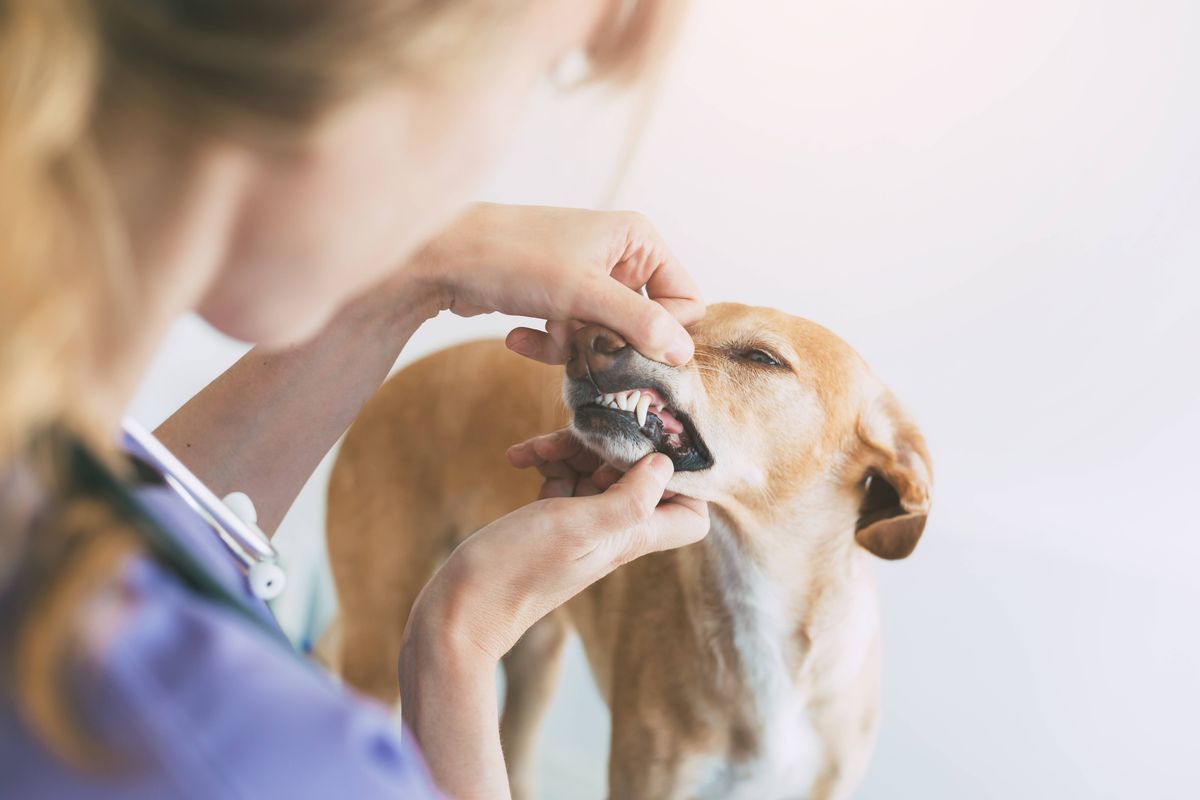
A vet has explained the reason for your dog’s bad breath – and when pet owners should seek treatment
A veterinary expert has advised dog owners to pay closer attention to their pet’s mouth – and not just with their eyes. Speaking on the official Pooch and Mutt TikTok channel, Alex the vet cautioned that your dog’s smelly breath may be a sign of a disease. So while a dog’s unpleasant breath might simply be down to a fishy meal or snack, there are situations that require veterinary attention.
Team vet Dr Alex Crow said that “it shouldn’t” stink. He explained: “Most of the time bad breath in dogs is a sign of dental disease. Plaque and bacteria build up on the teeth, harden into tartar and start to irritate the gums.
“Over time, that can lead to infection, pain, loose teeth, and eventually, tooth loss if not managed.” Sharing some “good news” he said, brushing your dog’s teeth at home can help prevent this. In fact, “it’s the most effective thing you can do”.
And it makes sense given we brush our teeth twice daily to avoid dental issues and losing any teeth. “Even a few times a week can make a big difference,” according to Alex. But with the good news, comes the bad,” he said.
The expert said that if “the smell is really strong, suddenly worse than usual or you notice red or bleeding gums, drooling, difficulty eating or your dog going off hard food, then that’s your sign to see the vet because they may already need treatment.”
Stressing that “bad breath isn’t just a mouth problem”, Alex said that “in some cases it can be linked to digestive issues or even heart and kidney disease.” Ending his video, he said that “if your dog’s breath could clear a room, don’t ignore it. Prevention is always better than a cure.”
What are the signs and symptoms my dog has dental issues?
It’s not just Pooch and Mutt that are urging owners to be wary of this issue. Experts at PDSA (People’s Dispensary for Sick Animals) stress that “many dogs don’t show any symptoms of dental disease, so regular checks at home and with your vet are essential.”
If they do show symptoms it can include:
- Halitosis (bad breath) – this can also be caused by other things
- Pain or difficulty eating i.e. chewing on one side of the mouth
- Weight loss and decreased appetite
- Plaque and tartar – yellowish brown covering on the teeth
- Red, inflamed, bleeding gums
- Wobbly, missing or broken teeth
- Excessive drooling – sometimes with blood in it
- Preferring soft food to biscuits
- A swelling on the face (can indicate a tooth root abscess)
- Pawing at/rubbing the mouth/face
- Head shaking
- Dropping food from the mouth
Disclaimer : This story is auto aggregated by a computer programme and has not been created or edited by DOWNTHENEWS. Publisher: www.dailyrecord.co.uk