Emirates Man
Industrial designer Marc Newson, one of the most celebrated creators of his generation, on the making of Louis Vuitton’s first rivet‑free aluminium suitcase
It is not often that a suitcase invites the same engineering precision as an aircraft fuselage. Yet the Horizon Aluminium, designed by Marc Newson for Louis Vuitton, has been subjected precisely to that standard. Described as the most celebrated industrial designer of his generation, Newson has spent a decade in collaboration with the French house. The mindchild of that dialogue is a piece of luggage that treats functionality as a form of elegance.
For Newson, the starting point was the gap in the market. “I was seeking out the perfect synergy,” he explains, “innate strength, durability and purity of form, but without the infuriating ‘tombstone’ that exists inside all other products.” That ‘tombstone’ he mentions is the obstructive interior cavity found in conventional suitcases, and was removed entirely. In its place, a completely flat, open internal surface was engineered. The intention, he notes, was “an inviting, rational device to enhance whatever journey you may be on.”
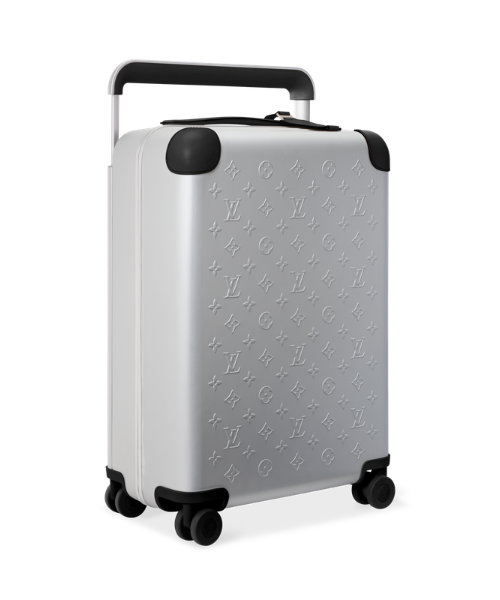
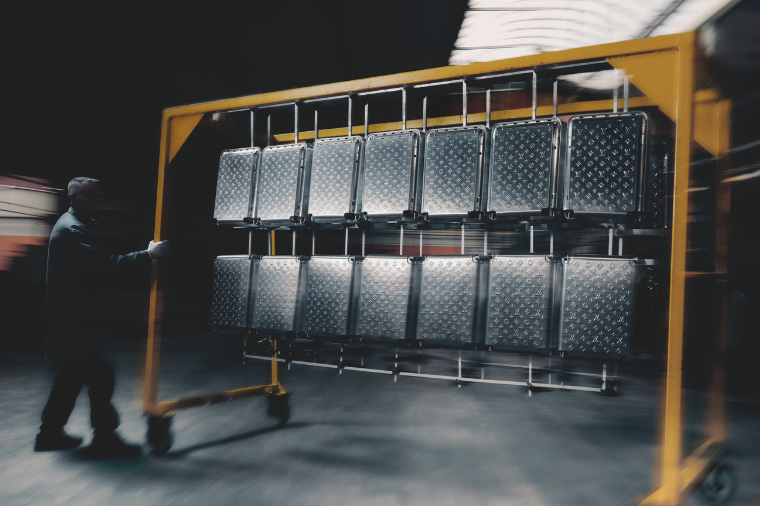
Newson says that aluminium was chosen as the material of choice for reasons that echo aerospace logic like lightweight, durable, corrosion‑resistant and aesthetically coherent. The Horizon Aluminium is the first rivet‑free aluminium suitcase ever produced, achieved through single‑piece 3D‑moulded shells and concealed hinges that sit flush within the interior. “We decided there was no other choice but aluminium,” Newson says. “The ability to choose a very specific alloy to satisfy the multifarious requirements was essential.”
Perhaps the most unexpected engineering solution in regard to this piece lies in the LV Monogram. Rather than being applied as a surface decoration, the motif is embossed directly into the shell, where it serves a structural purpose. “The seamless integration of the embossing, which started as an exercise in branding, serendipitously and intuitively became evident as a profound structural characteristic,” Newson recalls.
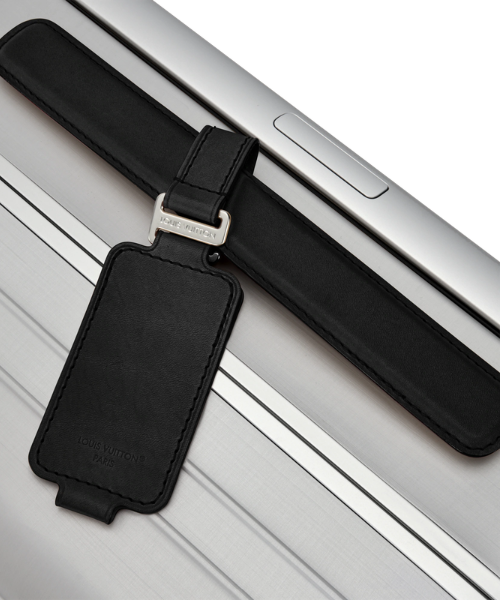
That iteration of this design required years, Newson notes. The concealed hinge mechanism, often compared to the precision of a fine watch movement, went through many versions. “The functionality was largely driven by the dimensionality of the product,” Newson says, “with a key point of focus being creating something within the smallest envelope; one that remained robust.” The final hinge is described by Newson as “a true aerospace piece of engineering.”
Newson considers himself a litmus test for such objects. As a constant traveller, he required the suitcase to work sustainably on every level. Ten years into the collaboration with Louis Vuitton – beginning with the biomorphic rucksack in 2014 and extending through trunks, fragrance bottles and the wider Horizon family – a creative shorthand has developed within him. “It has proven to be an inspiring platform upon which to explore differing iterations and outcomes,” he says. “May it continue.”
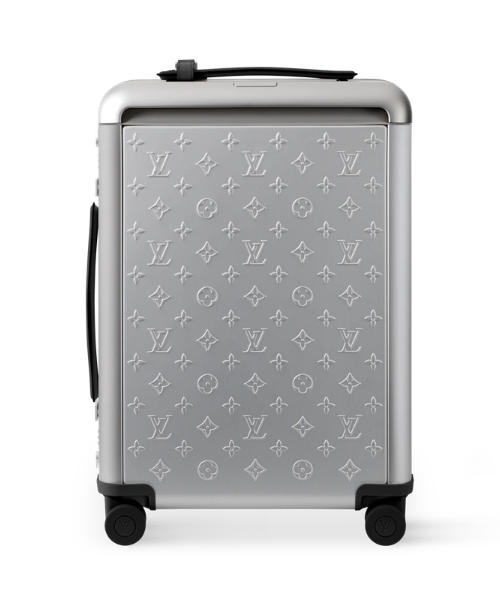
“Ultimately, we wanted the complexity of the product to be integrated, revealing something rational, effortless and elegant,” Newson explains as he talks about the impression of the suitcase on its user. No novelty is sought through it, neither is a spectacle intended. What remains is described by the designer as “a timeless, alluring, deeply functional and innately sustainable product that can stand the test of time.”
– For more on how to look smart and live smarter, follow Emirates Man on Facebook and Instagram
Images: Supplied
Disclaimer : This story is auto aggregated by a computer programme and has not been created or edited by DOWNTHENEWS. Publisher: emirateswoman.com