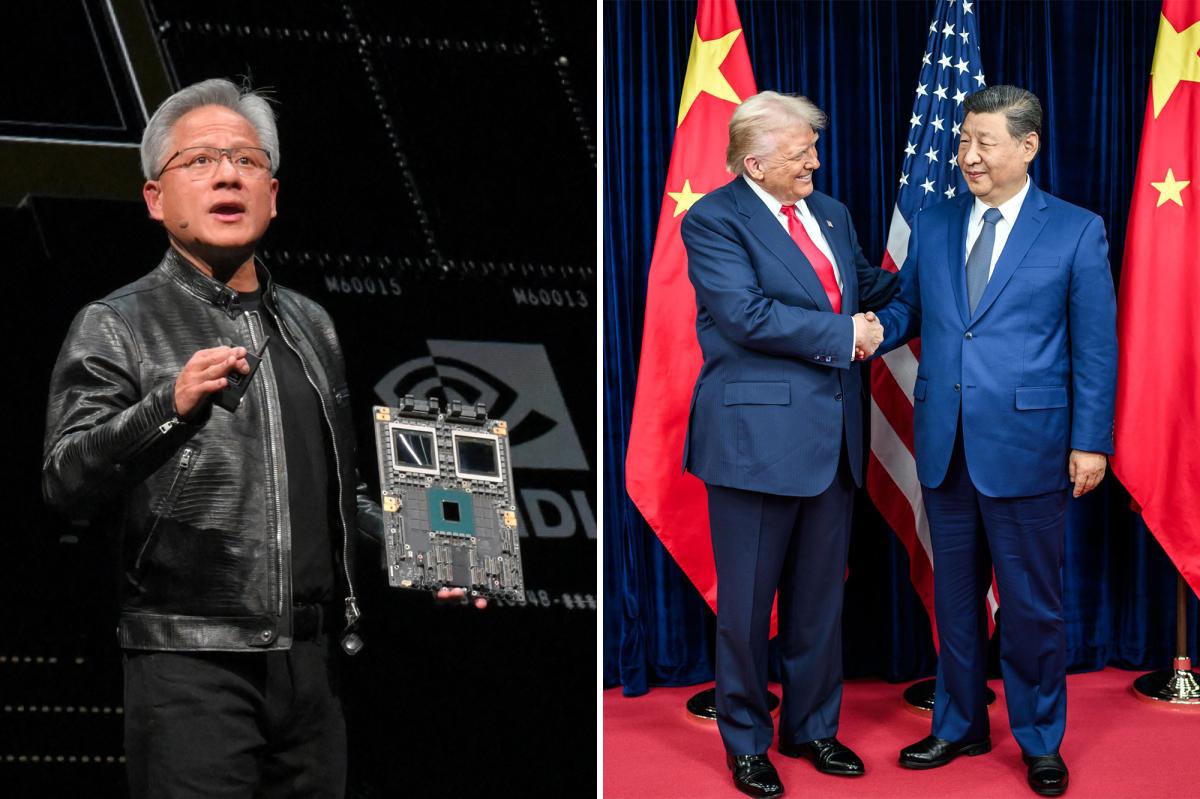
China is set to limit access to Nvidia’s advanced H200 chips – even after President Trump said the US chipmaker could resume exports to Beijing, according to a report.
Chinese companies have been forced to use less-powerful domestic alternatives as the US has enforced strict export controls on its AI chips – fearful Beijing could use the tech in military applications or to edge ahead in the AI race.
But now that it appears those export curbs could be lifted, Chinese regulators are discussing ways to allow only limited access to the chips as it encourages domestic production, two people with knowledge of the matter told the Financial Times.
Buyers would likely be required to go through a tedious approval process, including submitting requests to purchase the Nvidia chips and filing an explanation as to why domestic producers are unable to meet their needs, the sources said.
A final decision on the matter has not yet been made, according to the report.
In a Truth Social post on Monday, Trump announced the US “will allow NVIDIA to ship its H200 products to approved customers in China,” and that “25% will be paid” to the US.
He said the Commerce Department is working on the final details, and the same export approach will be applied to other American chipmakers like AMD and Intel.
The White House and Chinese Embassy did not immediately respond to The Post’s requests for comment.
Exports of Nvidia’s H200 chips – its second-best generation of AI chips – were initially banned under the Biden administration over national security concerns.
Nvidia CEO Jensen Huang has been lobbying for the export curbs to be lifted.
Those who support the resurgence of exports have argued it has the potential to make China reliant on American technology.
Meanwhile, Beijing has been urging domestic producers to step up their game and create chips that can replace American counterparts like the H200.
But Chinese tech giants like Alibaba, ByteDance and Tencent are eager to resume imports of Nvidia GPUs.
As Beijing discourages companies from using American tech, it has ramped up its customs checks of chip imports and offered energy subsidies to AI data centers.
The two regulators in charge of this independent chipmaking campaign could ultimately ban the public sector from buying H200 chips, sources told the Financial Times.
While Trump announced that exports would resume, he does face some obstacles at home – including a group of US senators who introduced legislation that would ban such a move for at least 30 months.
US lawmakers are also looking into adopting an approval process that would only allow the sale of H200 chips to companies it deems “safe,” sources told the Financial Times.
In the meantime, Nvidia has continued to export its H20 chip – a lower-performance variation – to China after it agreed in August to hand over 15% of revenues from such sales to the US government.
Beijing officials, however, have clamped down on access to these chips, arguing the lower-tier Nvidia product is no better than Chinese alternatives.
In a response to Trump’s Truth Social post, Chinese foreign ministry spokesperson Guo Jiakun said: “China has consistently advocated that China and the US achieve mutual benefit and win-win results through co-operation.”
US officials have been stepping up their enforcement efforts as smugglers attempt to bypass chip trade restrictions.
American authorities said Tuesday that they shut down yet another China-linked smuggling network that trafficked or attempted to traffic more than $160 million worth of Nvidia chips.
Disclaimer : This story is auto aggregated by a computer programme and has not been created or edited by DOWNTHENEWS. Publisher: nypost.com