Quick Read
-
NVIDIA (NVDA) trades near $215, Microsoft (MSFT) around $419, Apple (AAPL) at about $309, Amazon (AMZN) near $266, and Alphabet (GOOGL) around $383—all five represent the largest Nasdaq holdings and fit a 50/50 rebuild strategy where $300 of a $600 monthly contribution buys fractional shares of each at $60 per name while the other $300 funds an index ETF.
-
Cramer’s framework splits contributions evenly between individual stock picking and index funds, with the Nasdaq-100 ETF preferred for investors 20+ years from needing the money due to its 562% ten-year return versus the S&P 500’s 259%, though corrections averaging VIX 18 require accepting volatility as the tradeoff for higher growth.
-
Are you ahead, or behind on retirement? SmartAsset’s free tool can match you with a financial advisor in minutes to help you answer that today. Each advisor has been carefully vetted, and must act in your best interests. Don’t waste another minute; learn more here.
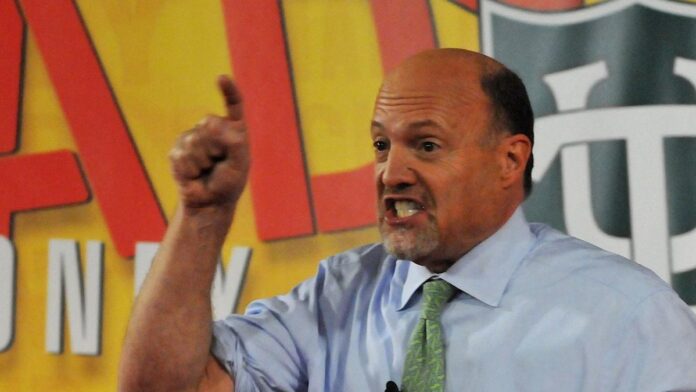
Jim Cramer’s blunt line to a young first-time homebuyer on the May 22 episode of Mad Money: “Expect corrections and don’t rely on hope as an investing strategy.”
The caller, a younger investor, had just used a significant portion of his investment assets as a down payment on his first home and asked how to rebuild. The stakes are real, but when your brokerage balance resets to near zero after a closing, every dollar you redeploy needs a plan, and a few hope-driven mistakes can stall a portfolio for years.
The verdict: Cramer’s 50/50 rebuild is sound
Cramer’s portfolio framework is straightforward and underused. Split your contributions evenly: 50% into five individual stocks you like, 50% into an index fund. Optional insurance comes from a small crypto allocation, with Bitcoin as his preferred vehicle over GLD. Realism is the absolute spine of the advice. Stop investing in the lazy assumption that prices only rise.
Are you ahead, or behind on retirement? SmartAsset’s free tool can match you with a financial advisor in minutes to help you answer that today. Each advisor has been carefully vetted, and must act in your best interests. Don’t waste another minute; learn more here.
Run the math on a $600 monthly contribution, and $300 goes to an index ETF. The other $300 buys five names at $60 each. If you picked the five largest Nasdaq holdings today, you’d own fractional shares of NVIDIA (NASDAQ:NVDA) near $215, Microsoft (NASDAQ:MSFT) around $419, Apple (NASDAQ:AAPL) at about $309, Amazon (NASDAQ:AMZN) near $266, and Alphabet (NASDAQ:GOOGL) around $383. Consistency beats perfect entries.
Cramer’s pitch on the upside: “One of them could hit big, another one could hit big, and next you know, you are a millionaire because of the individual stock side.” Recent results back the asymmetry: Alphabet is up 128% over the past year, while Microsoft is down 7% over the same window. Owning five gives you a chance to catch a winner, while owning one is a coin flip.
NDX or S&P? The time horizon question
The variable that changes everything on the index side is your time horizon, which Cramer translated into age. He was explicit: “You’re young, do the Nasdaq-100 fund, not the S&P.”
Look at the trade-off. The Nasdaq-100 tracker is up 17% year to date and 562% over the past ten years. The S&P 500 tracker is up 9% year to date and 259% over the same decade. The tech index has produced bigger gains, but it concentrates risk.
If you have 30 years before you need this money, that higher volatility is a feature. You ride through drawdowns and capture the recovery. If you’re 10 years out or less, the S&P’s broader composition softens the blows. The VIX has averaged about 18 over the past year and spiked to 31 in late March. Corrections are real.
The optional gold hedge
Cramer’s insurance layer is small and specific: Bitcoin as his primary hedge, with a gold ETF or physical bullion as a distant second. The data ranks them the exact opposite way. Over the past year, gold has been up 36% while Bitcoin is down 30%. A 5% to 10% commodity sleeve smooths returns without hijacking compounding on the equity side.
What to do this week
-
Set a fixed monthly contribution that fits the 28/36 affordability rule alongside your new mortgage. Automate it before you see the cash.
-
Split that contribution 50/50 between your index choice and five individual stocks you can actually explain to a friend.
-
Choose your index by horizon, and use a Nasdaq-100 fund if you are 20+ years out, an S&P 500 fund if you are closer to needing the money.
-
Add the gold sleeve only after the core is funded. Skip it entirely if it tempts you to tinker.
-
Write your sell rules now, while you are calm. Cramer’s warning is direct: cut your losses and move to a stock you can actually see going higher under its own power, not because of hope, but because of reason.
The rebuild after a down payment is unglamorous work: monthly deposits, five names you understand, and one fund doing the heavy lifting in the background. Expect the drawdowns, plan for them, and stop waiting for prices to bail you out.
If You’ve Been Thinking About Retirement, Pay Attention
Retirement planning doesn’t have to feel overwhelming. The key is finding expert guidance, and SmartAsset’s simple quiz makes it easier than ever for you to connect with a vetted financial advisor. Here’s how:
-
Get Matched with Vetted Advisors
-
Choose Your Fit
Why wait? Start building the retirement you’ve always dreamed of. Get started today!
Disclaimer : This story is auto aggregated by a computer programme and has not been created or edited by DOWNTHENEWS. Publisher: finance.yahoo.com