 PA Media
Flu cases in Scotland are expected to “spike” in the coming weeks, the health secretary has warned.
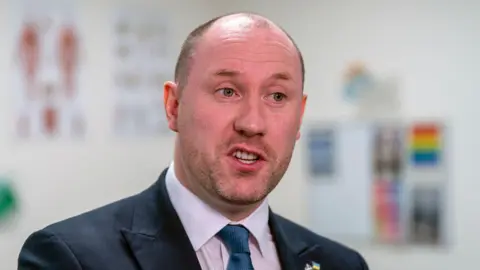
Neil Gray MSP said rates of the illness are following a similar trend to last year after figures from Public Health Scotland (PHS) showing confirmed cases doubled in the week ending 30 November.
Hospitals in the NHS Greater Glasgow and Clyde health board area have now asked staff and visitors to wear face masks at all times when on wards, while others have requested those with flu-like symptoms treat themselves at home.
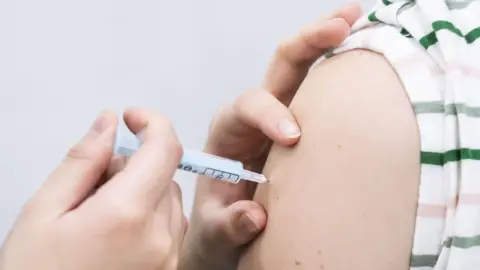
Gray urged those eligible for a vaccine to take up the offer and encouraged anyone who can afford a private vaccine to do so.
Lab-confirmed cases rose sharply to 1,759 compared with 845 the previous week, with PHS warning the flu season had arrived two weeks earlier than normal.
The dominant strain of flu is also believed to have mutated more than usual this summer, meaning the vaccine may be less effective although it will still offer some protection and help people becoming seriously ill.
Gray said the rising number of cases was a “worry” and expected them to increase further in the next few weeks.
“It is impossible to tell for certain because it depends on how the flu spreads, but at the moment it appears to be following the same trajectory as we saw last year which saw a short and sharp, sudden spike,” he told BBC Scotland’s The Sunday Show.
“That is happening earlier this year, which is part of the issue we are facing, but we can expect the continued trajectory to rise over the coming weeks.”
Currently Glasgow and the west of the country is facing the highest rates, along with the Grampian health board area, but he expected that to spread throughout Scotland.
Gray said about 1.5 million people eligible for a free vaccine had taken up the offer since the 2025 rollout began.
He told the programme uptake had been higher this year than in previous years, particularly among adults.
Who is eligible for a flu jab in Scotland?
Gray said there were no plans to widen the number of people entitled to the vaccine, adding that any decisions were made on the basis of advice from the Joint Committee on Vaccination and Immunisation (JCVI).
Under current rules, all over-65s in Scotland, as well as those aged between 18 and 65 defined as at risk due to an underlying health condition, are eligible for a free flu jab from the NHS.
Children aged between two and five and at school age also receive immunisation administered as a nasal spray.
But those aged between 50 and 64 as well as teachers and prison officers are no longer eligible for the jab, despite the programme being extended during the Covid pandemic.

 PA Media
People not eligible for a free jab can book one privately via a pharmacy.
These usually cost about £18 to £20.
Gray said: “These are decisions that we take on the expert advice of the JCVI on a UK-wide basis and that is how we determine this year’s flu vaccination eligibility.
“That is not to say that people can’t pick up a vaccine elsewhere, that is the health board-run vaccination programme.”
He added: “If you are eligible for a flu vaccine, even at this stage, please, whether you are a member of public or, critically, a member of staff in health or social care, please take up the offer of the vaccine.”
Gray said that individual health boards would continue to make decisions about mask wearing in hospitals and urged anyone feeling unwell to avoid going into work.
NHS Greater Glasgow and Clyde (NHSGGC) released advice on mask wearing on its premises on Saturday in a bid to contain the spread of the illness on the ward.
The health board for Ayrshire and Arran has suspended routine visits across all hospitals, with the measure under daily review.
NHS Dumfries and Galloway has also urged people not to visit hospitals, care homes, or other healthcare settings if they are unwell.
Dr Emilia Crighton, director of public health at NHS GGC, said efforts to encourage eligible people to get vaccinated had been stepped up once it was realised the virus was spreading earlier than last year.
She said GP surgeries and emergency departments were now “busy” and there had been a rising number of hospital admissions.
She urged people to stay at home in the first instance to avoid spreading the virus.
“Consider having some paracetamol at home to control fever, access local pharmacies and call your surgery or NHS 111 before you turn up,” she told BBC Radio Scotland.
“Be sensible, help yourself, drink plenty of fluids and take painkillers.”
What are the symptoms of flu?
- A sudden, intense fever
- Breathing difficulties
- Severe chest pains
- Aches all over
- Feeling hot and cold
- Feeling lethargic
- Having sensitive skin
- Suffering from vomiting and diarrhoea
Disclaimer : This story is auto aggregated by a computer programme and has not been created or edited by DOWNTHENEWS. Publisher: BBC