
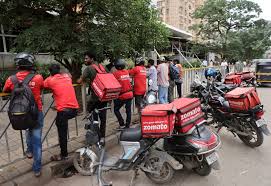
Hyderabad: As the heatwave crisis intensifies, Telangana has confirmed 16 heatstroke deaths, while the India Meteorological Department (IMD) has placed seven districts under red alert.
The extreme temperatures and dry winds are disproportionately affecting daily wage labourers, gig workers and app-based delivery personnel. On May 21, Hyderabad recorded a maximum temperature of 43.4°C, but that has not slowed down quick-commerce workers racing against time and weather conditions to fulfil customer orders and earn their daily wages.
“Whether it’s heat, rain or cold, we still have to deliver,” said Dawood Ali, a delivery worker for Swiggy in the Charminar area. “Petrol prices are increasing, payouts are decreasing, and we barely earn enough to survive.”
The rise of quick-commerce and ten-minute delivery culture has significantly worsened working conditions. Riders say algorithms, customer ratings and delivery timers force them to keep working even when physically exhausted, because logging off the app means losing income.
Several workers said their schedules leave them exposed to dangerous heat for long hours, especially between 12 pm and 4 pm when temperatures peak. Even night shifts between 7 pm and 11 pm offer little relief as the city continues to radiate heat long after sunset.
A 2024 survey by HeatWatch and the Telangana Gig and Platform Workers Union (TGPWU) highlighted the scale of the crisis. Among surveyed workers in Hyderabad, 52% reported heat exhaustion, while nearly 30% said they had experienced heatstroke while working.
The report also documented gender-specific impacts. Among 19 women workers surveyed, 13 said extreme heat worsened menstrual cramps and related symptoms, while four reported recurring urinary tract infections (UTIs).
Despite spending long hours outdoors, workers say access to basic facilities remains severely limited. The TGPWU survey found that 65% of workers demanded access to clean drinking water and toilets, while 55% sought shaded resting spaces. Another 43% supported compensated breaks during peak heat hours.
Workers say initiatives like Amazon’s ‘Ashray’ programme are a positive step but remain limited to select locations, leaving many others vulnerable to the harsh conditions.
Major companies such as Zomato and Swiggy have claimed they provide affiliated rest spaces where riders can access drinking water and washrooms. However, workers say the ground reality is very different.
“You rarely get clean water at these places. Sometimes they outright deny access,” said Ali. “We end up finding our own places to sit or buying water ourselves.”
Low payouts, rising fuel costs and inconsistent earnings leave many riders unable to afford breaks, even when unwell. Workers also say the fear of penalties, reduced incentives or arbitrary ID blocks discourages them from rejecting orders or logging off during extreme weather.
Labour unions say the crisis exposes deeper structural issues within India’s platform economy. Although gig workers are supposed to receive social security protections under the Code on Social Security, 2020, many continue to face limited coverage, delayed insurance payouts and a lack of emergency support.
In a recent statement, the Indian Federation of App-Based Transport Workers (IFAT) urged the Ministry of Labour and Employment to introduce binding national heatwave protections for gig workers. The demands include paid cooling breaks during IMD heat alerts, protection from penalties during heat-related pauses, access to water and cooling shelters, and in-app emergency heat distress systems.
“Heat protection is not a privilege. It is a labour right, a public health necessity, and a matter of dignity,” said Shaik Salauddin, Co-Founder and National General Secretary of IFAT.
For Hyderabad’s gig workers, the city’s convenience economy has become a race against both time and climate, where survival itself often feels uncertain.
(This article is written by Rocheta Chakraborty, a student of The English and Foreign Languages University, currently interning at Deccan Chronicle).
Disclaimer : This story is auto aggregated by a computer programme and has not been created or edited by DOWNTHENEWS. Publisher: deccanchronicle.com



