Near the U.S.-Mexico border—just a few miles from SpaceX Starbase—little-known NextDecade is on the verge of becoming the top exporter of natural gas out of Texas. Its massive complex, sprawling 1,000 acres along the Brownsville Ship Channel, took more than a decade to reach this point: surviving industry doubters, the sudden death of its founder, and contentious legal fights with environmental groups.
The war in Iran and the disruption of flows from Qatar have placed renewed global focus on liquefied natural gas (LNG), which must be chilled into liquid form for overseas tanker transport. The U.S. has emerged as the world’s top LNG exporter in recent years, supplying energy-hungry markets across Europe and Asia.
Most U.S. LNG capacity is concentrated along a corridor stretching from Corpus Christi, Texas to south of New Orleans. NextDecade’s Rio Grande LNG is an outlier—located another 160 miles south of Corpus Christi to the southern tip of Texas.
“The geopolitical volatility that we’re now seeing has made people aware of the fragility of our global energy system, and it’s more vulnerable than people thought,” NextDecade CEO Matt Schatzman told Fortune.
Founded in 2010, NextDecade is finally bringing Rio Grande LNG online—slated to begin production early next year and continue expanding through 2036, adding roughly one new liquefaction unit, called a train, per year. The first phase of three trains—capable of powering more than 20 million households—is expected to be complete by early 2029. Ten trains are planned in total, half of which are now under construction, producing enough energy for 65 million households.
“I wish we were producing LNG today, but it’s coming soon and we’re ahead of schedule,” Schatzman said. “God forbid, if this situation is still going on, we’ll be helpful adding more supply to the market and hopefully easing some of the pain that’s out there.”
Schatzman is emphatic that Rio Grande LNG’s business case stands on its own merits—the war in Iran only sharpens the argument for securing reliable U.S. gas supplies.
U.S. LNG’s rise
The U.S. was a natural gas importer until the shale gas boom took hold roughly 20 years ago. The country shipped its first LNG exports in early 2016, and volumes have grown rapidly since. Today, the U.S. is the world’s largest LNG exporter—surpassing Qatar and Australia—and capacity is projected to more than double between 2025 and 2030. The U.S. Energy Department projects total natural gas exports will grow 30% from early 2026 through the end of 2027.
U.S. LNG pioneer Cheniere Energy remains the industry leader, with Sempra and the newer entrant Venture Global also expanding aggressively. NextDecade is next in line. In early April, the Federal Energy Regulatory Commission approved NextDecade’s request to shift to a round-the-clock, seven-day construction schedule with contractor Bechtel—a sign of the urgency driving the project.
Qatar’s and Exxon Mobil’s Golden Pass LNG project just came online near Port Arthur, Texas. Other projects in the pipeline include Australia-based Woodside Energy’s Louisiana LNG, Caturus’ Commonwealth LNG in southwestern Louisiana, and Glenfarne’s and ConocoPhillips’ Alaska LNG.
The Biden administration LNG permitting “pause” in 2024 reflected fears of an overbuild. The Iran war is changing those dynamics.
“That opinion that we’re in an overbuild, that we’ll have too much supply, was way overplayed,” Schatzman said. “Natural gas demand has been growing consistently on average about 1.8% annually. We expect that to continue to happen. We’re building because of natural gas demand growth globally.”
Driven by global population growth, electrification, and the AI data center boom, worldwide electricity demand is surging by almost 4% a year. The war could ripple across energy markets in multiple ways: Accelerating the shift toward U.S. LNG, spurring renewable energy development, and extending the lifespan of coal plants. Schatzman acknowledged the war may cause some near-term LNG “demand destruction” overall, even as he makes a bullish case for American supply specifically.
“Perhaps the instability in the Middle East and this horrible situation will heighten the awareness of U.S. LNG, not only from its flexibility—our customers can take it anywhere in the world—but it’s also really not that expensive,” he said. “It’s actually a relatively inexpensive insurance policy.”
Decade-long journey
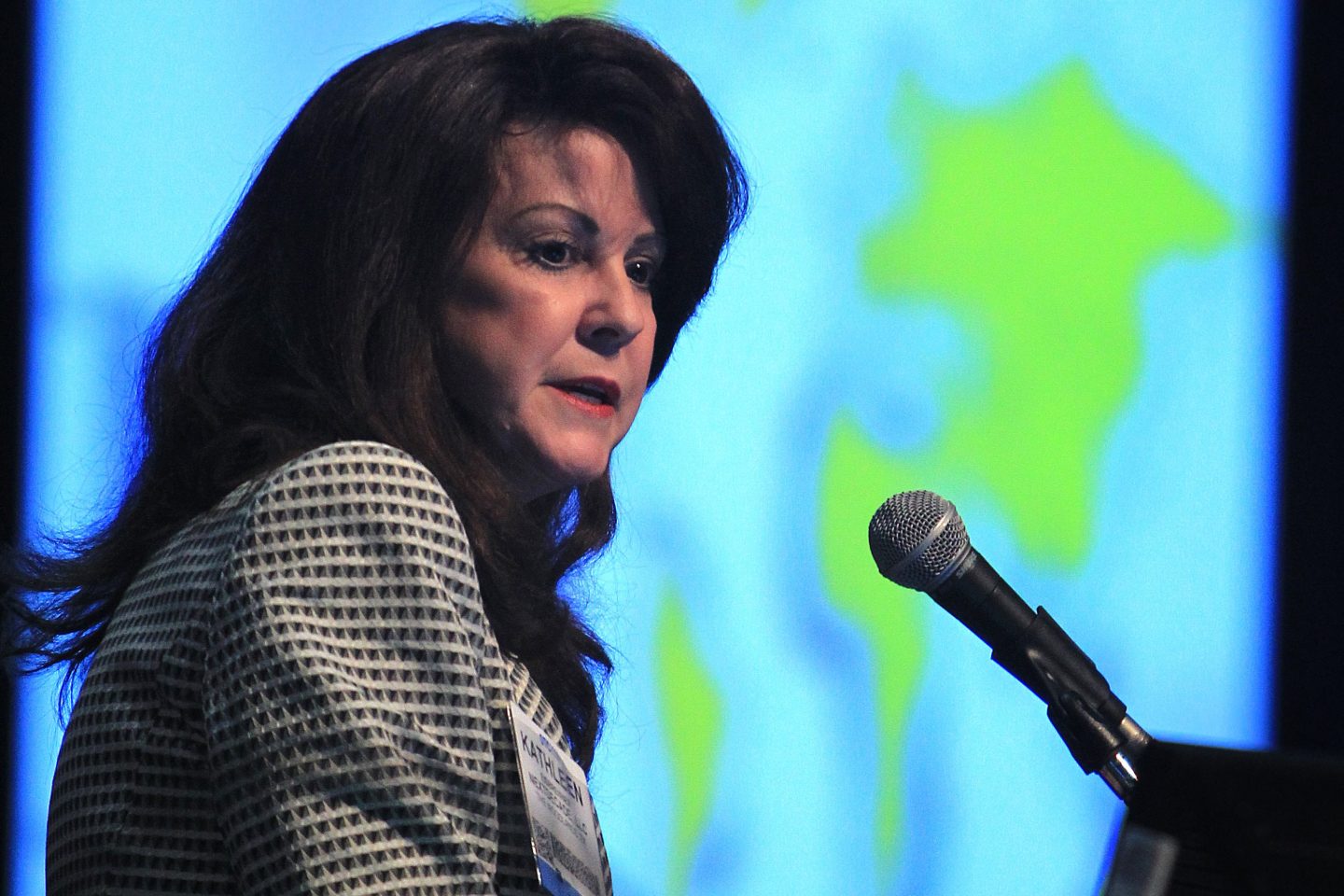
When NextDecade was founded in 2010 by industry veteran Kathleen Eisbrenner—a rare woman CEO in oil and gas—it was widely dismissed. The U.S. wasn’t even exporting LNG yet, let alone from a remote stretch of the Texas-Mexico border lacking pipelines and easy access to gas supplies.
Eisbrenner chose Brownsville for its deepwater access, low vessel traffic, and her conviction that the oil-rich Permian Basin in West Texas would eventually flood the region with excess natural gas. The pipelines would come, she believed.
Schatzman, then a senior vice president at gas producer BG Group—later acquired by Shell—was among the skeptics.
“A lot of folks said this will never happen—that this will be a really expensive place to build an LNG facility because no one’s going to want to build pipelines to it,” Schatzman said. “I have to admit I did not have the vision when I first met her. But she convinced me the Permian is going to change the gas market in the U.S. She said, ‘Matt, there’s going to be a lot of gas that comes out of there, and this is the cheapest path to the water.’ And she was 100% right.
“She was a visionary for the pure fact that I don’t know anybody who would have considered building an LNG project at the south tip of Texas,” he said.
Mayra Beltran/Houston Chronicle via Getty Images
NextDecade still faced years of delays—a global pandemic, struggles seeking long-term contracts, permitting battles, and environmental lawsuits—adding an ironic wrinkle to the company’s name, which was meant to evoke the future, not foreshadow a 15-year fight to bring an $18 billion first phase online.
“Her name, not mine,” Schatzman said, deadpan, making clear he’s never been enamored with it.
Brought on in 2017 to lead operations, Schatzman took the CEO role in 2018 as Eisbrenner stepped back into the chairwoman position.
Then, in 2019—a little more than a year after that transition—Eisbrenner died suddenly at 58 following a reported fall and head injury at her home.
“Without her idea, we wouldn’t have done this. That said, the hardest part is taking that idea and turning it into reality. And it took a long time,” Schatzman said. “It’s a great story, but it’s a story of perseverance—of going through trials and tribulations.”
Now, with Rio Grande LNG approaching first production and a decade of planned expansions ahead, Schatzman reflects on the woman who started it all.
“This is the best place to build an LNG facility in the United States, in my opinion,” he said. “Kathleen deserves the credit for having a great idea. I wish she were here to see it being built and producing, but somewhere up in heaven she’s looking down and hopefully smiling.”
Disclaimer : This story is auto aggregated by a computer programme and has not been created or edited by DOWNTHENEWS. Publisher: fortune.com