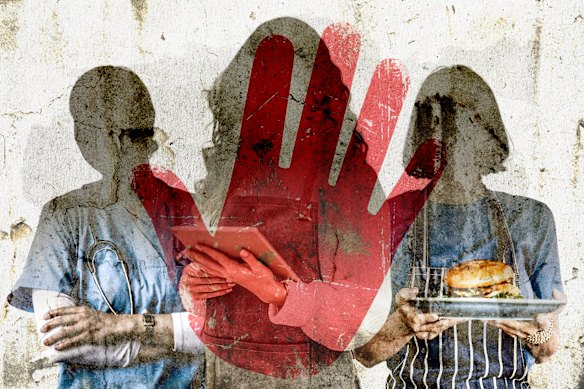

The days of customers harassing public-facing workers with apparent impunity are hopefully numbered following a wide-reaching court decision that imposed consequences on a customer and contractor who had sexually harassed an employee.
In a decision confirming customers and other patrons can be held liable for harassing workers, the Federal Circuit and Family Court found a male worker at a self-storage facility had been sexually harassed by a major customer of the business and a contractor.
The Herald’s Michaela Whitbourn reports that under orders made by the court, the two men are jointly liable to pay $90,000 in compensation. Separately, they were ordered to pay penalties of $13,000 each.
The Fair Work Act makes an employer vicariously liable for the sexual harassment of a worker by another employee unless they had taken all reasonable steps to prevent the employee engaging in the behaviour, but the storage facility case is believed to be the first to test the liability of a customer for sexual harassment under the Fair Work Act provision since legislation was introduced in 2023.
Sydney-based lawyer Justin Penafiel, principal of J Penn Co Lawyers, the firm that acted for the storage worker, said the decision had implications for all public-facing workplaces, including retail, hospitality and health. “It does help businesses make it clear to the community, or anyone who walks into their business: you will face not just legal but severe financial consequences if you harass our staff,” he said. “It might actually help businesses better control customer [behaviour] and … ensure respect in their workplaces.”
Workplace sexual harassment has been prohibited in Australia under federal laws like the Sex Discrimination Act 1984 and the Fair Work Act 2009, and employers are legally bound to proactively prevent discrimination and harassment. They face severe penalties for failing to do so.
But the legislation has done little to impede harassment of workers by customers, especially in the hospitality and retail sectors.
Two years ago, a report by the University of Sydney’s Centre for Gender Equity and Inclusion found that one in two women and one in four men working in retail had experienced harassment. The most common form was sexually suggestive comments, followed by invasive questions and staring or leering. Vulnerable young workers were routinely subjected to gendered and sexualised comments from strangers, co-workers and bosses.
The data showed the harassment weighed most heavily on workers who were frightened to complain. In an insecure workplace of shifts and rosters, many thought they would not be believed; and they feared for their jobs.
The COVID-19 years changed customer behaviour and the Minns Labor government subsequently reminded consumers to behave respectfully by amending legislation targeting workplace violence where retail workers were abused, threatened or physically or sexually assaulted. In the first two years, 136 individuals were charged and 25 individuals were given custodial sentences.
Workplace abuse should have disappeared years ago. Making intolerant and ugly customers suffer the consequences of their intemperance is not only overdue, but needed and welcome.
 The Herald’s View – Since the Herald was first published in 1831, the editorial team has believed it important to express a considered view on the issues of the day for readers, always putting the public interest first.
From our partners
Disclaimer : This story is auto aggregated by a computer programme and has not been created or edited by DOWNTHENEWS. Publisher: www.smh.com.au