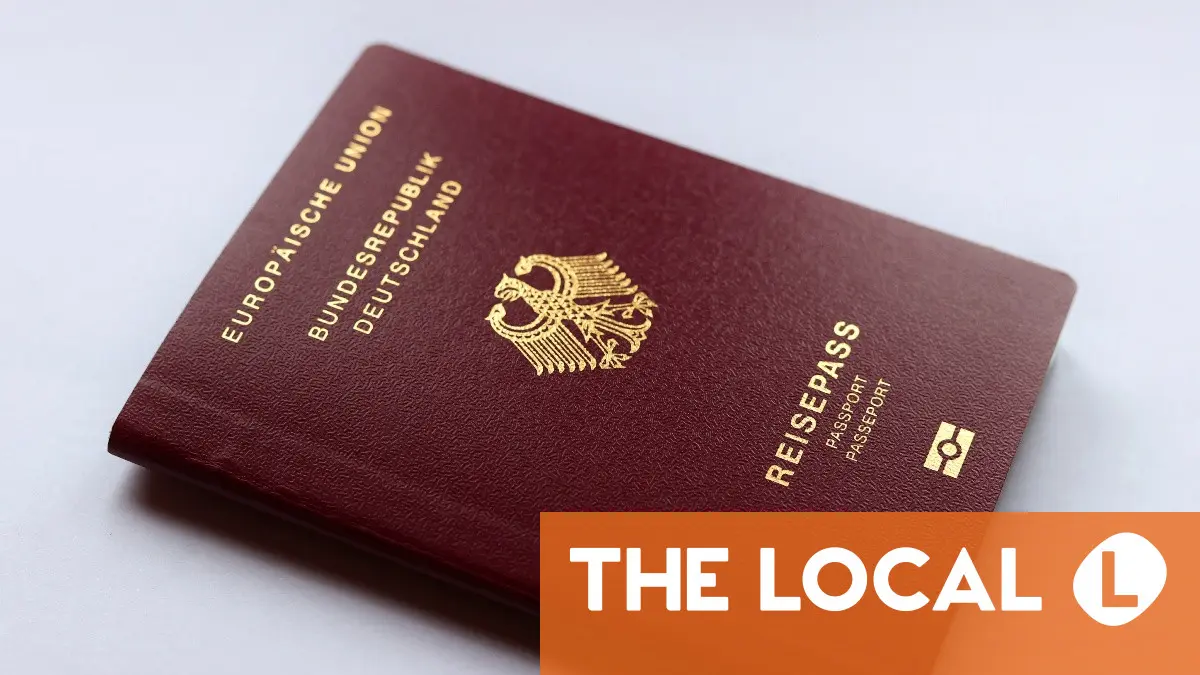
Many people had their citizenship revoked or were never granted it under Nazi Germany. After a rule change in 2021, more than 52,000 affected individuals and their descendants have been granted German passports.
The German government expanded restitution laws in 2021 to allow people who were stripped of their German citizenship by the Nazi regime, as well as their descendants, to reclaim it.
Since then more than 52,000 people have become German via this route, according to new figures from the Interior Ministry.
However, the data, which was requested by Left Party (Die Linke) MP Ferat Kocak, also sheds light on how lengthy this process can be.
EXPLAINED: Who is entitled to German citizenship by descent and how to apply for it
Overall, German authorities received a total of 101,180 applications for naturalisation as a form of reparation between the start of 2021 and the end of March this year. During this period, 52,180 people were granted German citizenship.
Very few applications have been rejected, which suggests that individuals face a long and drawn-out processing time.
As The Local has reported, applying for citizenship through ancestry can take several years.
READ ALSO: ‘Difficult and opaque’ – Applying for German citizenship via ancestry can take years
How can Nazi victims and their descendants gain citizenship?
Germany reformed its nationality law in 2021 to significantly broaden the scope of those eligible to apply.
Under the rules, Jewish people and others who lost, were forced to give up or were denied German citizenship between 1933 and 1945 because of political, racial or religious persecution under the Nazi regime may reclaim their citizenship, as can their descendants.
The hurdles for restitution naturalisation are lower than for naturalisation through residency, which requires people to have lived in Germany for five years and prove they have B1 level German language skills among other requirements.
However, Nazi victims and descendants who want to acquire German citizenship through restitution must show official records and other proof of persecution of their direct ancestors.
READ ALSO: What do I need to apply for German citizenship
Naturalising is also free of charge to this group. That’s because those affected lost their citizenship through no fault of their own or never obtained it due to discriminatory laws.
Due to complex refugee histories, it is often very time-consuming to obtain, translate and have the necessary documents certified.
Many of the applicants come from Israel, the UK or the US, where Jews found refuge after the Nazis came to power.
In 2025, a total of 12,000 people were granted citizenship via this route, an increase of 61 percent compared to the previous year.
READ ALSO: Where are the 330,000 newest German citizens from?
Disclaimer : This story is auto aggregated by a computer programme and has not been created or edited by DOWNTHENEWS. Publisher: thelocal.de