Fuel shortages are forcing North Korean farms to abandon mechanized equipment during the critical rice transplanting season, with workers left to haul seedlings by hand as authorities continue to trumpet agricultural progress.
A source in North Hamgyong province told Daily NK that the provincial party committee, a regional body of the Workers’ Party of Korea (WPK) that oversees economic and political directives at the provincial level, has been issuing orders to accelerate the transplanting pace to meet seasonal deadlines. Farm workers and mobilized laborers across the province’s cities and counties have been working past nightfall by the light of bonfires to keep up with quotas.
Workers who fail to meet their daily targets are not permitted to leave the fields even after dark, with bonfires lit along the paddies to extend the working day, the source said.
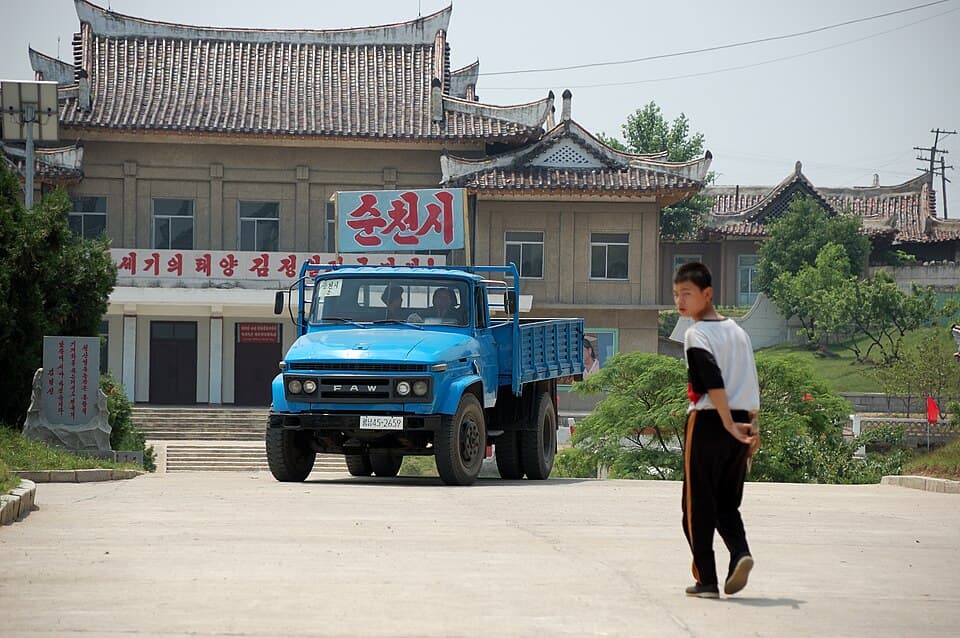
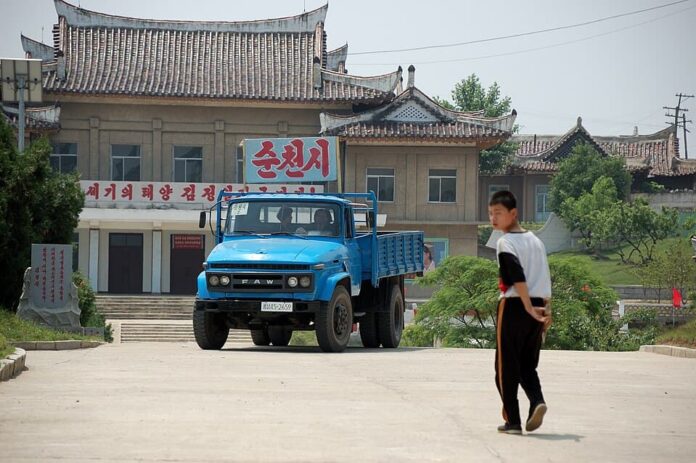
The core problem is that transplanting machinery and transport tractors have been idled by fuel shortages at the height of the planting season, leaving no alternative but manual labor to fill the gap.
“In Hwadae county last week, WPK officials went en masse to support planting in one village, but the transplanting machines stopped mid-operation because of fuel shortages,” the source said. “The tractors used to transport seedlings weren’t working properly either, so support workers had to carry the seedlings back and forth on stretchers.”
The situation has given rise to open frustration on the farms. “If there’s no fuel, the only option is to throw more people at the problem,” workers have been heard saying, according to the source. Despite the authorities’ repeated emphasis on agricultural mechanization, field conditions make it nearly impossible to operate machinery at all.
Hopes for Russian fuel fade on the farm
Rumors had circulated among farm workers that expanded North Korea-Russia cooperation would bring an influx of Russian fuel, raising expectations that the state’s supply situation would improve. Those hopes have given way to disappointment as no tangible change has materialized.
“Word has been going around for a long time that a lot of fuel is coming in from Russia, but farm workers complain they haven’t seen so much as a shadow of it,” the source said. “There’s a lot of talk that whatever fuel does come in goes first to munitions factories and military units.”
Farm workers have also voiced resentment over that prioritization. “The munitions factories earn their own foreign currency and get first priority from the state,” workers have said, according to the source. “Meanwhile, those of us producing rice work ourselves to exhaustion and still have to worry about feeding ourselves.”
The grievances extend to the authorities’ propaganda campaigns. Lectures and study sessions continue to promote the successes of the rural revolution and the achievements of agricultural development, a message farm workers say is completely detached from their daily reality. “From the moment you open your eyes, loudspeaker vehicles are blaring ‘Everyone to the rice transplanting battle!’ and workers shudder just hearing the sound,” the source said. “The state trumpets agricultural progress every day, but in the countryside the view is that things haven’t changed much since collectivization after liberation.”
North Korean authorities have designated food production a top national priority, mobilizing labor across the country and pressing for rapid completion of the rice transplanting season. Yet in the field, workers say the emphasis on hitting targets is unaccompanied by the material support needed to reach them.
“Those at the top keep pressing to finish transplanting on time, but on the ground, machines break down and people end up running around everywhere,” the source said. “Farm workers are saying that instead of just talking about prioritizing agriculture, the state needs to actually guarantee the fuel needed during the transplanting season.”
Reporting from inside North Korea
Daily NK operates networks of sources inside North Korea who document events in real-time and transmit information through secure channels. Unlike reporting based on state media, satellite imagery, or defector accounts from years past, our journalism comes directly from people currently living under the regime. We verify reports through multiple independent sources and cross-reference details before publication.
Our sources remain anonymous because contact with foreign media is treated as a capital offense in North Korea — discovery means imprisonment or execution. This network-based approach allows Daily NK to report on developments other outlets cannot access: market trends, policy implementation, public sentiment, and daily realities that never appear in official narratives.
Maintaining these secure communication channels and protecting source identities requires specialized protocols and constant vigilance. Daily NK serves as a bridge between North Koreans and the outside world, documenting what’s happening inside one of the world’s most closed societies.
Disclaimer : This story is auto aggregated by a computer programme and has not been created or edited by DOWNTHENEWS. Publisher: dailynk.com