The crackdown on scam compounds in Cambodia is leading some gangs to relocate to beach resorts and office buildings in Sri Lanka, in what may be the next phase of one of the world’s fastest-growing criminal industries.
A combination of visa-free travel, available building space, relatively strong telecommunications networks and a well-established informal money transfer system make the South Asian island nation an appealing destination for scammers, investigators say.
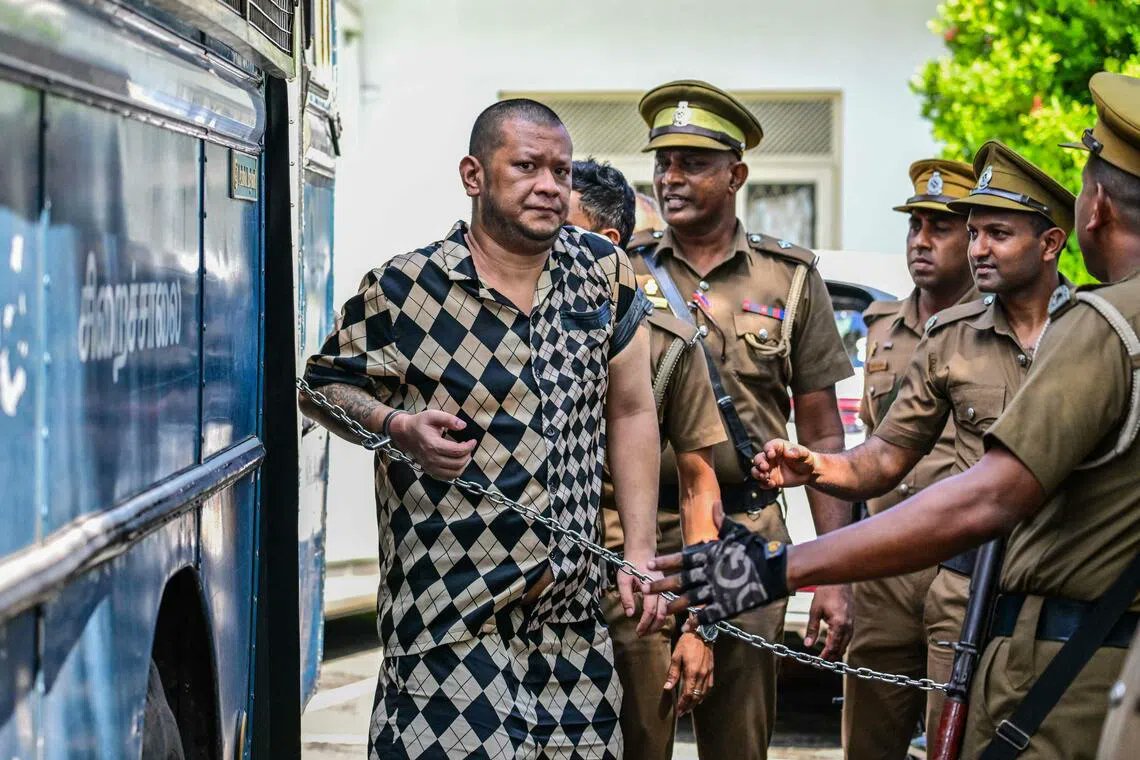
Authorities in Sri Lanka have set up a new cybercrimes unit and say they’ve arrested more than 1,000 people this year alone, most in western beach areas where tourists flock or in the capital, Colombo. “Police, along with the immigration department and the central bank, are working as a collective effort to see that this is being controlled,” said assistant police superintendent Fredrick Wootler.
Still, observers say the country has a brief window to get its arms around what are fast-moving and increasingly sophisticated operators. “In Sri Lanka there are issues with implementing our laws, the fact that we don’t necessarily crack down on these companies — they simply use tourist visas,” Dilrukshi Handunnetti, director at the Center for Investigative Reporting Sri Lanka, said.
When officers descended on one west coast property in April, they found more than 150 foreign nationals allegedly running a cyber-scam operation. Days later, police raided a multistory apartment building near Colombo and arrested another 120 foreign nationals.
As authorities step up the pressure, some operators appear to be shifting from large compounds to hotels, apartment buildings and office space that can be rented quickly and abandoned just as fast.
“This is happening in ways that are unfortunately even more difficult for us to keep our eyes on,” said Erin West, founder of anti-scam nonprofit Operation Shamrock. “I think we’ve created such skilled workers, whether they wanted to be or not, that they can operate really in any kind of environment.”
A report by a US congressional committee in July last year warned fraud networks appear to be relocating into environments marked by “regulatory stress” — jurisdictions with weak enforcement capabilities but strong digital infrastructure.
Some of the suspected centers in Sri Lanka may be staffed by escapees from Southeast Asia’s scam centers who, with limited alternate work opportunities, are choosing to put their newfound skills to use, scam investigators said.
Sri Lanka’s ascendency reflects a broader pattern of scam
Sri Lanka’s ascendency reflects a broader pattern of scam operations that are appearing far beyond their traditional strongholds in places like the United Arab Emirates, Timor-Leste, Fiji and parts of Africa, raising concerns transnational gangs are becoming increasingly global.
China is one country paying attention. It was Chinese pressure in part that led Cambodia, a key ally, to clamp down earlier this year. The Chinese embassy in Sri Lanka released a statement in mid-March saying it was “closely following” reports of arrests of suspected scammers, including Chinese nationals.
“Cases like these pose immense harm,” the statement said, citing the country’s developed telecommunications infrastructure, favorable geographic location and the “kindness and friendliness of its people” for an increase in scam operations.
There’s also a long history of Chinese workers living and working in Sri Lanka, in part due to Beijing’s Belt and Road infrastructure projects, potentially making it easier for scam operators to disappear into the diaspora.
“It’s not unusual to see entire apartment complexes and shopping complexes, and sometimes even neighborhoods inhabited by Chinese,” said Sanjana Hattotuwa, an independent researcher who has spent more than two decades writing about Sri Lanka.
Sri Lankan authorities should look to other countries, including Vietnam and the Philippines, on how to prevent scam operators taking hold, versus Cambodia where they clearly did, according to Julia Dickson, an associate fellow at the Center for Strategic and International Studies.
“It comes down to, are officials keen to actually take action, or are they benefiting substantially like those in Cambodia?,” she said. Sri Lanka ranked 107 out of 182 countries and territories in Transparency International’s 2025 Corruption Perceptions Index, just above Algeria, Bosnia and Herzegovina and Laos.
A representative of Sri Lanka’s ministry of Foreign Affairs, Foreign Employment and Tourism didn’t immediately respond to a request for comment
Sri Lanka currently allows visa-fee free entry for about half a dozen countries, including China, and has approved plans to increase that to 40 to boost tourism. Visitor arrivals increased again in May after slowing in March and April, likely due to the prolonged conflict in the Middle East.
It’s too soon to know if human trafficking is occurring with the scam operations in Sri Lanka, according to Stephanie Baroud, a criminal intelligence analyst with the human trafficking and migrant smuggling unit at Interpol in Lyon. “It’s not yet something that is acknowledged” or reported, she said. But she added loose visa policies can be an enabling factor in trafficking.
Sri Lanka also lacks a legal framework equipped to tackle cyber-scam operations, while easy access to SIM cards and widespread connectivity have made it an attractive base for fraud networks, according to Hattotuwa. The country’s informal Undiyal money-transfer system may also provide a grey-market channel for moving scam proceeds, including cryptocurrency, beyond the reach of regulators.
Sri Lanka’s Financial Intelligence Unit is working with local law enforcement agencies in combating illicit fund flows, according to Central Bank Governor Nandalal Weerasinghe. He declined to comment on whether Sri Lanka is working with foreign authorities.
One immediate imperative is better sharing of information on what is happening in Sri Lanka. Cuts to US foreign aid have weakened civil society groups that often provide early warnings about emerging scam hubs.
“We have a lot less information about what’s going on on the ground,” said CSIS’s Dickson, making information sharing even more critical to tracking fraud networks.
Disclaimer : This story is auto aggregated by a computer programme and has not been created or edited by DOWNTHENEWS. Publisher: deccanchronicle.com