A new happiness ranking challenges assumptions about urban life in Germany – suggesting that smaller, more affordable cities may offer a better everyday experience.
If you’ve ever wondered whether life in Germany might be nicer somewhere else, the latest city ranking from the SKL Happiness Atlas offers plenty to think about.
The 2026 Glücksatlas, released this week, is the result of an annual study that compares how satisfied residents say they are with their lives in Germany’s 40 largest cities.
This year several cities have risen and fallen sharply, compared to last year’s ranking, with Erfurt unexpectedly leapfrogging from sixth place to take the top spot. Meanwhile last year’s winner, Kassel, dropped to 13th.
The ranking is based on interviews with more than 23,000 people conducted over several years, combined with so‑called ‘objective’ measures such as income levels, employment and infrastructure.
Crucially, the researchers also distinguish between “overperformers” – where residents report higher satisfaction than objective conditions would suggest – and “underperformers”, where peoples’ lived experiences seem to fall short of what might be expected.
Overall, life in German cities is still improving according to the researchers. Average satisfaction has edged up to 7.02 out of a possible score of 10, but the pace of improvement has slowed.
READ ALSO: Germany ranked among the best places to live in the world in 2026
Erfurt takes first place
What makes Erfurt Germany’s happiest major city?
The Thuringian capital ranks just 27th in terms of objective quality of life, yet tops the happiness chart – making it a textbook “overperformer” in the researchers’ analysis.
Compared with other eastern cities, Erfurt combines relatively affordable rents, good environmental quality and a slightly stronger local economy, without exhibiting the same degree of unemployment or demographic decline.
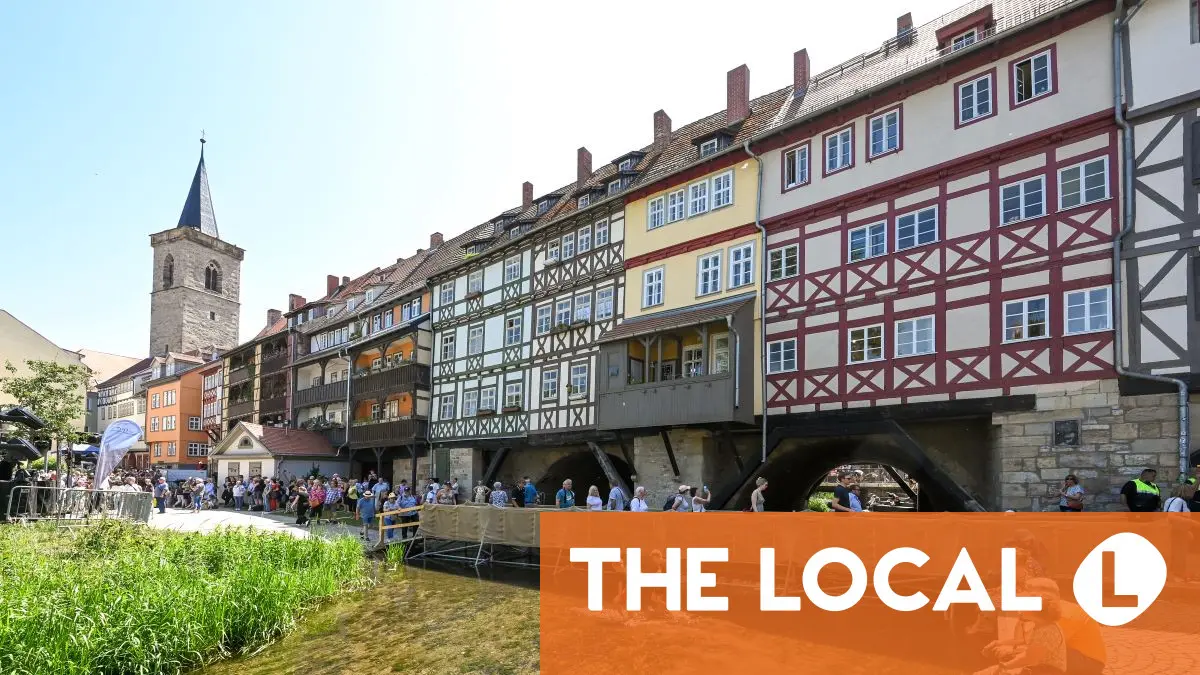
But the researchers’ findings also point to less tangible factors. Erfurt is compact, green and calm by big‑city standards. Its medieval centre – including the Krämerbrücke, a bridge lined with houses and independent shops – gives the city a strong sense of identity.
Put simply, it offers something many people in Germany appear to value: a manageable, affordable and cohesive urban environment. That combination helps explain how it climbed from sixth place to number one in just a year.
As a fun bonus, the city is also steeped in history: Martin Luther studied here and Erfurt has been a cultural hub since the Middle Ages.
READ ALSO: Regensburg vs Erfurt- Why a battle over Bratwurst has broken out in Germany
Money doesn’t buy happiness
Perhaps the most striking conclusion overall comes from what the researchers describe as an “urban paradox”: strong economic performance does not automatically translate into higher life satisfaction.
On paper, cities such as Munich, Frankfurt and Karlsruhe perform extremely well. They boast strong economies, excellent public services and high incomes. Yet in the ranking, they appear only in the middle or lower half when it comes to how satisfied residents actually feel.
According to the study, this gap can be explained by everyday pressures – including high housing costs, long commutes, environmental stress and a sense of anonymity. In these cities, material comfort may be high, but so are expectations and potential sources of frustration.
By contrast, many of this year’s top performers follow a different pattern. Cities such as Duisburg, Kiel and Erfurt are weaker in terms of economic indicators, but they score highly on factors such as affordability, shorter commutes, access to green space and a strong sense of community.
Another key factor highlighted by the researchers is inequality.
Cities with wide gaps between rich and poor, such as Frankfurt, tend to report lower overall satisfaction. Where differences are less pronounced – even if average incomes are lower – overall life satisfaction tends to be higher.
READ ALSO: Germany’s best ‘Kur’ towns for wellness and why you should visit
The regional picture
The regional breakdown reinforces these findings.
In the northwest and west – including cities such as Düsseldorf, Krefeld and Aachen – residents report some of the highest satisfaction levels in the country. These areas tend to combine solid infrastructure with comparatively moderate living costs.
Southern Germany presents a more complex picture. Cities such as Stuttgart and Munich are prosperous and well-served, but high housing costs and pressure on infrastructure appear to weigh on residents’ sense of wellbeing – a pattern the researchers highlight as typical of “underperformers”.
Eastern Germany shows the greatest contrasts. While cities such as Erfurt and Halle perform strongly, Rostock ranks last by a wide margin. Despite relatively good infrastructure and environmental conditions, factors such as an ageing population and a high proportion of single-person households appear to reduce overall satisfaction.
Even Berlin – often seen as dynamic and full of opportunity – falls into the lower third of the ranking. The study points to high rents, infrastructure strains and social factors, including a large number of people living alone, as possible explanations.
In other words, the cities offering the highest quality of life may not be the ones that top traditional rankings – but those that strike the right balance between opportunity and liveability.
READ ALSO: Four places in Germany experts say you should visit in 2026
Germany’s top ten ‘happiest’ cities in 2026:
- 1 Erfurt
- 2 Augsburg
- 3 Dusseldorf
- 4 Krefeld
- 5 Kiel
- 6 Aachen
- 7 Mönchengladbach
- 8 Oberhausen
- 9 Duisburg
- 10 Hamburg
You can view the full ranking here.
Disclaimer : This story is auto aggregated by a computer programme and has not been created or edited by DOWNTHENEWS. Publisher: thelocal.de