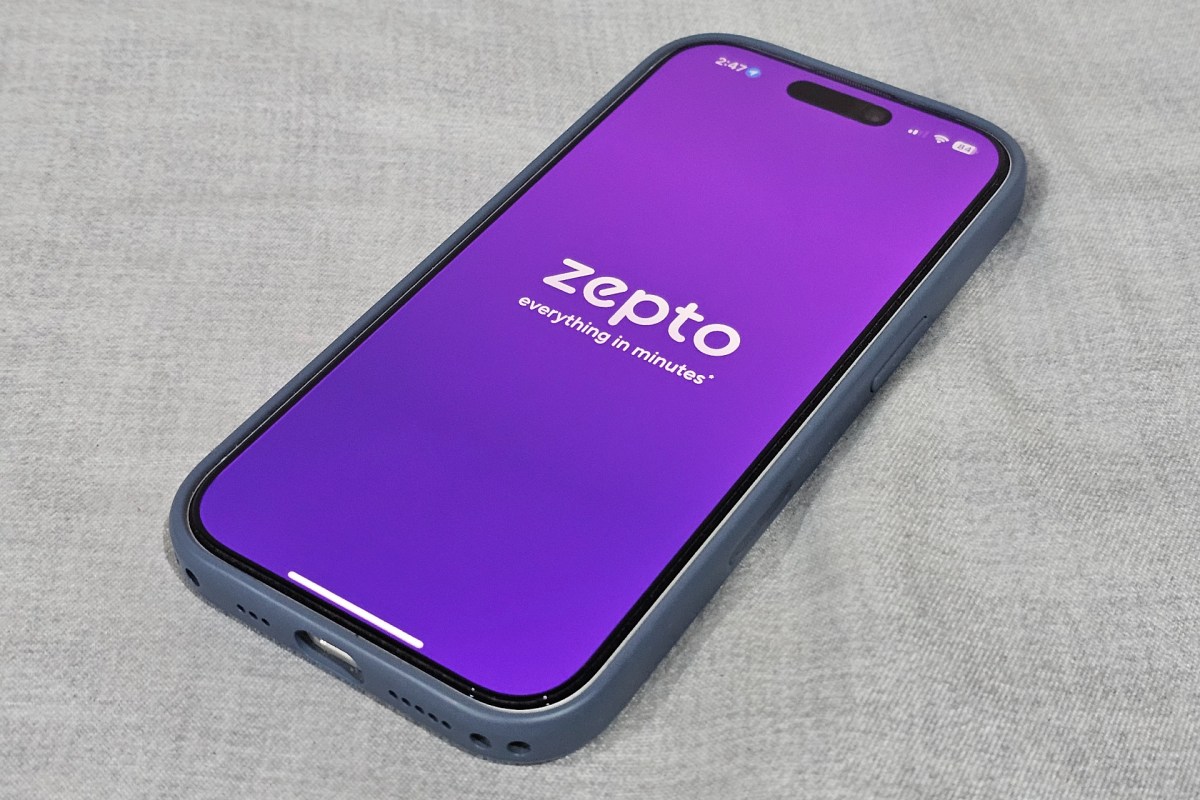
Indian quick-commerce startup Zepto has unveiled plans for an initial public offering that could be valued at about $1 billion, putting one of Y Combinator’s biggest bets outside the U.S. on the path to public markets.
The filing, released Monday, offers a rare look at how one of India’s most closely watched startups plans to sustain its breakneck growth after listing. Zepto’s advertising revenue rose more than 151% year-over-year to ₹16.4 billion (about $171 million) in fiscal 2026, outpacing the company’s 104% increase in operating revenue to ₹115.5 billion (around $2.4 billion).
While grocery deliveries remain Zepto’s core business, the faster growth of its advertising arm points to a broader shift in how the startup makes money — a strategy Amazon pioneered, turning its marketplace into one of the world’s most profitable ad businesses by selling visibility to the same merchants competing on its platform.
Founded in 2021 by Stanford dropouts Aadit Palicha and Kaivalya Vohra, Zepto has grown into one of India’s fastest-growing startups, competing with Zomato-owned Blinkit and Swiggy’s Instamart in the country’s fiercely contested quick-commerce market. Amazon and Walmart-backed Flipkart have also intensified their efforts in the segment in recent months.
Despite the intense competition, Zepto has continued to add customers and orders at a rapid clip. The startup processed more than 640 million orders in fiscal 2026, per the draft prospectus, nearly double the previous year, while the annual transacting users rose to almost 48 million. Even as it expanded its network to 1,139 stores, orders per store continued to increase, suggesting demand is growing alongside its footprint.
That growth comes at a cost, however. Zepto remains loss-making, reporting a net loss of ₹59.1 billion (about $617.36 million) in fiscal 2026, compared with ₹47.0 billion (around $492.45 million) a year earlier. The startup acknowledged in its filing that it may continue to incur losses and may not be able to sustain its historical growth rates, a standard but telling disclosure that highlights the tension facing venture-backed companies seeking public-market investors before reaching profitability.
Zepto plans to raise up to ₹80.1 billion (about $837.41 million) through a fresh issue of shares. The IPO will also include an offer-for-sale of up to 113.5 million shares by existing investors including Nexus Venture Partners, Contrary, and Razor Ventures, with the final size of the sale dependent on the eventual pricing of the offering. The startup also said it may raise up to ₹16.02 billion (about $167 million) from investors in a pre-IPO placement ahead of the listing.
The listing is set to provide a closely watched outcome for some of Zepto’s early backers. The startup was valued at $7 billion in its last funding round in October and counts Y Combinator, Lachy Groom, Nexus Venture Partners, StepStone, Glade Brook, and Lightspeed among its investors.
Several prominent shareholders — including Y Combinator-affiliated funds, Lightspeed, StepStone, Groom, and Glade Brook — are not participating in the IPO’s offer-for-sale, opting to retain their stakes as the startup prepares for its market debut. That’s worth pausing on: Zepto’s public-market valuation remains uncertain, and some mutual funds and family offices that reviewed the company ahead of the IPO have indicated valuations well below its last private round, according to people familiar with the matter.
Zepto’s founders, the filing revealed, received summonses from India’s anti-money laundering agency, the Enforcement Directorate, in April, seeking information related to foreign investments, the company’s shareholding structure, and other matters under the country’s foreign-exchange laws.
The two subsequently appeared before the agency and provided the requested information and documents. Zepto said it has not received any further communication from the regulator since, but cautioned that it could not rule out future inquiries, investigations, or penalties.
The proposed listing marks the culmination of a years-long effort to prepare the startup for a domestic market debut. Zepto relocated its legal home from Singapore to India last year, joining a growing number of startups restructuring their holding companies as local public markets become increasingly attractive for tech listings.
When you purchase through links in our articles, we may earn a small commission. This doesn’t affect our editorial independence.
Disclaimer : This story is auto aggregated by a computer programme and has not been created or edited by DOWNTHENEWS. Publisher: techcrunch.com