
TEHRAN – All sections of Isfahan’s Chehel Sotoun Palace, including the room known as Chaharshanbeh Suri and the Stone Museum, have been reopened to the public, the site’s director said on Wednesday.
Mostafa Hadipour, director of the World Heritage base of Chehel Sotoun Palace museum, told IRNA that several key spaces had previously been closed and inaccessible to visitors for unspecified reasons.
“With the planning carried out, these spaces have been reopened and are now accessible to the public,” he said.
Hadipour said restoration and maintenance measures were under way alongside the full activation of the complex, including landscaping work, improving conservation conditions, addressing humidity in interior spaces, and reorganizing arcades and the Stone Museum.
He also said some historical objects were being displayed under an object-focused approach. A Safavid-era cannon previously kept in storage has been organized and is now on public display, he added.
Hadipour said that introducing historical objects and activating museum spaces could contribute to cultural and historical tourism in Isfahan.
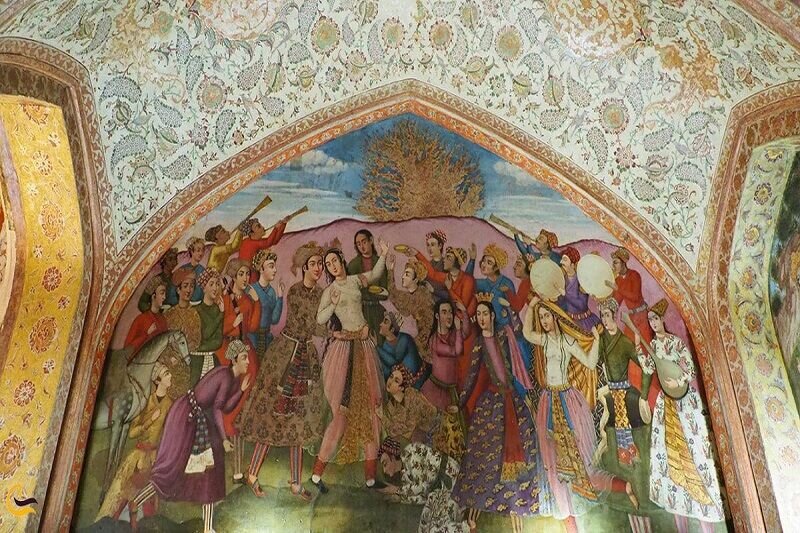
A mural in a small southeastern room of the palace, known as the Chaharshanbeh Suri room, has been associated with fire-related rituals such as Chaharshanbeh Suri or Sadeh. However, historical research links the painting to the Sati ritual during the Safavid period.
According to “Qasas al-Khaqani” by Safavid historian Ali-Qoli Khan Shamlu, the account relates to the siege of Kandahar by Iranian forces. Shamlu wrote that after 20 days of siege, a courtier of the Mughal Empire named Matrudass died among the besieged. His wife decided to follow the Sati ritual and immolate herself on his funeral pyre.
Shamlu reported that Indian beliefs held that words spoken during the ritual would come true. According to the account, when asked whether assistance from the Indian emperor would reach Kandahar, the woman replied that no help would come and that Iranian forces would capture the fortress after 40 days, adding that major turmoil would occur in India after 11 years.
The historian described the event while also presenting it as a sign of Iranian victory. Shah Abbas II later ordered that the episode be depicted in oil on one of the palace’s plaster walls to commemorate the victory over Indian forces.
Chehel Sotoun, meaning “Forty Columns,” is a Safavid-era pavilion built by Shah Abbas II in the 17th century in Isfahan. The palace was historically used to host dignitaries and ambassadors. Today, the site functions as a museum displaying artworks from various periods of Iranian history.
The garden surrounding the palace is part of the UNESCO-listed Persian Garden ensemble, inscribed on the World Heritage list in 2011. The property comprises nine gardens across several provinces and reflects principles of Persian garden design dating back to the era of Cyrus the Great.
AM
Disclaimer : This story is auto aggregated by a computer programme and has not been created or edited by DOWNTHENEWS. Publisher: tehrantimes.com



