TOKYO, Feb 05 (News On Japan) –
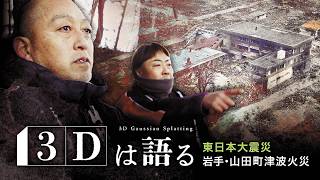
High-resolution 3D images created from aerial photographs taken after the Great East Japan Earthquake have revealed how large-scale fires spread in the aftermath of the tsunami, showing that in Yamada Town, Iwate Prefecture, debris left behind by the waves covered wide areas of the town and rendered roads ineffective as natural firebreaks, allowing flames to expand unchecked.
[embedded content]
Experts analyzing the 3D data found that the tsunami debris blanketing the urban area eliminated the fire-prevention role roads normally play, enabling multiple fires to spread and eventually merge into a single massive blaze, which became the largest fire by burned area caused by the disaster, centered around the Yamada Station area.
According to specialists, one characteristic pattern was what they describe as “debris accumulation-type tsunami fires,” in which debris floating on the waves ignited and continued burning on the water, making extinguishing efforts extremely difficult, with some fires eventually persisting and accumulating near hillsides, tsunami evacuation buildings, and mid- to high-rise structures, where the debris gathered and burned intensely.
Analysis of the 3D images also revealed blackened roads, which investigators say indicate areas where debris piled up on top of the roadway and continued to burn, turning what should have been firebreaks into conduits for the spread of flames, as burning debris moved along streets and carried the fire into neighboring areas.
In Yamada, two separate fires eventually merged into one, creating the largest fire seen during the Great East Japan Earthquake, a process made possible because the roads were completely buried under debris, leaving no visible separation between blocks and allowing flames to spread laterally across the town.
Firefighters on the ground recalled that the smoke initially appeared white, leading them to believe the fires might be quickly extinguished if they arrived in time, but the sheer volume of debris and the lack of usable water supply soon made conventional firefighting impossible.
With no functioning water infrastructure, firefighters were forced to improvise, diverting small amounts of water from drainage channels to slow the spread of the flames, and in the final stages, using an emergency drinking-water tank located behind the town hall, fully aware that it was not intended for firefighting.
Even after exhausting every available water source, the fires could not be fully extinguished, leaving firefighters to watch helplessly as the town burned until there was nothing left to consume.
Firefighters described the overwhelming sense of powerlessness they felt as their own neighborhoods were reduced to ashes, saying that although extinguishing fires was their duty, the scale of the disaster made it impossible to stop the destruction, forcing them to simply stand by and watch.
Experts warn that tsunami fires pose a unique danger because flames can reach heights of two to three meters and spread across entire areas, eliminating survivable spaces and making evacuation far more difficult than in ordinary fires.
While it is commonly believed that moving to higher floors ensures safety, widespread fires can engulf entire areas, leading specialists to caution against forcing evacuation to high ground when time is limited, instead urging people to use tsunami evacuation buildings or towers when escape routes are compromised.
They stress that if there is sufficient time, residents should evacuate to higher ground, but if not, properly designated tsunami evacuation facilities should be used, even when fears of tsunami fires remain, as this approach offers the best balance of safety under extreme conditions.
Source: Kyodo
Disclaimer : This story is auto aggregated by a computer programme and has not been created or edited by DOWNTHENEWS. Publisher: newsonjapan.com