Frequently Asked Questions
What makes Korean scalp treatments different from Western ones?
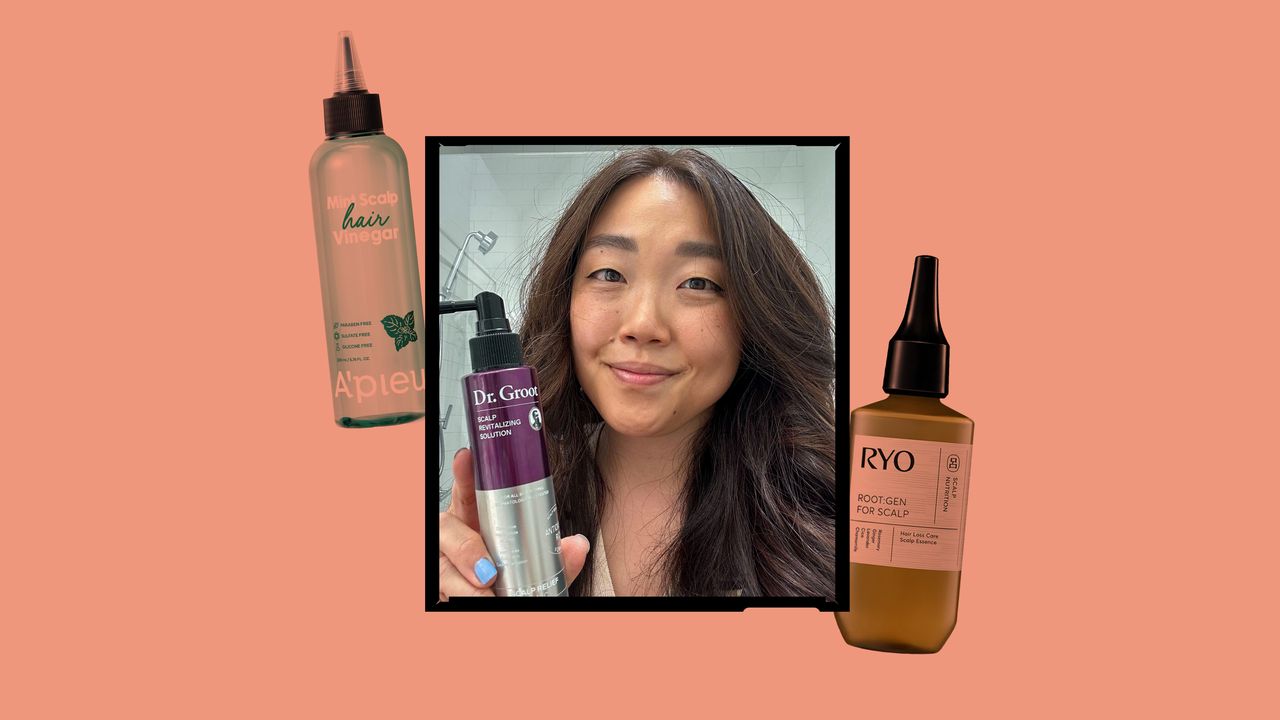
Korean scalp and hair treatments differ from many Western ones because they treat the scalp like skin. They’re usually lightweight, water- or essence-based formulas designed to absorb quickly and “create a healthy environment to nourish hair growth,” rather than coating the hair shaft, says Dr. Jhin. They focus on consistency, layering, and prevention, using gentle, multifunctional ingredients—like botanicals, ferments, and calming extracts—to balance oil, soothe irritation, and support the scalp barrier over time. Western scalp treatments often rely on stronger, single-minded actives (think minoxidil or high-dose exfoliants) aimed at correcting a problem quickly, while Korean formulas take a more holistic, long-game approach, combining soothing, strengthening, and circulation-stimulating ingredients.
How do you use Korean scalp tonics and serums?
Scalp tonics and serums are simple to fold into your everyday hair-care routine. Dr. Jhin recommends applying them directly to the scalp on clean, towel-dried hair after washing—or to dry hair between washes, depending on the formula. Part your hair in sections and dispense the product along the scalp, then massage it in for 30 to 60 seconds to help boost absorption and stimulate circulation. Some formulas come with rollerball tips, which make application easier while delivering a gentle scalp massage. “Because these products are lightweight and absorb quickly, they shouldn’t feel greasy or heavy at the roots,” says Dr. Jhin. Most are designed for daily or near-daily use, fitting easily into your routine before styling products.
What ingredients should I look for in Korean scalp care?
When shopping for Korean hair-care products, think of the scalp the same way you would your skin-care routine—supported by time-tested Korean ingredients that focus on balance and barrier health. Centella asiatica is a standout for soothing irritation and supporting the scalp barrier, while ginseng is prized for stimulating circulation and supporting stronger roots. Green tea is another classic, offering antioxidant and calming benefits, especially for reactive or oily scalps. You’ll also see ingredients like mugwort (artemisia), which is commonly used in Korean formulas to ease inflammation. Fermented ingredients—such as fermented rice, soybean, or probiotics—are also key, as they help nourish the scalp. “These ingredients work gently and cumulatively,” Dr. Jhin notes, “which is why consistency matters more than quick fixes.”
Meet the experts
- Jae Manuel Cardenas, a hairstylist at Sally Hershberger NoMad based in New York City
- Cherin Choi, a hairstylist and colorist based in Los Angeles
- Marie Jhin, MD, a board-certified dermatologist of Premier Dermatology, adjunct clinical instructor at Stanford University, and author of Asian Beauty Secrets and K-Beauty Secrets based in San Carlos, California
How we test and review products
When Allure tests a product, our editors look at it from every angle in an effort to best serve you. We review ingredients, scrutinize brand claims, and, when necessary, examine peer-reviewed scientific and medical studies. In addition to testing each and every product that’s included in each and every review, we rely on experts who shape their fields, including dermatology, cosmetic chemistry, and medicine, to help us vet the ingredients and formulas.
For our list of the best Korean scalp treatments, we considered each product’s performance across five primary categories: product ingredients and efficacy, packaging, fragrance, texture, and product wear. Every product was determined to have excelled in each category by our editorial team of in-house writers and editors, as well as contributors, along with special consideration from makeup artists and dermatologists. To learn more about our reporting and testing processes, read our complete reviews process and methodology page.
Our staff and testers
A beauty product is a personal purchase. You might be searching for a face cream to address persistent dryness or a new nail product to add to your Sunday self-care routine; you may simply be browsing around for the latest launches to hit the hair market. No matter what you seek or your individual needs and concerns, Allure wants to ensure that you love anything we recommend in our stories. We believe that having a diverse team of writers and editors—in addition to the wide range of outside testers and industry experts we regularly call upon—is essential to reaching that goal.
After all, can we really say a skin-care product is the “best” for people over 50 if the only testers we’ve solicited opinions from are folks who have yet to hit 30? Can we honestly deem a high-end diffuser worthy of your hard-earned cash if it’s never been tested on curls? We’re proud that our staff spans a wide range of ages, skin tones, hair textures, genders, and backgrounds, which means that we are able to fairly assess any beauty product that comes into the beauty closet.
Disclaimer : This story is auto aggregated by a computer programme and has not been created or edited by DOWNTHENEWS. Publisher: www.allure.com