A whopping 86% of Americans want Meta and Google held accountable for their role in a social media addiction crisis that has fueled anxiety, eating disorders and even suicide among kids, according to a survey obtained by The Post.
Meanwhile, 67%, or a two-thirds of American voters, said they were more likely to vote for US lawmakers who supported legislation that would crack down on “dangerous social media features like infinite scroll, near-constant notifications, and predatory algorithms,” the survey showed.
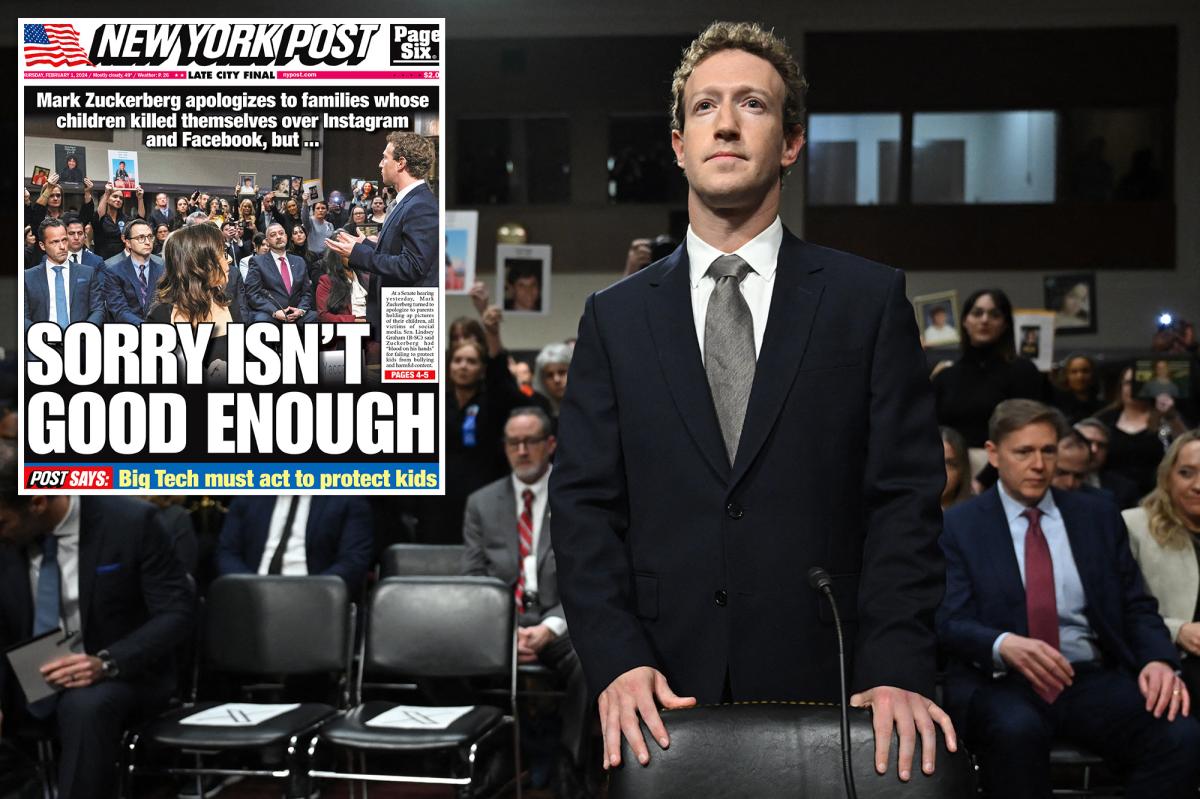
Meta CEO Mark Zuckerberg is set to testify starting Wednesday in the landmark California trial accusing Facebook, Instagram and Google’s YouTube of fueling social media addiction to boost their profits. The trial began on Feb. 9 and is expected to stretch into March.
The Tech Oversight Project, which prepped the survey, called the trial a “watershed moment” with the potential for real consequences for Big Tech. The case is seen as a bellwether that could decide how similar trials around the country are decided for years to come.
“This trial has already proven that there is a direct link between Big Tech’s dangerous product designs and real-world harms, and it should come as no surprise that voters are mad as hell and want Congress to do something about it,” said Sacha Haworth, executive director of the Tech Oversight Project.
One such proposal, according to the Tech Oversight Project, is the Kids Online Safety Act – a long-delayed bipartisan bill meant to enhance safety requirements on social media apps. The Senate version of the bill would impose a legal “duty of care” on companies to ensure their products are safe.
Respondents to the survey agreed that social media giants should be held accountable for evidence that has surfaced at the trial, including internal documents that revealed “companies buried research showing their products had damaging effects,” according to the results.
The online survey was conducted by polling service YouGov from Feb. 11 to Feb. 13 and had a sample size of 1,000 respondents. The margin of error was +/- 3.9%.
“For the first time, Meta is in the prone position of having to produce documents under court order – with actual legal penalties on the line,” said Haworth. “This isn’t a consequence-free zone or yet another opportunity to lie to lawmakers without fear of penalty.”
Meta did not immediately return a request for comment. Google declined to comment.
A trove of internal Meta and Google documents has surfaced as a result of the trial.
In one recently unsealed documented cited by the Tech Oversight Project, Meta employees discussed in 2017 how Zuckerberg “has been talking about [going after <13y/o users] for a while.” Another Meta employee responded that Zuckerberg’s focus on boosting engagement by teen users was “gross.”
In internal research slides from 2018, Facebook employee discussed how “people who are particularly sensitive to social rewards might find FB use more rewarding and therefore use it more.”
The lead plaintiff in the trial is a 20-year-old women identified only as “Kaley” or “KGM,” who alleges that deliberately addictive features in Instagram and YouTube got her hooked and fueled a downward spiral that included depression and suicidal thoughts.
During opening arguments, KGM’s lawyer Mark Lanier argued the case was as “easy as ABC,” with ABC standing for “addicting the brains of children.”
Lanier also alleged that Meta and Google would “try to blame the little girl and her parents for the trap they built” during the trial.
Attorneys for Google and Meta argue that Kaley’s issues were driven by problems in her personal life rather than the app design choices. Both companies say have have worked hard to protect online users, especially kids, from harm.
A lawyer for Google said Kaley had a five-year average watch time on YouTube of 29 minutes per day and an average daily watch time on short-form YouTube shorts of 1 minute and 14 seconds.
TikTok and Snap were originally defendants in the case, but hammered out settlements before the trial began.
Instagram chief Adam Mosseri sought to downplay allegations that social media apps are addictive during his testimony last week, arguing that it was “important to differentiate between clinical addiction and problematic use.”
“I’m sure I said that I’ve been addicted to a Netflix show when I binged it really late one night, but I don’t think it’s the same thing as clinical addiction,” said.
Disclaimer : This story is auto aggregated by a computer programme and has not been created or edited by DOWNTHENEWS. Publisher: nypost.com