
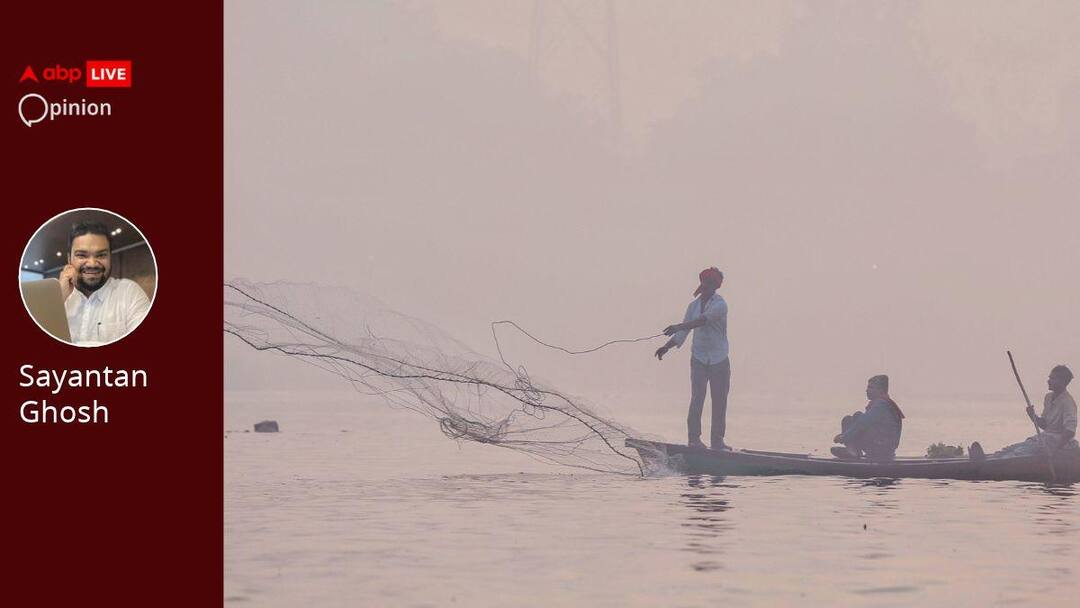
- Sustained, coordinated regional efforts are vital for clean air.
Delhi woke on the morning of November 9, 2026 under a thick, yellowish haze that cut visibility and left a metallic taste in the mouth. Diwali had been celebrated the night before, on November 8, with the usual lamps, sweets and, despite the Supreme Court’s limited green-cracker windows, a heavy burst of firecrackers that sent particulate levels soaring at several monitoring stations. By dawn, the city’s average Air Quality Index sat in the very poor range, while more than a dozen stations had already crossed into severe. Children stayed indoors, morning walkers turned back at the gate, and the familiar winter conversation began all over again.
Within hours, the usual suspects were named. Firecrackers, some said. Stubble burning in the fields of Punjab and Haryana, others insisted. Vehicular traffic, industrial stacks, construction dust and open waste burning were mentioned in passing. Almost at once the political exchange sharpened. The Bharatiya Janata Party government now running Delhi pointed to the Aam Aadmi Party administration in Punjab. The AAP, which had governed Delhi for nearly a decade before losing power, returned the charge and spoke of data manipulation and half-measures. The same script has been performed for more than ten years; only the actors change seats. When the AAP held the capital, it blamed the then Congress government in Punjab. Once the AAP itself took Punjab, it redirected the blame toward the Centre. Today the BJP holds Delhi and the cycle continues.
What Rarely Changes Is The Underlying Reality.
The pollutants that choke Delhi in November have been accumulating for months. Vehicles, construction, industry and household sources operate all year. Winter meteorology simply traps them. The annual spike is real, yet it is not the whole story. Governments treat the spike as the story because a spike produces headlines, press conferences and photo opportunities. Steady, unglamorous work through the rest of the year does not. That is why every government, regardless of party, fails to deliver lasting improvement.
Seasonal Politics And Selective Outrage
Every November the capital’s air becomes a political stage. Emergency meetings are called, Graded Response Action Plan stages are activated, and leaders trade accusations across state borders. Once the wind picks up and the numbers fall, the urgency vanishes. Construction sites resume, older vehicles remain on the roads, and the conversation moves on. Pollution is a twelve-month problem; political attention is a three-month event.
When the Aam Aadmi Party controlled Delhi it routinely blamed the Congress government then in power in Punjab for failing to stop stubble burning. After the AAP itself won Punjab and still could not end the practice, its focus shifted to the BJP at the Centre. Now that the BJP governs Delhi under Chief Minister Rekha Gupta, its ministers, including Environment Minister Manjinder Singh Sirsa, highlight farm fires in Punjab under Bhagwant Mann and question the previous Delhi administration’s record. The AAP, for its part, questions the reliability of current monitoring data. Each side can point to a failure by the other. None of them can point to a sustained reduction achieved on their own watch.
The blame game is useful. It keeps the issue in the news without requiring any party to own the harder, quieter work of enforcement, fleet modernisation, dust control or agricultural transition. Those measures do not generate daily headlines or election-eve photo opportunities. Seasonal outrage does.
Focus On The Usual Suspects
Stubble burning in Punjab and Haryana has become the most convenient single explanation. Firecrackers come a close second. Both matter on particular nights and weeks, yet they do not account for the baseline load that already sits in the severe or very poor categories before either source peaks. Vehicular emissions, industrial combustion, construction and road dust, and open waste burning operate every day of the year. In winter the atmospheric boundary layer drops, wind speeds fall and temperature inversions form. The same daily emissions that are dispersed in summer now linger. The result is a cocktail that feels sudden but is in fact cumulative.
Official source-apportionment exercises have repeatedly shown transport as one of the largest local contributors on many winter days, with stubble burning rising and falling according to harvest timing and wind direction. Construction dust is visible on almost every arterial road and building site, yet enforcement remains episodic.
The political conversation, however, returns almost exclusively to the most photogenic or politically useful sources during the festival and harvest window. For the other nine months the same sources continue largely unchecked. Delhi does not become a gas chamber on one night of crackers or one week of farm fires. It becomes one because the year-long load meets unfavourable weather, and because successive governments have chosen not to reduce that load in a sustained way.
Replace Seasonal Firefighting With A Year-Round Clean-Air Plan
The Graded Response Action Plan is not new. It was first notified in 2017 by the central environment ministry following directions from the Supreme Court, building on the earlier work of the Environment Pollution (Prevention and Control) Authority chaired by the former IAS officer Bhure Lal. The plan sets out staged restrictions once the Air Quality Index crosses defined thresholds: curbs on construction, restrictions on older diesel vehicles, bans on certain industrial fuels, and so on. Different stages have been invoked for years. The implementing body has changed; the Commission for Air Quality Management now oversees it. The essential character has not. GRAP is an emergency tool designed to prevent the situation from becoming still worse. It is not a strategy for making the air steadily cleaner.
Governments of every political colour have treated the activation of GRAP as the principal response. The Supreme Court itself has observed that a perennial reliance on such emergency measures is no substitute for long-term policy. What is required is a set of measurable annual reduction targets for particulate matter and other pollutants, backed by continuous enforcement rather than seasonal crackdowns.
That means tighter industrial emission standards and actual inspections, accelerated replacement of older commercial vehicles, expansion and improvement of public transport so that private vehicle growth slows, systematic control of construction and road dust through covering, watering and better waste management, and genuine alternatives for farmers who currently burn residue because other options remain expensive or unavailable.
Public dashboards that track whether each agency is meeting its targets, together with a year-round public campaign that treats clean air as a permanent civic priority rather than a winter emergency, would keep the issue from disappearing every March. None of this is dramatic. All of it is necessary.
The Solution Is Already Known
Delhi needs a denser network of low-cost sensors placed on streets, buses and public buildings so that real-time data can be combined with satellite imagery, weather forecasts and traffic information to identify hotspots before they become city-wide crises. Because the airshed is regional, an integrated command centre under the Commission for Air Quality Management must coordinate action across Delhi, Haryana, Punjab, Uttar Pradesh and Rajasthan, using pollution forecasts to trigger preventive steps rather than waiting for the index to cross into the severe range.
Farmers in the northern states need reliable, subsidised machinery, shorter-duration crop varieties and assured procurement incentives so that residue management becomes economically rational. Within the capital, the public transport system requires higher frequency, better last-mile connectivity and cleaner fleets so that the daily commute is not automatically a source of emissions. Construction norms must be enforced continuously, not only when cameras are present. Waste burning can be reduced only when collection is reliable and alternatives exist.
None of these measures is novel. Expert committees, court orders and successive action plans have listed them for years. What has been missing is the political decision to pursue them when they do not produce immediate headlines, when they require coordination across party lines and state boundaries, and when they demand sustained administrative effort rather than a seasonal announcement.
Until that decision is made, Delhi will continue to wake each November to the same haze, the same arguments and the same temporary restrictions. The air will clear when the wind changes. The politics will not.
Sayantan Ghosh, a columnist and Doctoral Research Scholar in Media & Politics, is a contributing author for ABP Live English.
[Disclaimer: The opinions, beliefs, and views expressed by the various authors and forum participants on this website are personal and do not reflect the opinions, beliefs, and views of ABP News Network Pvt Ltd.]
Disclaimer : This story is auto aggregated by a computer programme and has not been created or edited by DOWNTHENEWS. Publisher: abplive.com









