
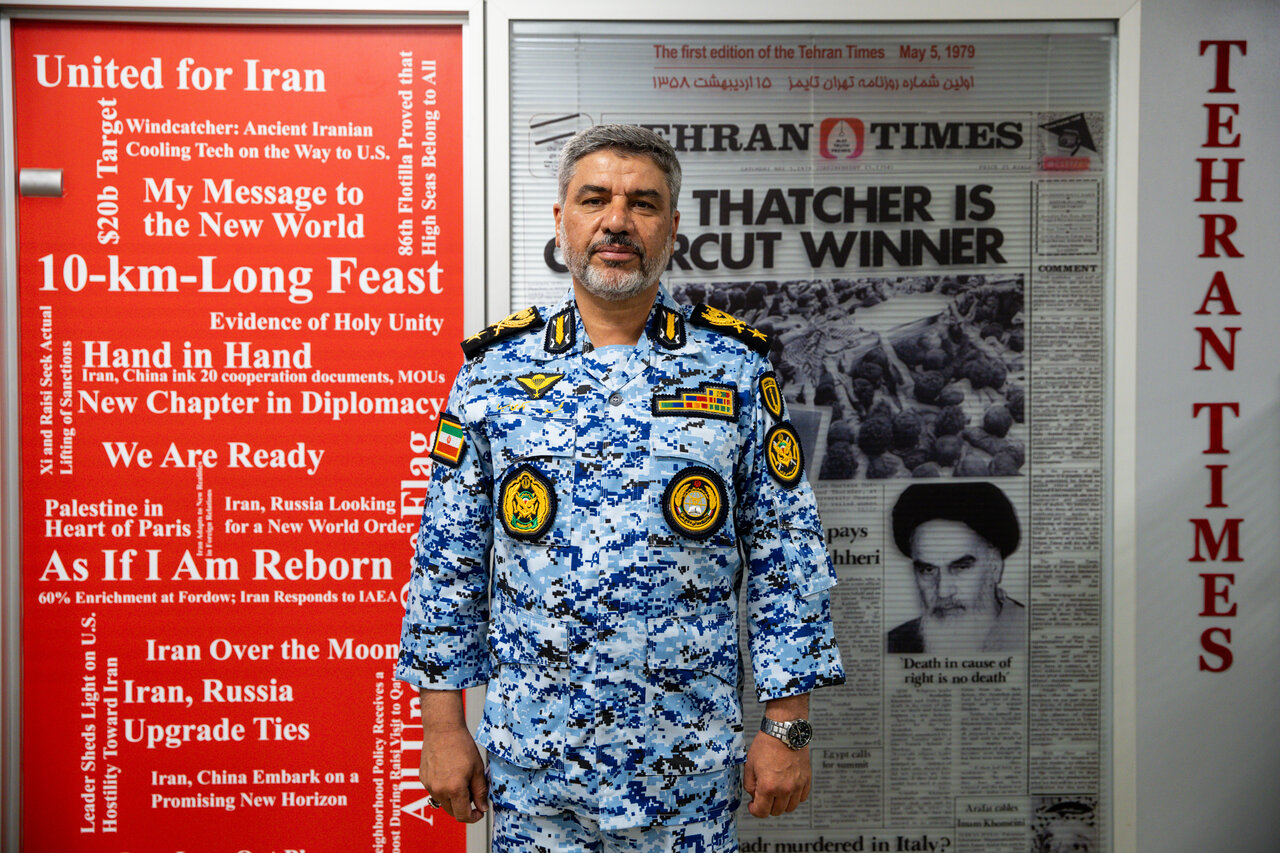
TEHRAN – Iran’s Armed Forces are transitioning towards an offensive military doctrine that envisages a broader operational reach, revised combat concepts and the development of weapons systems tailored to the new strategic requirements, Army spokesman Brigadier General Mohammad Akraminia has said.
Under the emerging doctrine, Iran’s response to aggression will no longer be confined by geographical boundaries, with the principles of an “effective response” and “no geographical limitations” being translated into operational concepts and actionable military strategies, Akraminia said on Monday.
He said the transition was being pursued in accordance with the latest directives issued by the Leader of the Islamic Revolution and Commander-in-Chief of the Armed Forces, Ayatollah Seyyed Mojtaba Khamenei. The directives call for a shift in the Army’s doctrinal orientation, the development of corresponding weapons capabilities and changes to established methods of combat, he added.
Explaining the doctrinal shift, Akraminia said Iran’s previous military posture had centered on defense and retaliatory or punitive deterrence. Under that framework, the armed forces were tasked with repelling an initial enemy strike before delivering a proportionate counterstrike, with the response geographically confined to the regional theatre and US military bases in the region.
The new directives, however, place particular emphasis on the speed and operational effectiveness of retaliation, as well as the removal of geographical constraints, he said. Akraminia pointed to the response mounted by Iran’s Armed Forces at the outset of the recent war as an indication of the importance attached to a rapid response.
He said the new concepts had already been defined in operational terms, with work underway to develop them into executable strategies. These, alongside revised combat principles and operational methods, would form the foundation of the Army’s future doctrine.
Akraminia described the emerging doctrine as comprehensive and intelligence-driven, stressing that its development would also draw on the Army’s ideological foundations and public support.
Military modernization to follow doctrinal shift
The spokesman said the transition would have implications extending beyond operational planning to force structure, training requirements, tactical concepts and weapons procurement.
The process, he explained, would draw on theoretical and religious foundations as well as operational lessons from the recent conflict and previous wars. These lessons would inform the development of strategies and tactics, which would in turn determine the force composition, training requirements and weapons systems needed to implement the revised doctrine.
Akraminia said the programs to enhance Iran’s combat readiness and defensive capabilities would continue irrespective of changes in the political environment or assessments of the likelihood of renewed hostilities.
Although recent political developments affecting the United States and Israel could reduce the immediate prospect of another war, he said they would not alter the military’s modernization priorities.
The spokesman stressed that Iran’s military planning was based on the fulfilment of operational missions and the implementation of the Commander-in-Chief’s directives, rather than assumptions about the intentions or constraints of its adversaries.
He cautioned against interpreting an adversary’s failure to launch an attack as an indication that the threat had diminished, arguing that restraint could reflect either Iran’s deterrent capabilities or internal political and domestic difficulties facing the opposing side. Both possibilities, he said, had to be factored into Iran’s security calculations.
Iran rejects US-backed alternative shipping route in Strait of Hormuz
On maritime security, Akraminia said the United States had sought, following the Islamabad Memorandum of Understanding (MoU), to establish an alternative shipping corridor south of the Strait of Hormuz and induce, including through pressure, commercial shipping operators and vessel owners to use it.
He described the initiative as an attempt to circumvent the arrangements envisaged under the memorandum, particularly the provision assigning an Iranian mechanism responsibility for managing affairs related to the strait and conducting the necessary consultations with Oman.
According to Akraminia, the objective was to erode Iran’s geopolitical leverage over the strategic waterway and undermine a key element of the Islamabad understanding.
He said Iran had issued warnings in response and that vessels which disregarded the prescribed requirements subsequently encountered security risks.
The Army spokesman also attributed the deterioration in maritime security to US intervention, arguing that vessels pressured into using unsafe routes risked striking naval mines and sustaining damage. Such incidents, he added, had wider implications for commercial shipping operators and the international transport sector.
Akraminia said commercial vessel owners and shipping companies could coordinate directly with Iran’s Armed Forces to transit designated secure routes through the Strait of Hormuz, adding that the Iranian military would guarantee the security of these passageways.
Disclaimer : This story is auto aggregated by a computer programme and has not been created or edited by DOWNTHENEWS. Publisher: tehrantimes.com




