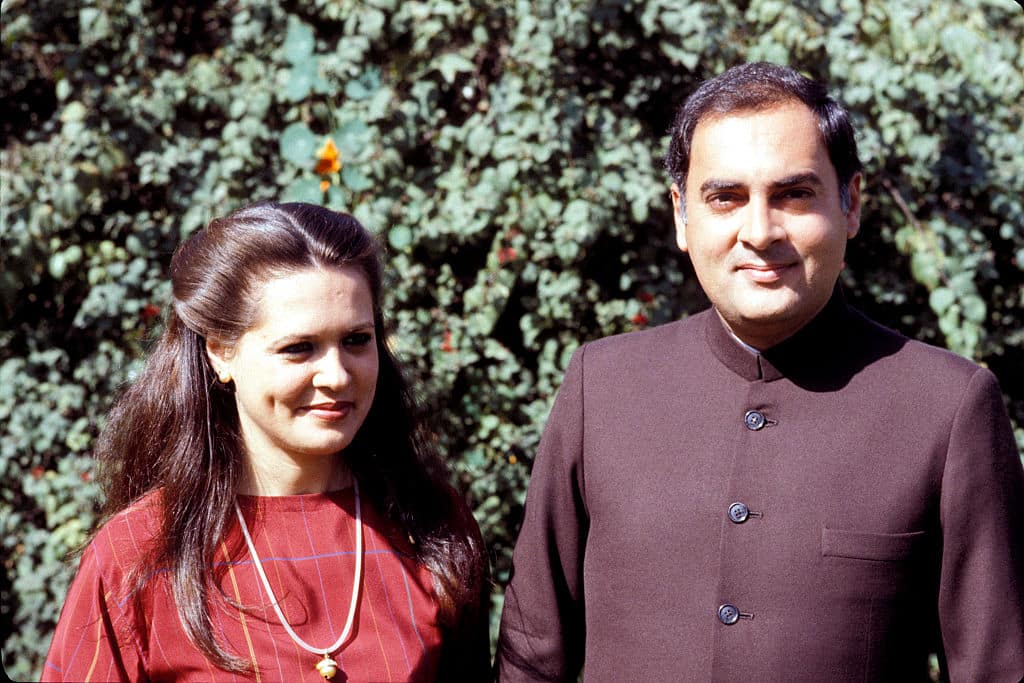
- Sonia Gandhi’s memoir recounts losing her first child in 1969.
- Son born prematurely, tragically died barely a day later.
- Family buried baby at farmhouse, a deeply personal decision.
Sonia Gandhi has, for the first time, opened up about the heartbreaking loss of her first child, a baby boy born prematurely in January 1969, in her newly released memoir Belonging: A Journey of Love. In an intensely personal account, she revisits the brief joy of motherhood, the devastating loss that followed barely a day later, and the painful decision she and her husband, Rajiv Gandhi, made to bury their newborn son at the Gandhi family’s farmhouse in Mehrauli.
The memoir, which hit the stands on Tuesday, offers a rare glimpse into one of the most painful chapters of her life, recalling not only the family’s grief but also the emotional trauma she endured in the aftermath.
‘A Pregnancy That Brought Joy’
Recalling the early days of her pregnancy in September 1968, Sonia writes that the news brought immense happiness to the Gandhi household. Indira Gandhi, whose usually stern demeanour gave way to affection, embraced her daughter-in-law and exclaimed, “One big baby having another baby!”
However, the joy was short-lived. Sonia delivered a baby boy on January 18, 1969, nearly two months before her due date. Although the newborn was initially placed in an incubator, the family had already been cautioned about his chances of survival.
The Heartbreak Of Losing Their First Child
In her memoir, Sonia recalls seeing her son for the first time, describing him as a tiny but perfectly formed baby with thick black hair and long, slender fingers.
“I heard the baby’s first cry as he was placed in the incubator. Later Rajiv took me to see him, a tiny, perfectly formed boy, with thick, black hair and long, slim fingers. We gazed at him together, Rajiv’s arm around my shoulder. We fell in love with him immediately,” she writes.
The couple’s happiness turned into devastation at around 6.30 am the following morning, when they were informed that the baby had died.
Sonia recalls being unable to accept the news, repeatedly asking why it had happened. Both she and Rajiv were overcome with grief, holding each other as they wept. Amie Crishna, a member of Indira Gandhi’s staff, was also present during the difficult moment.
Indira Gandhi, who was away on an official tour, immediately cut short her visit and rushed to the hospital upon hearing the news. Sonia remembers her embracing the couple, her eyes swollen and red from crying, before she had to return to fulfil her official engagements.
A Painful Decision
The family was then faced with the difficult question of how to conduct the newborn’s last rites. Sonia writes that, according to the Hindu customs she was told about, a newborn could not be cremated and was traditionally released into a river. Burial in a cemetery was also not considered an option.
The prospect of immersing her son in a river, however, was deeply distressing for Sonia. She recalls a disturbing memory of having once seen a dead man’s body caught near the Okhla barrage, surrounded by garbage and scavenging dogs. The image made the thought of consigning her baby to the river unbearable.
“No matter what, I’m not going to allow our baby to be thrown into the river,” she recalls whispering.
Despite the religious significance attached to the river, Sonia writes that she could not bring herself to accept what felt like an impersonal farewell to her child.
Eventually, the family decided to bury the baby at Feroze Gandhi’s farmhouse in Mehrauli. Rajiv and his younger brother Sanjay Gandhi carried out the burial, choosing a spot beneath a pink bougainvillea bush that was in full bloom.
Sonia writes that the couple would often pause at the spot and leave flowers whenever they visited the farmhouse. While the gesture did little to ease their grief, it gave them a way to remember their son.
Days Before The Tragedy
The memoir also revisits the otherwise uneventful months leading up to the premature delivery. Sonia recalls how Indira Gandhi would regularly advise her on her diet, daily walks and exercises.
She also writes about missing Italian food during pregnancy and developing an unusual craving for jamun, phalsa and Fanta, sometimes drinking as many as 12 glasses a day.
The loss, however, continued to affect her long after the tragedy. Sonia describes feeling depressed, inadequate and guilty as she struggled to come to terms with what had happened.
A Cruel Newspaper Headline
Adding to her distress was a particularly cruel article published by a right-wing opposition newspaper, which carried the headline: “Indira Gandhi failed in her attempt to become the grandmother of a bastard child.”
Sonia recalls being deeply wounded by the remark, questioning how anyone could be so malicious at a time when the family was already dealing with immense personal grief. She writes that the words further intensified her feelings of inadequacy and heartbreak.
Finding Hope Again
Gradually, however, the cloud of sorrow began to lift. In October 1969, Sonia shared the news of another pregnancy with Rajiv. Although the couple was thrilled, they remained anxious following their earlier experience.
Their second child, Rahul Gandhi, was born on June 19, 1970, bringing a new chapter of happiness into their lives.
Also Read: PM Modi Speaks To Zelenskyy, Reaffirms India’s Commitment To Peaceful Resolution Of Ukraine War
Disclaimer : This story is auto aggregated by a computer programme and has not been created or edited by DOWNTHENEWS. Publisher: abplive.com