Alterra Labs, a New York startup building simulated medical environments to test and train AI models, is announcing a $12.5 million seed round led by Oak HC/FT, with participation from Flare Capital Partners and Company Ventures.
The company evaluates models on medical tasks to identify where they fail, then turns those failures into training exercises. Doctors and scientists help design the tasks and judge the models’ decisions, providing feedback developers can use to improve their systems.
In a simulated patient case, a model might be asked to decide which tests to order, with clinicians assessing whether its choices are medically appropriate.
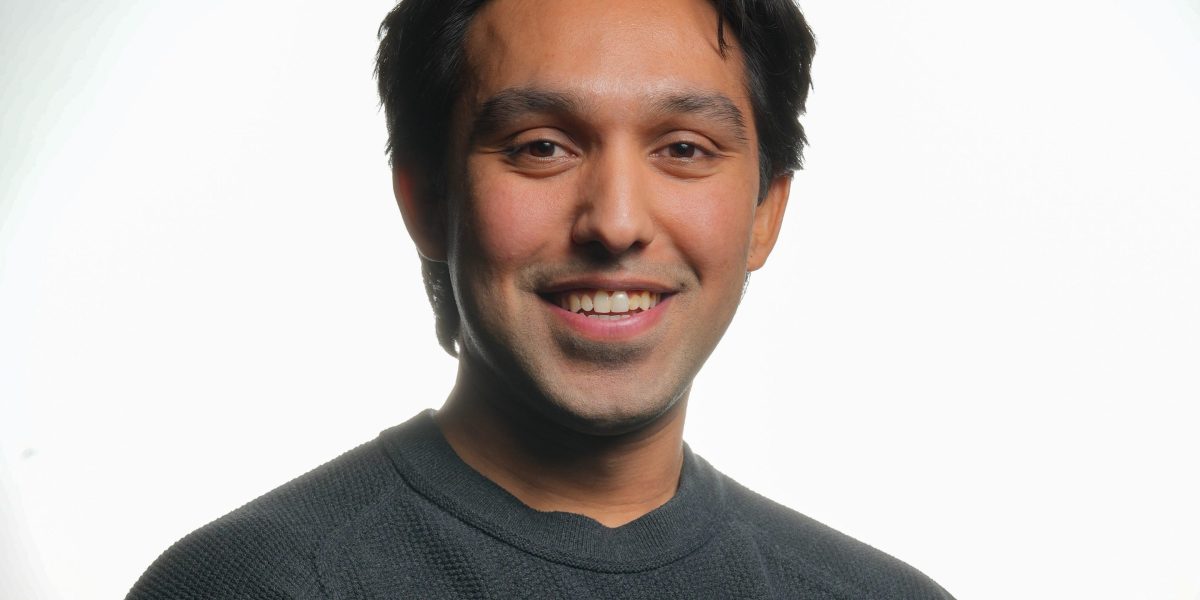
Akash Kapoor, Alterra’s founder and CEO, told Fortune that today’s models can learn to operate the software while still struggling with the clinical judgment behind each action. “The models don’t know when not to do something for a patient, and how to deal with uncertainty,” he said.
Stanford researchers found similar difficulties in PhysicianBench and HealthAdminBench, two benchmarks testing AI agents on clinical and administrative work. In each, the best-performing agent completed fewer than half of the tasks. Some agents described the correct action in a clinical note but never carried it out in the electronic health record. Others lost information as they moved between software systems.
Alterra turns clinicians’ assessments into scoring criteria and rewards used in reinforcement learning, which encourages models to repeat stronger decisions and avoid behaviors experts have flagged as unsafe. The company also builds environments for tasks involving medical imaging, clinical trials and telehealth.
Vig Chandramouli, the Oak HC/FT partner who led the investment, said Oak saw a pattern across the healthcare AI companies it has backed—adapting models for medical work took more than data. They also needed realistic environments and clinical judgment. AI labs are going through a similar shift, he said: “All of the money that went into ‘I need data’ is now evolving into ‘I need to understand how to successfully do work.’”
He sees an opportunity in building realistic simulations of the software clinicians and administrators use, such as electronic health records, insurer portals and billing systems, where AI models can practice real work. Frontier labs have yet to build deeply into those environments, he said. Creating realistic tasks within them requires people who understand both clinical work and model behavior.
“You can’t build this stuff without clinicians,” Chandramouli said. “And more specifically, clinicians who actually understand how AI works.”
Kapoor fits that profile. He studied machine learning before turning to medicine, pursued healthcare-focused machine learning research at the National Institutes of Health and completed three years at Columbia Medical School. Chandramouli said that “clinical backbone is essential” to making AI perform better in healthcare.
From healthcare applications to model training
Kapoor started the company in 2025 while attending Columbia Medical School. Initially called ChartR, it worked with healthcare providers to study how frontier models behaved in clinical settings.
The models often appeared capable at first, Kapoor said. Their weaknesses became clearer when they had to follow a patient over time, consider large amounts of information or make a series of decisions. They also struggled to recognize when they lacked enough information to act safely. Those observations pushed the company toward working directly with model developers. Kapoor left medical school in his final year to work on Alterra full time.
Kapoor’s interest in healthcare safety began with his own experience as a patient. As a junior at UCLA, he said, he discovered a two-year-old X-ray report in his patient portal warning of a potentially cancerous tumor in his leg and recommending an immediate oncology referral. No one had told him about it. He was diagnosed with osteosarcoma, a rare bone cancer, and underwent surgery.
His work at Alterra now focuses on the judgments AI models struggle to make when patients do not fit textbook descriptions. Kapoor expects that work to require repeated testing and training as models gain capabilities and medical knowledge changes.
“It has a lot of knowledge,” he said. “It lacks a lot of judgment.”
Alterra says it works with several frontier labs, hospitals, medical societies and applied AI companies. According to Kapoor, frontier AI labs are its fastest-growing customer group, and the company earns revenue from training environments and post-training services.
Disclaimer : This story is auto aggregated by a computer programme and has not been created or edited by DOWNTHENEWS. Publisher: fortune.com