The movement toward collective bargaining with major college athletes grew a bit louder this week.
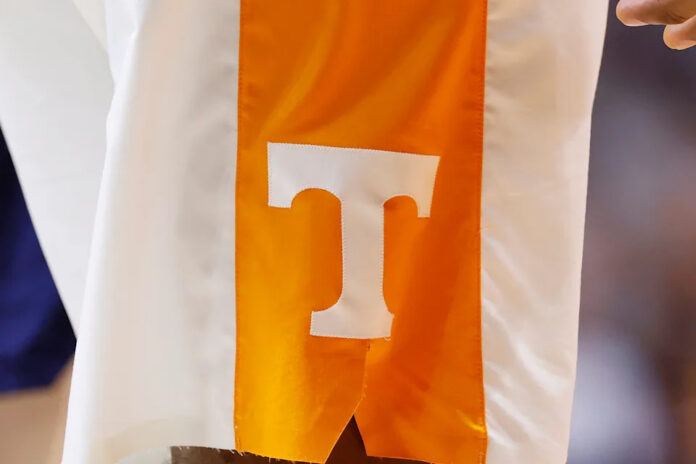
The University of Tennessee, in conjunction with the college sports players association Athletes.org, negotiated a proposed collective bargaining term sheet with its men’s basketball team — a move intended to pave the way for the concept in the future.
Advertisement
One of the strongest supporters nationally for collective bargaining, UT athletic director Danny White fully supported and participated in the exercise and he hopes it provides an avenue for discussion on “more substantive solutions that leads to binding contracts and a CBA,” he told Yahoo Sports this week.
The school released the components of an agreement that it negotiated with three elected player representatives from the basketball team as well as leadership from Athletes.org (AO). The term sheet is meant to provide college executives with a prototype that can be extrapolated to other schools and sports in what White hopes is a future national bargaining deal with major college players — his solution to the unregulated state of the industry.
“We are going to be at a CBA at some point. My position all along is the faster we can sprint to that the better college sports will be,” White said. “Giving student-athletes a voice doesn’t have to be something we are afraid of. They want a lot of the same things we want.”
The basketball team elected the three representatives — graduate student Tyler Lundblade, junior Campbell Duncan and freshman DeWayne Brown II — to negotiate for the entire roster. Over a series of meetings with AO leaders, the players discussed and debated the various categories of the agreement, eventually arriving at outcomes that AO leadership brought to school administrators. In this theoretical exercise, the two sides held “multiple rounds” of negotiations to arrive at the final term sheet, not unlike a collective bargaining deal may be struck.
Advertisement
“This shows that it can be done. This can happen,” said Brandon Copeland, the executive director of Athletes.org who, along with AO founder Jim Cavale, approached White about holding meetings with both the men’s basketball and football teams to spark the exercise.
The released term sheet touches on such concepts as contractual compensation, a salary cap, performance bonus pools, rookie/freshmen wage scale, guaranteed medical and healthcare coverage, the transfer portal length and timing, an enforcement system and agent policies.
The agreement is intended to eventually operate under a unique employment model that White believes avoids problematic issues often cited by critics of collective bargaining, most notably state laws against labor and unionization at public universities. In White’s model — described in detail in a Yahoo Sports story in June 2025 — major college athletes would be employed by a for-profit national agency rather than universities, the state or the conferences in which they play.
Will Tennessee’s collective bargaining exercise lead more schools to consider a new approach to player compensation? (Johnnie Izquierdo/Getty Images)
(Johnnie Izquierdo via Getty Images)
Brown, one of the Tennessee player representatives, said he hopes the exercise serves as a “stepping stone for more college athletics to replicate our process with their own schools.” Duncan, another Tennessee player representative, says a CBA would “solidify” athletes’ seat at the bargaining table to ensure “our voices are heard as decisions are made about our livelihoods.”
Advertisement
Tuesday’s announcement comes amid what administrators describe as a “chaotic” environment in the industry, where court rulings and state laws have crippled NCAA rules and created a landscape of free player movement, mostly uncapped compensation and even uncertain eligibility standards — which many contend is the fault of college leaders failing to adapt quickly enough.
For some, the solution lies on Capitol Hill, where college leaders have spent years and millions of dollars lobbying lawmakers to pass a congressional bill, the Protect College Sports Act. The legislation attempts to bring order to the unruly environment by limiting athlete movement, establishing eligibility standards and granting the NCAA and College Sports Commission an antitrust exemption to regulate athlete compensation in a way that many believe is unfair.
However, the Act, though overwhelmingly passed by the Senate in striking bipartisan fashion, faces a steep climb in the House of Representatives, which only has five working weeks before a new Congress — and likely a new, more Democrat-friendly bill — arrives in January. The Democrats won back control of both the Senate and House in last week’s mid-term elections.
Many believe that any Democrat-led legislation will lean more toward a collective bargaining and employment model for major college football and men’s basketball players — the athletes that drive billions in ticket sales and television contracts each year.
Advertisement
The predicted congressional failure now has conferences returning to what many describe as “Plan B,” where leagues create and enforce their own rules related to player movement, eligibility and compensation. The Big Ten passed a league cap rule last month with escalating financial penalties for cap violators and, as previously reported by Yahoo Sports, the SEC is exploring a similar model. In theory, leagues believe they avoid legal challenges by regulating themselves as opposed to the NCAA standards that fell victim to the courts.
However, attorneys believe such conference governance may still violate antitrust law as well as the House settlement — a federal injunction that the NCAA and conferences entered into to begin sharing revenue with athletes.
Copeland believes that conferences’ league-wide compensation policies “looks like a lot of people colluding” in an effort to “limit the compensation and restrict control of college athletes.” He expects the exercise at Tennessee to continue what’s been a wave of movement from many major conference school coaches and administrators who are warming to the idea of employment and collective bargaining as a solution to the quagmire.
“The CBA is the only way,” he said. “You can search for band-aid solutions, but the only proven way that is equitable and sustainable and gets rules back is through a collective bargaining agreement. We hope that we proved that it can happen. More people on the other side of the table need to come to the table, or be forced to come to the table.”
Advertisement
White also senses growing support for bargaining as school officials become desperate for regulation. The current compensation system — stemming from the House settlement, which many in the industry now deem as a failure — is “the most inefficient way possible in compensating players.”
There are public and private signs that bargaining is gaining traction. This summer, the Stanford football team established the first-ever chapter of the College Football Players Association in a move intended to create a foundation for eventual unionization and collective bargaining. Also earlier this year, the Oregon State women’s basketball team, while partnering with the United College Athletes Association, filed a union representation petition with the Oregon Employment Relations Board.
Advertisement
In May, SEC presidents and athletic directors viewed a collective bargaining presentation during their spring meetings in Florida, and though it was rejected, the mere presentation alone is a stark signal of frustration in the current system.
While bargaining “feels like a long-term” process, White said college executives should start deeply exploring the concept now to avoid a years-long labyrinth of concepts, such as the House settlement and congressional lobbying, that only end in disappointment.
“The overarching thing from our athletes is they want a CBA. We do have a willing party,” White said.
In the Tennessee exercise, the parties bargained over several primary concepts: (1) a universal athletic services agreement where players are paid for services instead of the current patchwork of revenue-share and school-affiliated NIL contracts; (2) a salary cap of around $22 million for the men’s basketball team and a spending floor for athletic departments, plus guaranteed minimum compensation for every roster spot and a freshman pay scale; (3) a postseason revenue pool for athletes that is separate from the cap, plus retention bonuses for veteran players; (4) guaranteed medical and healthcare coverage; (5) a mutually agreed-upon 15-day portal beginning after a sport’s national championship; (6) a jointly designed anti-circumvention, enforcement and arbitration system; and (7) agent certification and transparency structure with a 5% maximum fee.
“If we don’t start working on a CBA now, it is going to take a really long time,” White said. “We should be making an effort on how to expedite this.”
Disclaimer : This story is auto aggregated by a computer programme and has not been created or edited by DOWNTHENEWS. Publisher: Sports.yahoo.com