Roma may have sailed smoothly into the international break with a comfortable 3-0 win over Sassuolo, but the memories of the Manchester United debacle in the Champions League haven’t completely been banished yet.
And so they shouldn’t. Roma have some lessons to learn from what went wrong at Old Trafford, especially when some recurring themes are starting to emerge that could undo their largely positive work so far this season. The current break is an ideal time to reflect on them.
Advertisement
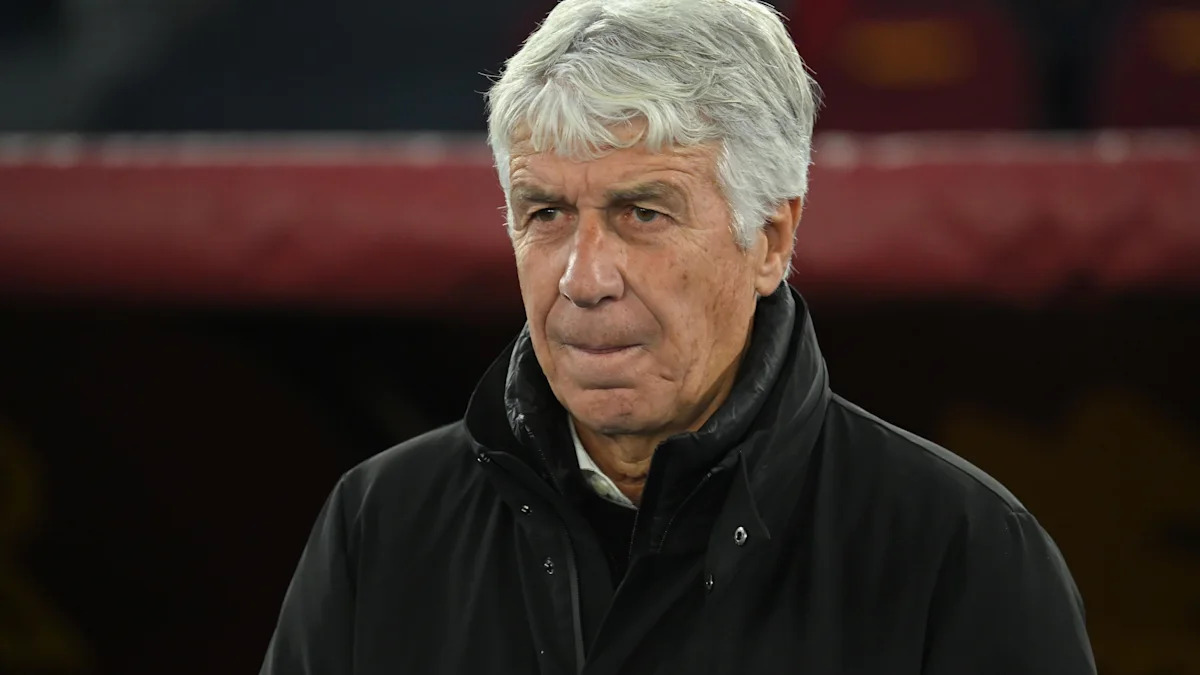
If Gian Piero Gasperini’s side are to sustain their strong start, then they’re going to have to start managing leads better when the stakes are high. And of paramount importance to that will be Gasperini’s decision-making when it comes to substitutions.
Look, there’s only nit-picking to do when it comes to assessing Gasperini’s work with Roma so far. Last season wasn’t the easiest on the eye, at least in the BM (before Malen) era, but getting Roma back into the Champions League was a superb accomplishment. Having Roma unbeaten in Serie A 11 games in is another. Keep it up and we may have no choice but to bow down to his brilliance.
But the truth is that Gasperini isn’t beyond criticism yet. OK, perhaps critiquing would be more appropriate than criticism, but you get the picture.
And on that front, there’s no doubting that Gasperini is getting his pre-match preparation largely spot on at the moment. Roma’s steady stream of positive results in the league show how his tactics are working. Those tactics are even passing the eye test, with Roma looking more fluid and threatening than this time last year.
Advertisement
But what of Gasperini’s in-game management? That’s where some small issues remain.
The Cost of Changing the Backline: Three Collapses, One Recurring Problem
Some of Gasperini’s substitutions in recent weeks have been… questionable, to say the least. For example, swapping out two-thirds of his backline against United was asking for trouble, even if it was the one starter who stayed on at centre-back, Leonardo Balerdi, who was the guiltiest party in allowing the English side a route back into the game.
It wasn’t the first time the boss has switched out two members of his starting back three only to see Roma capitulate, either. It happened against Real Madrid as well, with the second of those defensive changes coming just a couple of minutes before José Mourinho’s side started their comeback with the goal that reduced their deficit to one.
Advertisement
See also the draw with Inter back in September – their biggest throwaway in Serie A so far this season – when Roma actually finished the game with none of their starting back three still on the pitch. Inter’s equaliser came in between the second and third centre-back switches by Roma.
If there’s an area of the pitch you don’t mess with, unless out of necessity, when trying to protect a lead, it’s the rear-guard. That’s where maximum concentration is required and it helps if the players trying to keep the opposition out are warmed up into the flow of the game already. More than once, Roma have been left in a situation where they haven’t, and it’s backfired.
Granted, you can never be fully sure if a sub is being made because of fatigue, an unseen knock or purely tactical reasons. On the surface, what appears to be a like-for-like change might be an enforced one. But in an era of five subs, that’s rarely the case. If Gasperini has been overdoing the defensive changes by choice, it hasn’t always had the desired effect.
But does the data back up any hunches that Gasperini is misjudging some of his changes?
Advertisement
Roma’s record after Gasperini has used all five of his substitutions in games this season paints an interesting picture – but not quite the one you might expect. Roma have scored eight goals (one each against Fiorentina, Torino, Napoli and Udinese; two against Atalanta and Cagliari) in the allotted time, while only conceding five.
But those five goals against were spread across the two Champions League collapses against Real Madrid (three) and Manchester United (two). When you separate it between the two competitions and realise that Roma are 8-0 up on aggregate after their fifth sub in Serie A games but 5-0 down in Champions League games, it points to a potential lack of depth at the appropriate quality for top-level European football. If not, it could be a miscalculation by the coach of what changes to make and when.
Adjusting the parameters to Roma’s record after the first sub – which sometimes isn’t by choice if there’s been an injury, like when Manu Koné had to go off in the first half against Madrid – there have been 18 goals for and 11 against. It’s still a net positive, as you’d expect for a team competing at the top end of the table. In the league, it’s a wider margin with 15 for and four against. Maybe things aren’t as bad as they look, but there’s a lot of factors at play here.
While on the topic, another aspect that should not go unnoticed is Gasp’s occasional habit of leaving a sub waiting on the sidelines for a few minutes – even if the ball goes out of play – before changing his mind and sending someone else on instead. There were a few instances like that last season. Did he see something in the intervening action that made him change his mind over what was needed for the rest of the game? Was he never that convinced by his original plan, or a particular player? Of course coaches can change their mind – adaptability is absolutely essential, in fact – but it has been a peculiar theme during Gasp’s tenure.
Advertisement
Maybe he’s just spoiled for choice. Arguably, Roma have better depth right now than they have for a while – in some positions, at least. There are six centre-backs competing for three places. There are four genuine options to be the right wing-back, although one of them usually has to cover on the left. Sure, Roma have neglected positions like the left wing, but there are others with enough bodies to pick from.
Maybe that’s why Gasp has been so inclined to chop and change his back three mid-game, come to think of it. All six players there will want a reasonable share of minutes, and when you see Balerdi and Daniele Ghilardi doing some positive stuff, it boosts their case for gametime. But they can’t all play at once. There could be times when more than three should, though; instead of swapping defender for defender against Madrid or United, Roma could have benefitted from sticking an extra defensive body on to help see things out.
A Tale of Two Benches: Roma’s Attack Benefits While Its Defense Pays the Price
At the other end of the pitch, though, things are looking pretty good in terms of impact from the bench. Roma already have seven goals by substitutes this season: Niccolò Pisilli against Fiorentina, Rodrigo Mora against Lecce, Matías Soulé against Atalanta, Balerdi twice against Napoli, plus Mora again as well as Donyell Malen against Cagliari. In contrast, Roma only had one goal by a substitute this time last year (Artem Dovbyk’s goal against Parma in October 2025). They are already halfway to matching their final tally from last season of goals from the bench, without even being a third of their way into the campaign.
Advertisement
It helps that Roma have often had bigger leads heading into the final stretches of games this season than they did last season, when matches were often close. Those bigger leads offer Gasp more freedom to give minutes to some of his attacking alternatives, who can go and play without pressure and get themselves on the scoresheet.
However, even some of Gasp’s decisions when Roma are far enough in front have raised eyebrows. For example, against Slovan Bratislava recently, when 4-0 up, he sent Gianluca Mancini on in midfield as his last change. That’s the kind of change he should have been considering in tighter games, but when it’s as comfortable as that, it may have been a missed opportunity to give some minutes to a youngster. Alessandro Di Nunzio, a natural midfielder who’d made his debut late on against Genoa a few days earlier, was available as a sub that evening.
In the bigger picture, having to manage leads is a nice problem to have. Roma weren’t always in this kind of position last season. But if they want to take the next step in the bigger games – and there has been some progress on that front, but not quite enough to suggest Roma have banished demons of the past few seasons – then Gasp will need to refine his in-game management.
The January transfer window should help if it allows Roma to fill the remaining gaps in their squad. And as we’ve seen, the attacking changes have already been pretty effective. Throw in another winger and it could get even better. But defensively, the decision making needs to sharpen up.
That’s as much on the players as it is Gasp, of course, but everyone needs to be on their A-game on and off the pitch if Roma are to fulfil their potential this season.
Disclaimer : This story is auto aggregated by a computer programme and has not been created or edited by DOWNTHENEWS. Publisher: Sports.yahoo.com