
Radiologist Dr John de Campo finds himself staring at useless scans of knees – CT, ultrasound and X-ray – brimming with red-herring findings patients won’t be able to unsee.
“They’ll get a shocking list of things that are wrong with their knee, when these things probably have nothing to do with how much pain they’re in or how far they can walk,” de Campo said. “It’s gotten out of hand … we’re not helping here.”
There has been an explosion in the number of Australians with knee osteoarthritis getting unnecessary imaging, leading to avoidable and expensive knee replacement surgeries.
In reality, imaging is not needed to diagnose knee osteoarthritis, and the best treatment is exercise and weight management for the vast majority of people, according to clinical guidelines set by the Australian Commission on Safety and Quality in Health Care aimed at reversing the trend.
“Scans are unhelpful – it’s expensive, it’s time-consuming, and it’s not going to change their treatment,” de Campo said.
About 1.9 million Australians live with osteoarthritis of the knee, which can cause inflammation in the joints that can cause pain, swelling and stiffness, and disability.
Dr Phoebe Holdenson Kimura, GP and the commission’s medical adviser, said: “This is a real and very common problem, and it really worries me that people are not accessing first-line treatment that is backed by strong evidence.”
Advice from the clinical standard for knee osteoarthritis
Limit knee imaging: Diagnosis should be based on history and examination. Imaging should not be routinely used, but if warranted, X-ray is the first preference.
Focus on exercise and weight: People can often reduce pain and improve mobility by focusing on physical activity, exercise, managing their weight, and pain relief.
Surgery is the last resort: Knee replacement should be reserved for those with severe pain and/or functional impairment.
Myth busting: Use language that is positive and avoid unhelpful beliefs and unnecessary concerns.
Prescriptions not recommended: Avoid opioids, platelet-rich plasma (PRP), hyaluronan, stem cell treatments, medicinal cannabis, gabapentin or pregabalin.
It was a trampoline mishap that sent Louise Bainbridge limping to her GP, who ordered an X-ray on her right knee.
“When the results came back, I was told: ‘It’s bad news. You’ve got knee osteoarthritis, and it’s serious … You need to see a surgeon’,” Bainbridge said.
“They told me: ‘You’re really going to have to change your lifestyle and slow down’.”
Bainbridge was in shock, in pain and worried.
The early childhood educator was in her late 30s and led an active life, with four young children. Going to the gym was her release.
But a friend – an elite athlete and coach – helped change her trajectory and shift her mindset.
“He said, ‘We’ve all got something that shows up on those scans … You can sit on the couch and drink milkshakes every day, or you can come down and do weight training with us.’ ”
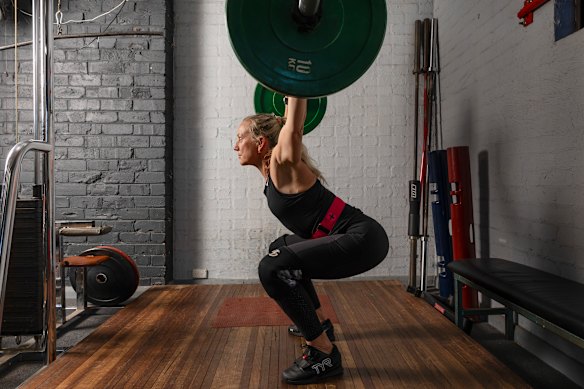
She did the latter. As the pain from her trampoline injury subsided, she swapped high-impact exercise for cycling and heavy-weight training, slowly building up to Olympic-style weightlifting.
“It worked wonders for me,” Bainbridge, now 52, said. “I have zero problems with my knees.”
Medicare-subsidised knee CT scans have increased by 83 per cent and knee ultrasounds by 26 per cent in Australians aged 45 and over in just five years, according to the commission’s Atlas Focus Report published on Thursday.
Subsidised X-rays rose by 10 per cent and MRIs 6 per cent for knee investigations between 2019-20 and 2023-24. It is likely private patients willing to pay out-of-pocket costs use more of these services.
Knee replacement surgeries rose by 17 per cent between 2012-13 and 2023-24.
Hunter said clinicians should be confident in diagnosing osteoarthritis based on symptoms and clinical examination, rather than ordering unnecessary imaging that can cause anxiety.
“[Patients] may see structural changes [on their scans] that they think can only be fixed by surgery, and they go off and have surgery … often with poorer outcomes,” he said.
More than 53,500 knee replacements are performed to treat knee osteoarthritis every year in Australia. By 2030, this is expected to increase by 276 per cent.
Holdenson Kimura said only about one in 10 people with knee osteoarthritis needed a knee replacement, and her patients were generally relieved when she explained the alternatives.
Knee osteoarthritis myths:
- It just gets worse and worse and eventually you will need a knee replacement
- Knee replacement surgery is the only cure for arthritis
- Exercise wears out your joint
- There are only so many steps a joint can endure in its lifetime
“Knee replacements have their place and are life-changing for people who have severe and long-standing pain and functional impairment, but we need to be reserving them only for these patients,” she said.
Bainbridge recently had an MRI scan for suspected rheumatoid arthritis. There was no rheumatoid arthritis, but she was again told she had severe knee osteoarthritis and was recommended surgery.
“I told them I don’t need surgery for my knee,” Bainbridge said. “I’m not in any pain or discomfort and can squat 130 [kilograms], so I’m fine.”
She takes precautions, wearing knee sleeves when she lifts, and putting her feet up at the end of a busy day to reduce the chance of swelling.
“My goal is to maintain an active and healthy lifestyle so I can do things I enjoy,” she said. “I also want to set a positive example for my children.”
Start the day with a summary of the day’s most important and interesting stories, analysis and insights. Sign up for our Morning Edition newsletter.
From our partners
Disclaimer : This story is auto aggregated by a computer programme and has not been created or edited by DOWNTHENEWS. Publisher: www.smh.com.au