From Dodger Stadium to Intuit Dome and now SoFi Stadium, founder Adam Derry is building a collectibles business around the places where sports history is made, connecting a growing marketplace with the culture, commerce and experiences that give its objects meaning.
At Dodger Stadium, collectors stepped away from rows of trading cards and memorabilia to throw pitches inside the same bullpen used by Major League players.
Advertisement
The Dodgers were approaching another postseason following back-to-back World Series championships, and baseball was still very much in season. Nearby, pitcher Will Klein practiced during his rehabilitation as children and longtime fans took turns throwing pitches in a part of the ballpark ordinarily reserved for professional athletes.
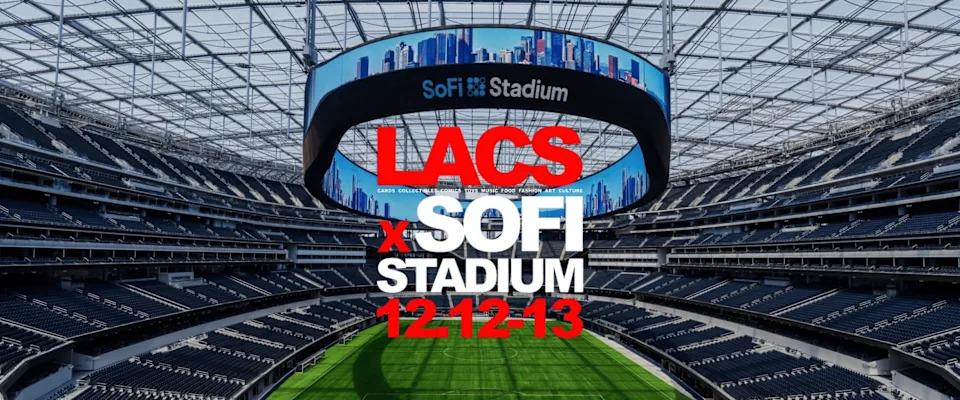
For LA Card Show founder Adam Derry, that proximity between the game and the collectibles marketplace has become the foundation of a growing business. After bringing collectors onto the Clippers’ court at Intuit Dome and into the Dodgers’ bullpen, his next stop is SoFi Stadium, where more than 750 vendor tables are scheduled for December 12 and 13, ahead of Super Bowl LXI.
The two-day event will include an on-field mini-camp for VIP attendees, extending a model built around access to the sporting environments where athletes compete and history is made.
Advertisement
At Dodger Stadium in September, more than 650 vendor tables filled the ballpark with sports cards, Pokémon, memorabilia and other collectibles. Beckett offered grading services, music filled the venue, and the Dodgers’ road game against the Miami Marlins played on DodgerVision. Fans explored the dugouts and walked the infield, trading their familiar view from the stands for the perspective of the players.
“Am I supposed to be here?” Derry recalled thinking during an interview at the event.
For Derry, the connection between the collectibles marketplace and the places where sporting history unfolds is fundamental to the experience.
“Sports cards are a relic. They’re an echo of moments that matter,” he said.
For an industry long associated with hotel ballrooms and convention floors, LA Card Show represents a different approach to the business of collecting. Derry is bringing the marketplace into professional sporting environments, making their history and cultural significance part of the experience itself.
Advertisement
The Business Behind the Game
Before establishing LA Card Show, Derry built his career in fashion, creative direction and brand development. Through his Los Angeles agency, ADBD, he worked on projects connecting consumer products with the communities and cultural identities surrounding them.
“We weren’t just creating a show,” Derry explained. “We were creating a platform with a branded purpose.”
That philosophy has shaped an expanding operation built around professional sporting venues, where the surroundings contribute something beyond exhibition capacity.

LA Card Show’s April 2025 edition at Intuit Dome advertised more than 250 vendors. That September, approximately 350 vendors participated at Dodger Stadium, followed by more than 500 at Intuit Dome in March 2026.
Advertisement
The company expanded again at the Los Angeles Convention Center in June, where more than 700 vendor tables shared the event with fashion brands, entertainment and sports activations. By September, LA Card Show returned to Dodger Stadium with nearly 700 participating vendors, according to DodgerBlue.
SoFi represents its next major expansion, taking the marketplace into professional football with more than 750 advertised vendor tables across two days.
The progression reflects more than an increase in exhibitors. Derry has paired the marketplace’s growth with increasingly ambitious access to the venues themselves.
“Dodger Stadium was top of our list, a place that we wanted to go and make sure that we built a relationship with,” he said.
At Intuit Dome, attendees could walk through the Clippers’ player tunnel and shoot on the NBA court beneath the Halo Board. At Dodger Stadium, the bullpen, dugouts and infield became part of the experience. The activities took place during the respective sports seasons, bringing collectors into facilities still actively associated with professional competition.
For Derry, access has become part of the commercial offering, alongside premium admission, exclusive merchandise and venue-specific programming.
“They trust us. They trust our community. They trust our structure that we’ve set up,” he said of the Dodgers.
The partnership illustrates a different approach to event production. Conventional exhibition venues accommodate the marketplace. Professional stadiums can contribute the sporting history, physical experiences and cultural identity surrounding the objects being traded.
“Even watching the games has changed,” Derry said, describing how entering the dugouts and bullpen affected his relationship with the ballpark.
The experience connects personal memories with the sporting history that collectors preserve through cards and memorabilia.
Advertisement
Where Performance Becomes Value, and Culture Becomes Commerce
The sports-card market has always moved in conversation with the games themselves. A breakout season can ignite demand for a rookie card. Championships and career milestones can renew interest in memorabilia tied to a player or franchise. Scarcity, condition and collector sentiment shape prices, but sporting performance remains a powerful source of attention.

That relationship now operates within an increasingly sophisticated commercial infrastructure. Auction houses, grading companies, authentication services, pricing platforms and independent dealers support a marketplace where objects are tracked, evaluated and exchanged with growing financial precision.
Advertisement
During the interview, Mantel contributor and SOMOS Index founder Sam Goodman pointed to platforms such as Card Ladder and the increasing availability of historical sales data.
“I think it’s become a bit of the backbone, to be honest,” Derry said of the technology supporting the market.
Comparable sales and historical pricing have introduced the language of financial markets into collecting, changing how buyers and sellers evaluate the cards they own.
“They’re basically trading like stocks,” Derry said.
“Alternative assets,” Goodman responded.
“100%,” Derry agreed.
Yet for all its financial sophistication, the culture surrounding collecting has never been confined to cardboard.
Sports fandom extends through jerseys, sneakers, music, food, fashion and the merchandise people wear, display and preserve. These interests share audiences and cultural references, often shaping what people consider worth owning.
Advertisement
At Dodger Stadium, hip-hop artist Westside Gunn joined the September event for a meet-and-greet presented by R&G Records and Producer Plug, with a performance also reported in post-event coverage. Producer Large Professor was among the musical talent Derry highlighted, while memorabilia partner Legends’ Attic brought former Dodgers All-Star Shawn Green and seven-time NBA champion Robert Horry for autograph appearances.
Westside Gunn’s presence was especially fitting. Beyond Griselda Records, the Buffalo rapper has built ventures spanning fashion, contemporary art and professional wrestling through Fourth Rope, reflecting a culture where creative identity, sports fandom and collectible merchandise frequently intersect.
That same sensibility appeared at LA Card Show’s June edition at the Los Angeles Convention Center, where brands including HYPLAND, Holiday, Vandy The Pink and Research Vintage participated alongside collectibles vendors and professional sports activations.
Advertisement
For Derry, these connections reflect the way people already participate in culture, rather than separate interests being assembled for an event.
“I think these things are intrinsically already together,” he said.
The crossover extends to the objects themselves.
Derry recalled artist David Choe visiting an earlier show and designer Dr. Romanelli attending the September event. Contemporary artists have also explored the trading-card format as a smaller creative canvas, bringing artwork into a market built around physical ownership, authentication and resale.
Goodman also pointed to the different ways artwork circulates through traditional galleries and the trading-card market.
“Instead of being hung up in a museum or in someone’s living room, they can change hands at a higher volume and speed,” Goodman observed.
The same curatorial logic extends to the dealers assembling display cases. Each selects inventory around athletes, historical moments, aesthetics and rarity, presenting a personal interpretation of what deserves attention.
“That’s what it takes until you can come here and see a whole bunch of curators at once,” Derry said.
For all the attention paid to comparable sales and financial performance, he remains interested in the relationship between an object and its owner.
“This is art. Full stop. You’re buying art. Do you love it? Does it connect with you?”
The value of a collectible is not exhausted by its latest transaction price. LA Card Show reflects a marketplace where cultural appreciation and commercial exchange operate together, bringing athletes, artists, musicians, creative brands and independent dealers into the same environment.
Advertisement
The Marketplace Behind the Experience
A Dodgers fan might attend for the bullpen. A Clippers supporter might arrive for a chance to shoot on the team’s court. Someone following an artist or designer may discover the collecting marketplace through an interest that began elsewhere.
For an industry whose specialized vocabulary can intimidate newcomers, those experiences provide familiar points of entry.
“There’s got to be bridges or no one can enter,” Derry said, describing the complexity of pricing, comparable sales and market terminology.
Beyond the spectacle is a substantial marketplace of independent businesses, many built by entrepreneurs balancing collecting with other careers.
“We’re creating these massive entrepreneurial moments,” Derry said.
He described vendors maintaining full-time employment while sourcing inventory, preparing for shows and developing collecting businesses during evenings and weekends.
Advertisement
The event brings those sellers into direct contact with buyers who can examine inventory, negotiate transactions and build relationships with specialists across different collecting categories. Stadium access and cultural programming create opportunities to reach audiences beyond established hobbyists.
The demand to participate extends beyond the available exhibition space. Derry reported approximately 4,200 prospective exhibitors on a waiting list for future events, reflecting interest from independent sellers seeking access to the company’s growing marketplace.

That demand indicates exhibitor interest rather than independently verified transaction volume or profitability. The commercial opportunity lies in connecting established collectors and independent dealers with audiences drawn by professional sports and cultural programming.
Advertisement
The range of participation remains broad. Experienced collectors pursue scarce inventory using increasingly sophisticated market information, while others acquire objects tied to childhood memories, favorite players or cultural interests.
Derry sees a parallel with the identity surrounding professional sports teams.
“I think you could argue that we’re literally doing the same thing,” he said when asked how LA Card Show fits into the broader fan experience.
Fans wear team jerseys as an expression of belonging. Derry wants the LA Card Show identity to carry a similar connection, supported by merchandise, recurring events and a community that extends beyond any single transaction.
SoFi Stadium and the Next Evolution of the Card Show
LA Card Show’s upcoming SoFi Stadium edition brings its largest announced marketplace into professional football during the NFL regular season, two months before the venue hosts Super Bowl LXI.
Advertisement
Scheduled for December 12 and 13, the event will feature more than 750 vendor tables spanning sports cards, memorabilia, trading card games, fashion, toys and other collectibles. Programming includes music, special appearances, grading services and limited-edition releases, alongside an exclusive VIP on-field mini-camp.
The setting carries significance beyond its scale.
In February 2022, the Rams defeated the Cincinnati Bengals at SoFi Stadium to win Super Bowl LVI on their home field. Five years later, the stadium will host another championship, bringing the NFL’s biggest game back to Inglewood.
Advertisement
LA Card Show’s December event arrives between those moments, placing collectors on a field that has already produced a championship and is preparing to host another.
The move also completes a progression across three professional sports. Baseball offers the bullpen and infield. Basketball opens the court and player tunnel. Football brings participants onto the playing surface itself.
Each venue contributes its own sporting identity, while the business remains anchored in independent commerce, cultural programming and access to experiences normally associated with professional athletes.
Derry intends to carry that model beyond Los Angeles.
“We’re trying to be away game versions of our show, but as LACS,” he explained.
His ambition reflects a background in brand development rather than conventional event promotion. LA Card Show is building an identity intended to travel through partnerships with sporting venues, regional collecting communities and creative collaborators.
Advertisement
He also envisions larger multiday festivals incorporating fashion, food, music and entertainment, developing an experience that reaches beyond any single collecting category without abandoning the dealers and collectors at its center.
For Derry, that ambition remains grounded in the motivations that brought collectors into the market long before pricing platforms and portfolio tracking became commonplace.
“It’s about the love of the game,” he said, describing how financial analysis and personal attachment can coexist within the same collecting culture.
Collectors can search for rare inventory, negotiate trades and meet dealers at shows throughout the year. Far fewer opportunities allow them to throw pitches inside the Dodgers’ bullpen, shoot on the Clippers’ court or step onto an NFL field preparing to host the Super Bowl.
A card show brings collectors closer to the objects they want to own. LA Card Show is bringing them closer to the places that made those objects worth collecting.
Disclaimer : This story is auto aggregated by a computer programme and has not been created or edited by DOWNTHENEWS. Publisher: Sports.yahoo.com