
A former deputy prime minister described the position as the most powerful editorial role in the country.
Its former occupants were courted for political office, invited to illustrious events and credited (or blamed) for influencing a cohort of voters on issues ranging from social norms to fashion and food, where politicians often struggled to connect.
But the editor’s position at The Australian Women’s Weekly is no longer. Its most recent denizen, Sophie Tedmanson, has departed the business. Instead of replacing her, its publisher, Are Media, announced it would create a new role of “editorial director” of The Australian Women’s Weekly and Women’s Weekly Food.
Former editors point to a slow fade, rather than a blackout, along the same gentle slide as that other ageing institution, David Jones, which was the magazine’s fashion partner for many years.
“These two fabulous icons of Australian life are facing difficult times,” said former editor and long-time royal correspondent Juliet Rieden.
“It’s a sign of the times perhaps, but probably it’s time that we really look closely at them to make them suitable for contemporary Australia because I think they both still have a place.”
An Are Media Spokesperson said the magazine continued to play an important role in the lives of Australian women and reached 1.62 million readers across print and digital audiences. It recently launched the digital membership platform My Weekly.
From its radical origins in the 1930s, through its heyday in the 1950s and 60s, when 42 per cent of Australian women regularly read the magazine, and its continued dominance in the 1970s and 80s, The Australian Women’s Weekly has been a cultural touchstone for generations.
But those generations are getting older, and they are not being replaced by young readers. In the minds of some Weekly champions, the publisher has failed to adapt to the digital landscape.
Its ownership bounced from the Nine-owned Australian Consolidated Press to Bauer Media and then Are Media, which reduced the editor’s responsibilities. When the magazine went online, it cast aside its history and rebranded as “Now to Love”.
Ita Buttrose, who edited the magazine from 1975 to 1981, said the hobbling of the editor’s autonomy was crucial to the magazine’s failure to thrive.
“The Weekly hasn’t been itself for a long time,” Buttrose said.
“It’s being run by a committee, that’s my impression, so nobody makes a decision. The editor is God, and you have to let her or him run the magazine the way they like. It’s a skill.”
Helen McCabe, who edited the magazine from 2009 to 2016, said she first grasped the significance of the role when former Deputy Prime Minister Kim Beazley told her it was the most important editorial role in the country.
“It was a bit of a surprise hearing that … but I could see what he was saying,” McCabe said.
“We really did represent a very large number of women who were often hard to reach demographically for a political leader. If you wanted to have a conversation with women, it was the holy grail to access that group.”
The Weekly was where the former Australian cricket captain Glenn McGrath introduced the country to his new wife, where comedian Magda Szubanski gave her first in-depth interview after coming out as gay on live television and where Crown Princess Mary of Denmark chose to pose for global exclusive photographs wearing gowns by Australian designers.
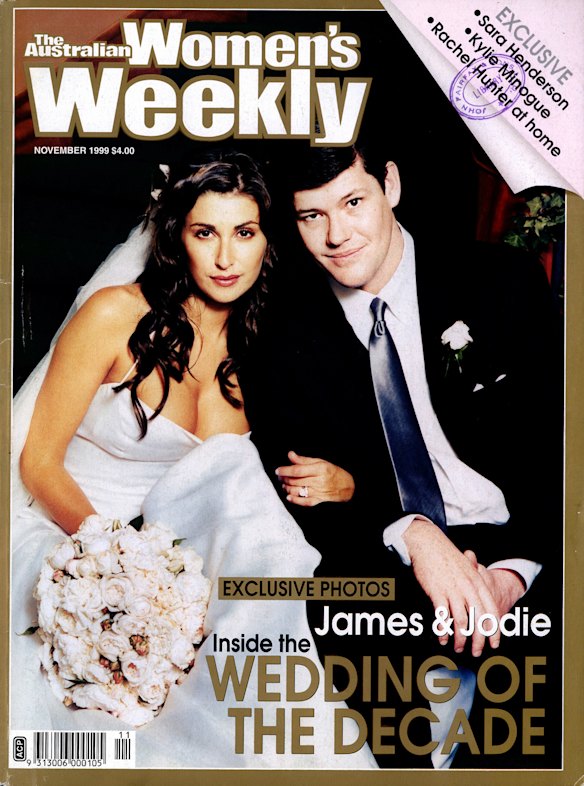
Each edition lived or died by its cover.
Former editor-in-chief Kim Doherty said it told the stories of Australian women, for Australian women, when they weren’t being told anywhere else.
“It was a touchstone right across the country,” said Doherty, who now works for the Herald.
“It had a place in people’s hearts, it had a place on people’s coffee tables, it had recipes your mum knew and everybody’s favourite birthday cake was made by The Australian Women’s Weekly team. They really did triple-check the recipes.”
Richard Walsh, who oversaw the magazine as publisher of Australian Consolidated Press in the 1980s, said it was no coincidence that the position was axed in the same week that David Jones met its demise. In fact, the name “magazine” comes from the French word for department store, “un magasin”.
“The department store has been eaten up by the specialists,” Walsh said. “If you want make-up, you go to a make-up store, not a department store, likewise with magazines.”
For McCabe, the writing was on the wall back in 2015 when she put actresses Helen Mirren and Judi Dench on the cover. It was a bold choice to grace the cover with women over the age of 60, but circulation figures showed the readers loved it.
“I got the sense of where my audience was going,” she said.
From our partners
Disclaimer : This story is auto aggregated by a computer programme and has not been created or edited by DOWNTHENEWS. Publisher: www.smh.com.au