
Tax plans for 2027 changed ahead of budget talks, Social Democrats call for stronger residence rights for working refugees, Allianz and Siemens post record profits and more news on Thursday, October 12th.
Thursday’s top story: Sugar tax postponed, electricity tax cut killed again
Members of the black-red federal coalition were set to begin budget deliberations for the coming year on Thursday.
But even ahead of the start of negotiations a last-minute compromise has brought two significant updates to the government’s plans for next year.
The sugar tax on heavily sweetened beverages is now not to come until the beginning of 2028 — six months later than had previously been planned.
Union parliamentary group leader Thorsten Frei (CDU) announced the postponing of the tax late Wednesday evening.
Additionally a planned new tax on plastic packaging has been rejected for the coming year.
Meanwhile a reduction in electricity taxes, which had been strongly supported by Chancellor Friedrich Merz, has once again been shelved for the time being.
The measure was previously promised by the governing coalition, and more recently was put back on the agenda as the CDU made efforts to rebuild trust following poor election results in eastern state votes and Berlin.
READ ALSO: Electricity and gas bills in Germany expected to rise in early 2027
SPD calls for secure residence rights for working refugees
Germany’s Social Democrats are calling for refugees who work, study or complete vocational training to receive a more secure right to remain in the country.
Under an SPD parliamentary group proposal, existing residence provisions for people with long-term tolerated status would be extended to recognised refugees holding temporary humanitarian permits. Several hundred thousand people, particularly Syrians and Ukrainians, could benefit.
READ ALSO: How many people benefited from Germany’s ‘Opportunity Residence’ permits?
Four groups would qualify. Employees paying social insurance and covering most of their living costs would receive priority, including those outside traditional skilled occupations. Apprentices and university students could qualify even while receiving state support, as could school pupils with realistic prospects of graduating and integrating.
Special circumstances would be considered where people cannot support themselves fully because they care for young children or relatives. But the SPD also says those who make no effort to integrate, break rules or commit crimes should leave Germany.
Study reveals widespread sexual harassment in German military
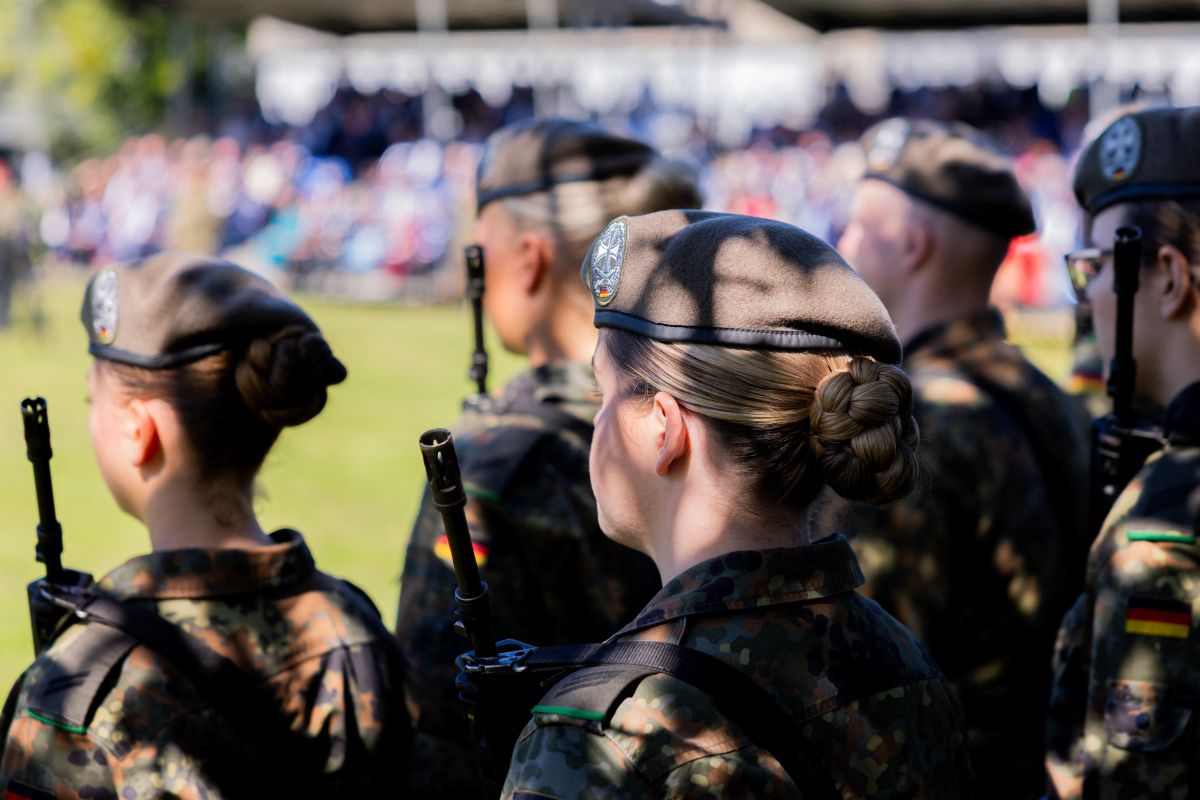
Nearly three-quarters of female soldiers in Germany’s armed forces have experienced verbal sexual harassment during their service, according to a major new study.
The survey found that 72 percent of women and 31 percent of men had experienced such behaviour at least once.
Female soldiers from the Bundeswehr’s Guard Battalion take part in the ceremonial handover of command at the North Rhine-Westphalia Regional Command in September. Photo: picture alliance/dpa | Rolf Vennenbernd
Younger women in lower ranks and non-heterosexual men were particularly affected. Many incidents went unreported because victims feared causing a stir or lacked trust in military structures and reporting systems.
Defence Minister Boris Pistorius announced a “zero tolerance” approach and a 34-point action plan. Measures include an independent counselling centre outside the chain of command, stronger psychosocial support and recurring prevention training.
Specialist disciplinary lawyers and a trained investigative unit are also planned. However, Green MP Sara Nanni said the measures did not go far enough and called for an external body with investigative and disciplinary powers.
READ ALSO: Germany’s voluntary military service fails to attract new recruits
Germany plans strategic gas reserve for energy emergencies
Germany’s government has approved a draft law establishing a strategic gas reserve to protect the country’s energy supply during emergencies.
The reserve would hold 24 terawatt-hours of gas – about 10 percent of national storage capacity – and replace mandatory storage targets introduced after Russia’s invasion of Ukraine. It would operate from 2027, subject to parliamentary approval.
The federal energy regulator could release the gas following sabotage, critical infrastructure failure or other exceptional events. The volume could compensate for the loss of Germany’s main import infrastructure for 30 days, all Norwegian pipeline supplies for 20 days or German LNG terminals for 40 days.
READ ALSO: Electricity and gas bills in Germany expected to rise in early 2027
Energy Minister Katherina Reiche said the scheme would protect against crises rather than high prices. Germany’s storage facilities are currently 59 percent full, below the EU average of nearly 75 percent and the national target of 70 percent by November 1st.
The government nevertheless considers supplies secure this winter, citing diversified sources including liquefied natural gas.
The reserve is expected to cost €247 million to €405 million annually over ten years. Funded through a consumer surcharge, it could increase household gas bills by around 0.3 to 0.5 percent.
German football team advisor looks for new football DNA
DFB advisor Marc Kosicke is pushing for a new mentality behind the German national team, promoting the influences of a diverse immigration society
“We have lost a bit of this ‘Made in Germany’ in Germany,” said Kosicke, speaking as an external consultant for the DFB to the “OMR Podcast”.
“But as a country of immigrants, we also have so many other things that have been added. And if you look at our national team with its different socio-cultural backgrounds, it’s a new Germany, so to speak.”
READ ALSO: Bundesliga – Everything you need to know about Germany’s new football season
Germany’s Allianz and Siemens post record profits
German insurance giant Allianz on Wednesday raised its 2026 earnings outlook after reporting a record core profit for the first nine months of the year.
In preliminary results, Allianz said it had booked a record core profit of 14.1 billion euros in the first nine months of 2026, up around eight percent from the previous year.
The company will release full results for the first nine months of the year and the third quarter on Thursday.
In other business success stories, German engineering giant Siemens posted record annual profit on Thursday and said it saw growth ahead as the artificial intelligence boom sweeps up European companies in its supply chain.
US tech giants such as Microsoft and Meta have together invested hundreds of billions of dollars in AI data centres, boosting the fortunes of companies like Siemens that make much of the electrical and cooling equipment needed to operate the sites.
READ ALSO:
With reporting by AFP and DPA.
Disclaimer : This story is auto aggregated by a computer programme and has not been created or edited by DOWNTHENEWS. Publisher: thelocal.de




