TEHRAN – “If the US launches another war against Iran, every military base involved in the aggression—from West Asia to Europe—will be a legitimate target for Iran’s lethal strikes. NO SAFE DISTANCE. NO SAFE HAVEN. NO IMMUNITY.”
With these three capitalized lines posted on X on Thursday, November 12, Mohsen Rezaei, Secretary of Iran’s Supreme National Security Council (SNSC), condensed weeks of Iranian signaling into a single doctrine. The message was not presented as rhetoric but as operational warning: any base from which American aircraft take off to bomb Iran will be treated as a belligerent, regardless of whether it sits in the Persian Gulf or in the heart of Europe.
In a separate interview with Beirut-based Al Mayadeen broadcast the same day, Rezaei clarified that Iran would not restrict retaliation to nearby American installations. European bases used for refuelling, transit, intelligence or launch would qualify. The significance, lies precisely in the geographic scope: Tehran is signalling that a renewed campaign would expose American power far beyond the immediate battlefield.
The warning did not emerge in a vacuum. It is the public, outward-facing formulation of an order issued 14 days earlier at the highest level of the Islamic Republic.
On October 31, Ayatollah Seyyed Mojtaba Khamenei, Leader of the Islamic Revolution and Commander-in-Chief of the Armed Forces, met Iran’s three top commanders — Armed Forces Chief of Staff and Khatam ol-Anbiya Central Headquarters Commander Maj. Gen. Ali Abdollahi, IRGC Commander Maj. Gen. Ahmad Vahidi, and Army Commander Maj. Gen. Amir Hatami. According to the leader’s official website, he described “intelligent combat readiness for a powerful confrontation with the enemies” as a requirement of “maximum deterrence” and decreed that every level and type of threat must be met with an “immediate and effective response, without geographical limitation.”
The statement added: “If the enemies once again launch military or terrorist attacks, it is the Armed Forces of the Islamic Republic and the Iranian nation who will determine the time and conditions of their end.” The target bank, Ayatollah Khamenei ordered, must be updated so that all kinds of “tangible and intangible” assets of the American-Zionist enemy fall within reach. The commanders, in turn, reported readiness along the Persian Gulf coast, the Strait of Hormuz, the Gulf of Oman and the northwestern and southeastern borders, alongside a “several-fold increase” in production of ammunition, reconnaissance, support and combat weapons.
That October 31 directive is now the doctrinal anchor for everything Tehran says about Europe. A Tehran Times analysis on the same day summarized the conclusion in the capital: when countries accompany aggressors by providing bases, airspace, fuel, intelligence or political cover, there is no reason they should remain immune. Under Iran’s reading of the inherent right of self-defense, any facility used to attack Iran is by definition a legitimate military target, and geography does not grant immunity.
What makes the claim potent is that Europe’s role is no longer a matter of Iranian allegation alone. It has been acknowledged by NATO itself.
NATO Secretary General Mark Rutte, visiting Washington in June in an attempt to ease transatlantic tensions, twice openly defended Europe’s contribution. In a Fox News interview cited by Al Jazeera, Rutte said that aside from “isolated cases,” ally after ally made bases available for what the U.S. calls Operation Epic Fury, the joint U.S.-Israeli war launched on February 28. “When you look at the numbers, 4-5,000 US planes [were] taking off from bases in Europe in the six weeks this war took place,” he said. He cited 500 U.S. sorties from bases in Italy and noted Romania had to cut commercial flights to host U.S. tankers. “Without NATO and without Europe as a platform for projecting U.S. power,” Rutte argued, the United States could not have carried out the operation. He added that European allies are now pre-positioning assets near the Strait of Hormuz to help with demining and freedom of navigation.
A detailed BBC Persian investigation published October 2 mapped that platform. Britain’s Fairford stands as the clearest case of a European base used for direct strikes on Iranian soil, with U.S. bombers flying from there since the start of the war. The IRGC in July explicitly named Fairford and warned that bases used to bomb Iran would be “legitimate targets.” Other British bases functioned mainly as transit and support hubs, while London insists its Cyprus bases, including Akrotiri, were not used for offensive operations against Iran.
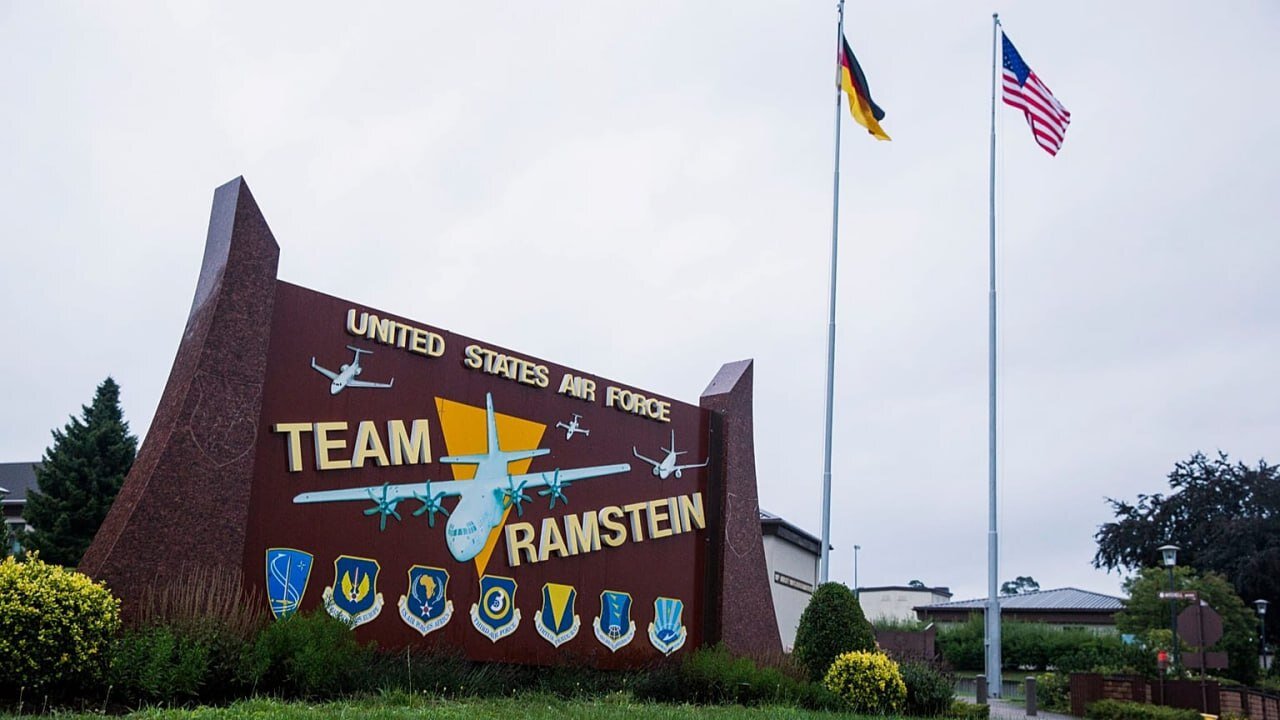
The rest of the network, according to the BBC, Al Jazeera and DW, was logistical but decisive. Germany’s Ramstein became a major hub for movement, refuellers and, according to Poland’s Centre for Eastern Studies, very likely a source of guided munitions. Portugal’s Lajes in the Azores saw a surge of U.S. traffic before the war and served as a transit point, though Lisbon said combat flights required separate authorization and confirmed it rejected some U.S. requests. Greece’s Souda, Italy’s Aviano and Sigonella — Rome hosts nearly 120 U.S. facilities — and France’s Istres and Avord hosted C-17 transports and KC-135 tankers. Romania in March approved U.S. tankers, surveillance gear and satellite communications; Bulgaria’s parliament on July 22 approved up to eight KC-135s and 250 U.S. personnel at Bezmer, stressing no direct attacks would originate from its soil. Turkey, despite hosting Incirlik, said the base was not used in attacks, and President Recep Tayyip Erdogan condemned the U.S.-Israeli strikes.
Not all of Europe complied, and those divisions provoked Washington’s fury. Spain under Prime Minister Pedro Sanchez took the sharpest line, refusing use of Moron and Rota for attacks on Iran and later closing airspace to U.S. aircraft involved in the war. Fifteen U.S. aircraft, mostly KC-135s, left Spain, at least seven moving to Ramstein. President Donald Trump called Spain “a horror show” and “terrible” and threatened to cut off trade. France authorized only a temporary presence of U.S. support aircraft on condition they would “in no way” participate in operations against Iran, limited to defense of regional partners, and in late March blocked an Israeli airspace transit for U.S.-linked weaponry. Italy under Giorgia Meloni authorized only “technical and logistical, non-kinetic activities” under its constitution and 1954 bilateral agreements.
Trump’s disappointment was public: “I was disappointed with Italy. I was disappointed with the UK, Germany, and France. We were disappointed with most of them.” Secretary of State Marco Rubio in Manama said Europe’s refusal to allow bases undermined the alliance. German Chancellor Friedrich Merz replied that the operation is not a NATO mission, that Washington had not consulted Berlin, and that there is still “no convincing plan for how this operation could succeed.” Defense Minister Boris Pistorius was blunter: “This is not our war, we have not started it.” President Emmanuel Macron echoed: “We are not party to the conflict.”
Tehran reads this record as complicity, not neutrality. Foreign Ministry spokesman Esmaeil Baghaei, responding to Rutte on September 25, wrote on X that Rutte’s remarks were “a frank confession” that Europe “knowingly and actively participated” while repeatedly denying it during the war. He said the EU, its members and NATO must answer for political, military, logistical or other support that contributed to killing and destruction, and that European citizens have the right to demand answers from governments, including for fuel-price hikes stemming from an illegal war.
That legal-political argument is now paired with an explicit military threat across multiple institutions. The IRGC, in a statement on November 4 marking the anniversary of the 1979 embassy seizure, pledged an “immediate, effective response without geographical limits to every level and type of threat,” citing Ayatollah Khamenei’s order to update the target bank. Kayhan newspaper, published under supervision of a representative of the Leader, wrote that potential targets are no longer confined to the Middle East and could reach “the heart of Europe.” Government supporters hung a banner outside the German Embassy in Tehran quoting Rezaei: “Europe will pay the price for supporting Israel.” Fars reported Iran had warned Berlin its regional assets would be treated as “legitimate defensive targets” if it entered open confrontation, after Tehran summoned the German ambassador.
Parliament has amplified the same line. Ahmad Bakhshayesh Ardestani, member of the National Security Committee, told Euronews on November 4: “If America uses its bases in Europe, including in Italy and Germany, Iran’s missiles will be fired towards Europe. In the two previous wars we did not do this, but this time we will not let Europe’s assistance go without consequence.” Fellow committee member Fada Hossein Maleki said Iran has prepared a new approach that would surprise both the U.S. and Europe. MP Hossein-Ali Haji Deligani warned Tehran’s response would be “strategic, voluminous and manifold without geographical considerations,” covering Europe and pushing oil beyond $150. Brig. Gen. Abolfazl Shekarchi vowed a tenfold response to Trump’s threat of a five-times-stronger strike.
Europe’s hesitation is driven less by sympathy for Tehran than by cost and lack of control. Polls cited by international media show 58% of Germans, 49% of Britons and 68% of Spaniards oppose the war. Rising energy prices and cost-of-living protests across France, Belgium, Italy, Spain, Portugal, Greece and Albania have sharpened opposition.
Taken together, Rezaei’s post is therefore more than a post. It translates Ayatollah Khamenei’s October 31 “no geographical limitation” order into a named addressee — every base involved, from West Asia to Europe — backed by Rutte’s numbers, Fairford’s precedent, and a parliament and IRGC already speaking of Europe as within range. Tehran’s calculation, as regional analysts observe, is to raise the anticipated price of facilitation so that European capitals withhold airspace, bases and fuel for a third round.
Disclaimer : This story is auto aggregated by a computer programme and has not been created or edited by DOWNTHENEWS. Publisher: tehrantimes.com