
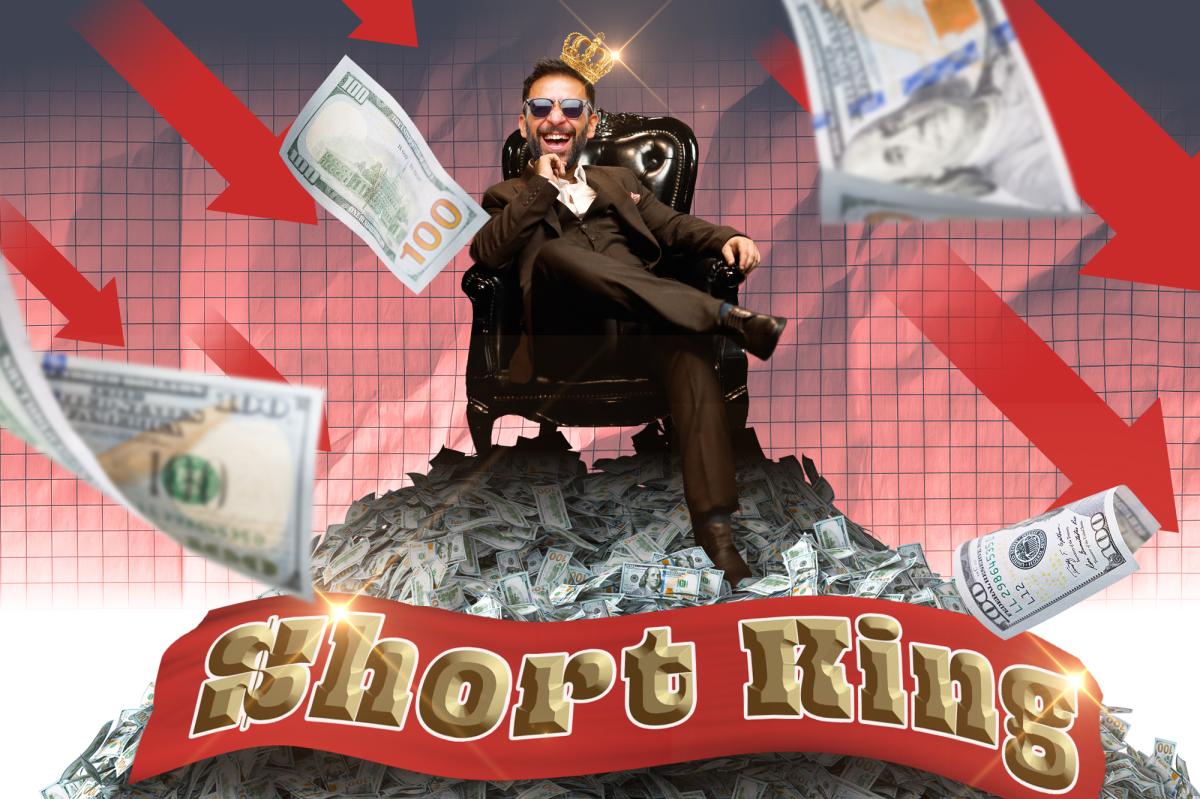
They are reviled as the market’s villains: traders who seek to profit from bets that stocks will crater — and who sometimes even spill dirt they believe will scare investors into selling.
Now, with the seismic revelations about Nvidia CEO Jensen Huang, these supposed rogue speculators are getting a taste of the positive press that they have long deserved.
I’m talking about short sellers, the investors who do something that seems counterintuitive: rooting for lower stock prices. Truth be told, short selling has been around for as long as there’s been markets for the simple reason they are addressing a major problem.
That problem, of course, is the reality of markets being filled with touts pushing crappy investments. The shorts provide a necessary check on the usual irrational exuberance.
And yet, the shorts have taken a pounding in recent years amid the relentless bull market, fueled by super low interest rates and most recently, the AI revolution. That is, until the tech explosion became an implosion, with a little help from Huang’s dalliance with a woman who the feds believe could be a Chinese spy.
Huang’s ouster over his sexual escapades was more than an embarrassment for the company and the billionaire who built it; it exposed gross corporate governance flaws and potential accounting weirdness at what was once the world’s most valuable company.
Among the takeaways: investors are so hooked on stock prices going up that they don’t dare to think how stocks can and will tank. They delight in making CEOs like Huang into superheroes when they are mere mortals prone to mistakes.
They also have misplaced hate for short sellers. Rising share prices obscure such inconvenient facts until reality sets in, usually stoked by the shorts. Inside their bubbles, many investors are also too quick to demonize the very market players who call into question the prevailing and sometimes fantastical narratives.
Indeed, there are investors who literally want to outlaw the practice of short selling. Companies routinely complain to lawmakers about shorts ruining their business.
Time to bail
“Pretty much all short sellers have been carried out in body bags over the past few years,” said one prominent short seller who asked not to be quoted by name.
“With the Huang mess, it really looks like the AI cycle is over,” the trader added, saying that’s “bad news for the market and the economy, but good news for short sellers and people who listen to them.”
For the unacquainted, short sellers make money by borrowing shares, selling them and hoping to buy them back at lower prices. They often goose their positions by publishing negative research, another thing that rubs people the wrong way since we rely on the buoyant markets fueling retirement accounts.
Yet stocks never go straight up and shorts alert the markets when it’s time to bail, or at least take some of your winnings off the table. Yes, some shorts are bad actors, but anyone who knows the markets also knows the shorts aren’t the real problem facing long-term investors. People have lost a hell of a lot more money being pushed to invest in highly touted shares that fizzle.
If you don’t believe me, do a little research on the losses experienced by the meme-stock buying crowd over the past five years. The shorts ID’d those meme stocks early on — just like they did the upheaval at Nvidia and Huang’s undoing.
One such player, Culper Research, headed by Christian Lamarco, raised some unsettling questions back in May about the market’s hottest stock and its rock star CEO in a detailed 40-page report titled “NVIDIA: The China Problem.” The tome is instructive because most of its conclusions were either derided or ignored by the market that kept pushing Nvidia shares higher to its one-time $5 trillion valuation.
Here’s the latest on the Nvidia CEO’s affair with an alleged Chinese spy:
Even more instructive is that Culper nailed it. Not only did it warn about an Nvidia vendor named Megaspeed and suspicions that it was funneling AI chips to China in violation of US law, it also flagged that Huang had an “uncomfortably close relationship” with a senior employee of the company, a Chinese woman named Alice Huang.
As we now know, that relationship turned out to be very close indeed, and cost Huang his job.
Nvidia’s shares have been getting trounced almost daily as one unseemly disclosure keeps piling on top of another. It didn’t help matters that when confronted, the company initially suggested that Jensen Huang’s relationship with Alice Huang was purely business, just before it admitted that it wasn’t.
Putting out statements like that on material matters can be a significant violation of securities laws. Now a second and third affair between Huang and women at Nvidia are in the news. A company that was the ultimate market darling is facing an existential crisis.
You could have seen all of this coming if you listened to the shorts.
Disclaimer : This story is auto aggregated by a computer programme and has not been created or edited by DOWNTHENEWS. Publisher: nypost.com







