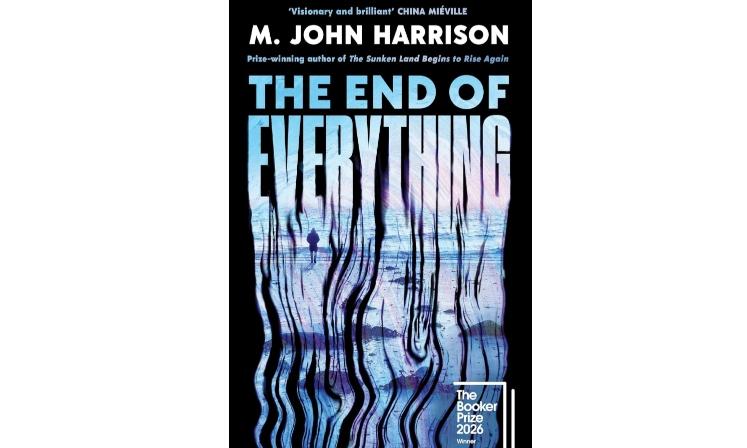
Let us start with the basics. The world, as the title to this novel suggests, has come to an end. A decades-long war between humanity and blob-like, indeterminate figures called the ‘iGhetti’ — either aliens or vestiges of some kind of human spiritual detritus arrived from the ‘astral plane’ — rages over London, but the toll of this conflict or its precise terms are left to the imagination. There is no Internet, nor government. In a deliberately ironic inversion, hundreds continue to line up on the shores of Kent, where our story unfolds, to escape into Europe or further afield. Yet aside from these drip-fed details, there is little by way of civilisational conflict over the course of this spare, elegantly plaintive novel.
Phillip, at 38, come of age in a time of “influenzas and Covids”, lives along the coastline collecting and selling materials that wash ashore from a sea accumulated with remnants of various ‘artefacts’ that were deployed over the years by the iGhetti. One such artefact, which rapidly grows into a translucent humanoid capable of speech and action, spurs the narrative into life, though the novel is largely devoid of the stakes and drama that one usually associates with mainstream science fiction storytelling. We instead linger in the inner rooms of Phillip and his elderly aunt Marnie’s minds as they mill about contemplating the breakdown of meaning at the end of the world. Often, they find themselves asking if anything real was occurring at all.
Phillip laments the present: “We don’t know how to make the best use of their stuff, only how to live a worse life of the kind we already had.” The broken architecture of his social world, which alternatingly resembles coastal British purgatory and a zombie apocalypse, bears this out. So does the artefact, whose growing cognition betrays a tendency easily reminiscent of LLMS: “it had no place in any emotional structure,” reflects Marnie. “There was, perhaps, an element you can only describe as ‘diligence’— although you would always wonder what you mean by that.”
What results is a beautifully elegiac work, nostalgic for a future that was lost as quickly as it arrived. Upon it floats, like the flotsam Phillip drags out of the sea, much of the material of the present: the conspiratorial, the desperate, the lonely. Yet M. John Harrison handles these themes with a muted, retrospective intensity. The writing is sublime; it elevates the mundane expository work of science fiction — its myriad occlusions and clarifications — through beautifully rhythmic prose, and trains its eyes on a wider, less transparent meditation on time and memory.
It is borne out in Marnie, for whom age is “an immense sadness that seems to be folded into everything” and in the inexplicable nature of the crisis itself: there is no clear intentionality behind why the iGhetti invaded the planet, and doubts over whether they are even fully present in the world. “After that”, writes Harrison, “the apocalypse seemed to withhold itself, quickly becoming just another historical continuity. That is to say, we got used to it. No one had expected the utter banality of that.”
The End of Everything
By M. John Harrison
Published by Hachette
Disclaimer : This story is auto aggregated by a computer programme and has not been created or edited by DOWNTHENEWS. Publisher: deccanchronicle.com