TEHRAN – The Iranian headquarters for developing traditional medicine and medicinal herbs has proposed the establishment of a trilateral consortium named after Abu Ali Sina (Avicenna), in cooperation with Tajikistan and Afghanistan, to foster scientific, technological, and innovative collaborations in the health sector.
Referring to the shared scientific, cultural, and historical capacities of the three countries, Hossein Rezaeizadeh, the chief of the headquarters, underlined the necessity of benefiting from the scientific and pharmacological legacy of Avicenna to expand regional scientific and technological cooperation, IRNA reported.
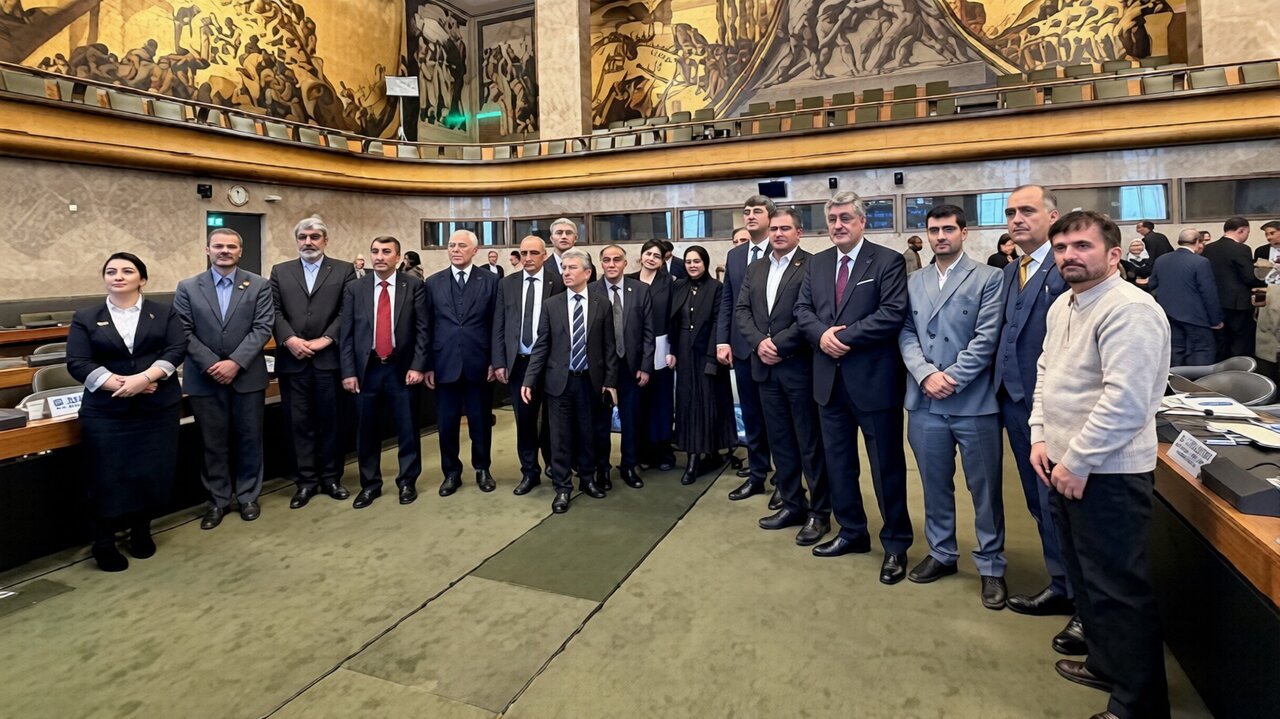
The official made the remarks while addressing the International Scientific Conference entitled “Abu Ali Sina and His Contribution to the Formation of a New Scientific Worldview”, which was held at the Palais des Nations in Geneva on November 12.
The initiative aims to lay the basis for targeted regional cooperation in the health sector and transform scientific and historical commonalities into technological achievements utilizing the capacities and capabilities of universities, scientific research centers, and knowledge-based companies in Iran, Tajikistan, and Afghanistan,
Expanding joint research, documenting and re-examining medical and pharmacological sources, standardizing natural products, and enhancing cooperation in harnessing the potential of medicinal plants were among key focuses of the proposal.
Accordingly, ‘Avicenna consortium for science, health, and innovation’ could serve as a collaborative platform for the organization of scientific capacities of the three nations, development of joint projects and programs in the health sector, particularly traditional medicine, medicinal plants, and pharmacological heritage.
To implement the proposal, Rezaeizadeh suggested establishing a working group to develop a three-year roadmap to clarify priorities, course of cooperation, and the implementation of a flagship joint project in the field of medicinal plants and pharmacological heritage.
The International Scientific Conference brought together representatives of the diplomatic corps, international organizations, academic and research institutions, as well as distinguished scholars and researchers, who discussed the significant contribution of Avicenna to the advancement of world science and philosophy, the importance of his scientific and intellectual legacy, and the role of his humanistic ideas in fostering dialogue between Eastern and Western civilizations.
Particular attention was also devoted to the preservation, study, digitization and promotion of Ibn Sina’s scientific heritage, the strengthening of international scientific cooperation, and the advancement of the universal values of knowledge, enlightenment, rational inquiry and intercultural understanding.
Addressing the event, Ali Bahreini, Iran’s Ambassador and Permanent Representative to Geneva, said: “The world today is grappling with self-centeredness, extremism, and division, and needs wisdom, scientific curiosity, and freedom from prejudice more than ever.”
He noted that Avicenna, drawing on Persian, Greek, and Indian intellectual traditions, opened new horizons in understanding humanity and the world. His greatness, Bahreini added, lay not only in his scientific achievements but also in his open-mindedness, intellectual humility, and commitment to truth and humanity.
“Avicenna belongs to all centuries. He is a bridge between East and West and a reminder that the highest form of power is the power of thought placed in the service of humanity,” he said.
Persian medicine
Persian medicine, one of the world’s oldest traditional medical systems, has a long history of scholarship associated with prominent physicians such as Rhazes and Avicenna. Its traditional framework places considerable emphasis on maintaining health, preventing disease, and adopting appropriate lifestyles.
According to figures previously reported by the health ministry, the country ranks third globally in traditional medicine clinical trials registered on the World Health Organization’s International Clinical Trials Registry Platform (ICTRP), following China and India.
The share of clinical trials in traditional and complementary medicine in Iran makes up about three percent of all clinical trials registered in the country, while just about 0.3 percent of the healthcare staff are experts in traditional and complementary medicine. The report shows the high capacity of Iranian researchers to move towards evidence-based medicine.
Persian traditional medicine strongly focuses on prioritizing health maintenance and disease prevention over treatment.
It is one of the most ancient forms of traditional medicine. It is grounded in the concept of four senses of humor: phlegm (Balgham), blood (Dam), yellow bile (Safra’), and black bile (Sauda’). The concept of the four senses of humor is based on the teachings of Rhazes and Avicenna in an elaborate medical system.
So far, about 30,000 plant species have been identified in the world, with Iran’s share of about 8,000 species, which is more than the whole of the species found in Europe.
Around 500 Persian medicine experts are providing health and medical treatment services across the country. More than 1,000 general practitioners who have passed the Persian medicine courses approved by the health ministry are also offering services.
Training Persian medicine experts has always been at the top of the Persian medicine office’s agenda. Therefore, different skill courses have been developed and held under the supervision of the health ministry.
MT/MG
Disclaimer : This story is auto aggregated by a computer programme and has not been created or edited by DOWNTHENEWS. Publisher: tehrantimes.com