Is India rethinking its short-term military recruitment scheme?
-
Published
For generations of young Indians, joining the armed forces offered something few other jobs did – a steady career, financial security, the promise of a pension after retirement and the pride of serving their country.
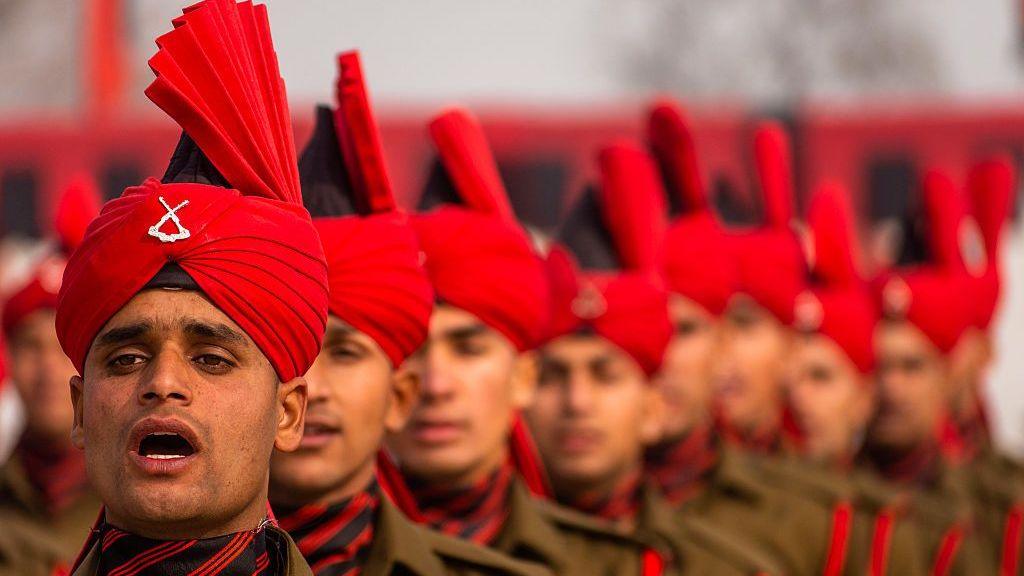
In 2022, the government upended that arrangement, announcing a new reform scheme under which young men and women entering the military would serve for just four years. Only a quarter would be allowed to stay on permanently. The rest would return to civilian life with a lump-sum payment, but without the pension and other benefits that had long made military service an attractive career.
Now, as the first batch of recruits prepares to complete its four-year term, the government is offering them a chance to stay longer, in a significant shift in a policy that has been fiercely debated since its introduction.
On 4 November, Chief of Defence Staff General NS Raja Subramani announced that recruits who failed to secure permanent positions under the Agnipath, or “path of fire”, programme would be offered another two years of service at higher pay. They would then get a second opportunity to join the regular forces, provided they met the selection criteria.
Gen Subramani said the decision followed feedback from the forces and insisted that Agnipath would continue.
But the timing is significant. More than 18,300 recruits from the first batch are due to complete their initial tenure by the end of 2026. Officials say the new arrangement will be offered to more than 300,000 Agniveers – as recruits under the scheme are known – currently serving across the army, navy and air force.
Whether future batches will also be covered remains unclear. The BBC has contacted the defence ministry for clarification.
The ministry has defended , externalAgnipath, saying internal assessments found the recruits to be physically fit, motivated and technologically adaptable. It also said the scheme had widened recruitment across districts and made the process more standardised.
But the extension has brought renewed attention to the trade-offs at the heart of the policy – and whether its original ambitions were realistic.
 Image source, AFP via Getty Images
When the government introduced Agnipath, it argued the scheme would reduce the average age of the armed forces, lower long-term salary and pension costs and create a younger, more technologically adaptable fighting force.
But military experts and opposition leaders have questioned whether a four-year contract could replace what had traditionally been a coveted, long-term career in the armed forces.
“Being a soldier in the armed forces was a chance for these young men to make a life for themselves, to get their families out of poor or lower-middle-income conditions,” says retired Maj Gen Yash Mor, a vocal critic of the scheme.
These concerns were also amplified by the timing of Agnipath’s launch. Recruitment had been suspended for nearly two years during the Covid pandemic, leaving thousands of aspirants waiting for vacancies to reopen.
The changes were greeted by massive protests across the country, with many saying the career path they had spent years preparing for had fundamentally changed.
This sentiment was felt most in states and cities that have traditionally been major recruitment hubs, where military service has been a family tradition for generations.
Kulbeer Singh Chaudhary, who runs a recruitment training institute in Dehradun city, says interest in joining the armed forces fell sharply and he stopped conducting Agniveer training batches.
The latest announcement, he hopes, would reverse that trend.
“The possibility of a longer engagement and eventual absorption into the forces may offer young candidates greater assurance,” he says.
The changes also come at a time when the armed forces are facing personnel shortages. In November last year, The Indian Express reported, external that the army alone faced a shortfall of nearly 180,000 soldiers and was considering increasing recruitment.
 Image source, Bloomberg via Getty Images
But the debate over Agnipath goes beyond what happens to recruits after four years. Critics also question whether that is enough time to turn them into experienced soldiers.
Sanjiv Krishan Sood, a former additional director general of the Border Security Force, has argued, external that the shorter training period is particularly problematic for technical roles requiring specialised skills.
Retired Maj Gen Mor says military effectiveness depends on experience and trust built over years.
“It takes eight-to-nine years to turn a raw recruit into a dependable, seasoned soldier – someone capable of handling a tank crew, an artillery gun crew or a small detachment,” he says.
“Over those years, a soldier develops the ethos, camaraderie, brotherhood and fighting spirit that bind a unit together. These qualities cannot be built overnight.”
Sood says the additional two years could help improve recruits’ skills, particularly in handling specialised equipment.
Senior military leaders have also welcomed the extension. Air Vice Marshal Shekhar Yadav told news agency ANI, external it would allow the forces to retain trained personnel for longer.
But the change could create fresh challenges within military units.
Regular soldiers, Agniveers on four-year contracts and those serving an additional two years could find themselves working alongside one another despite differences in pay, promotion prospects and post-service benefits.
Experts warn that these disparities could affect unit cohesion.
 Image source, NurPhoto via Getty Images
There is also the question of whether the changes will undermine one of the government’s central objectives: reducing spending. Almost half of India’s defence budget, external goes towards salaries and pensions, leaving less money for modernisation and new equipment.
By limiting the number of personnel eligible for long-term benefits, Agnipath was expected to ease that burden. But critics argue that savings should not come at the expense of military effectiveness.
“We are not against making changes, but there are ways and means to go about it,” says Mor, adding that the government could instead reduce annual recruitment while retaining soldiers for longer periods.
He also points to India’s tense borders with Pakistan and China, where troops remain deployed year-round, placing sustained demands on manpower and operational experience.
Retired Major-General Birender Singh Dhanoa, meanwhile, questions whether shorter service makes financial sense when the military is investing in training to operate increasingly sophisticated equipment.
“The amount of time it takes to train, and the financial outlay for training, is much higher for modern equipment. So shouldn’t you get the best bang for your buck?” he asks.
Many retired officers had proposed a different approach when the scheme was announced, he says.
“We suggested that if you want to reduce your financial burden, you increase the terms and conditions of service. Take these guys for eight-or-nine years and retain a larger number after that.”
The announcement also comes at a politically sensitive time. Elections are due soon in Punjab, Uttar Pradesh and Uttarakhand – states that have traditionally supplied large numbers of soldiers and where military recruitment remains an important source of employment.
The opposition Congress party has called the revision a “u-turn”, alleging that the government is responding to fears of losing votes.
For young recruits approaching the end of their contracts, the changes offer some reassurance, but few guarantees. Two more years of service could mean more money, greater experience and another chance at a permanent career.
But for many, it also means putting their futures on hold, without knowing whether they will eventually be allowed to stay.
Disclaimer : This story is auto aggregated by a computer programme and has not been created or edited by DOWNTHENEWS. Publisher: BBC