- Jensen Huang’s potential Nvidia return sparks comeback CEO discussion.
- He resigned previously amid reports of extramarital relationships.
- Many executives, like Jobs and Altman, returned to top roles.
- These returns require board confidence and investor support.
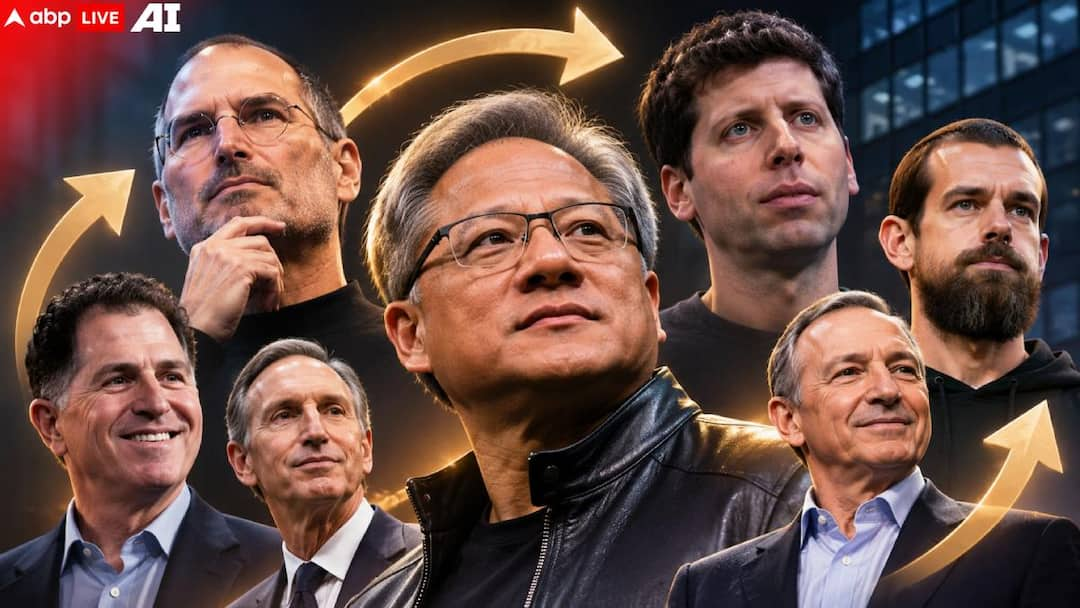
Jensen Huang’s reported efforts to return as Nvidia CEO have brought the spotlight back on one of corporate America’s most fascinating leadership trends: the comeback CEO. From Steve Jobs reclaiming Apple to Sam Altman returning to OpenAI within days of being fired, business history is full of executives who walked away from, or were pushed out of, companies they helped build, only to find their way back to the top.
Huang resigned as Nvidia CEO on November 12, following a controversy involving reported extramarital relationships, including one with a businesswoman suspected by US intelligence agencies of having links to China. Beijing has denied the espionage allegations. Nvidia’s board had initiated an independent investigation, while the company said it had no reason to believe that national security or its proprietary information had been compromised.
However, his departure may not be the final chapter. According to a Financial Times report, Huang has discussed the possibility of returning with close associates, while supporters in Silicon Valley are reportedly organising efforts to persuade Nvidia’s board to reinstate him. Major investors Brad Gerstner and Gavin Baker have also urged the board to keep the possibility of his return open.
ALSO READ: Jensen Huang’s Nvidia Exit Timeline: What Happened Behind The Scenes Before He Resigned
The situation brings back memories of several high-profile corporate leadership battles. While some executives were removed following disagreements with their boards, others voluntarily stepped aside before returning during periods of business uncertainty. Here are 12 notable CEOs who made dramatic returns to companies they had previously left.
Steve Jobs: Forced Out Of Apple, Returned To Build A Technology Empire
The night Steve Jobs returned to Apple Dec 20, 1996 Had never seen these pictures before https://t.co/h8SqxE8Ejj
— Zach Pogrob (@zachpogrob) November 15, 2026
Perhaps the most celebrated corporate comeback belongs to Steve Jobs. The Apple co-founder was pushed out of the company in 1985 following a bitter power struggle with then CEO John Sculley.
Jobs subsequently established NeXT, a computer company that developed advanced software and hardware products. More than a decade later, Apple acquired NeXT in 1997, bringing Jobs back into the company he had helped establish.
Initially appointed interim CEO, Jobs eventually took permanent charge and led Apple’s transformation into one of the world’s most influential technology companies. The iMac, iPod and iPhone became defining products of his second tenure, fundamentally changing the company’s fortunes.
Sam Altman: OpenAI’s Board Reversed Its Decision Within Days
NEW: Sam Altman is returning to OpenAI as its chief executive. Altman’s return to CEO caps an intense five days of discussions, debates, and convincing following the sudden dismissal of Altman from the startup he co-founded. Read everything we know about Altman’s return here: https://t.co/eoX6k2Su33
— TechCrunch (@TechCrunch) November 22, 2023
Sam Altman’s return to OpenAI is among the most recent examples of a CEO comeback following a boardroom confrontation.
In November 2023, OpenAI’s board removed Altman as CEO, saying he was not “consistently candid” in his communications with directors. The decision triggered an extraordinary internal crisis, with employees threatening to leave the company and join Microsoft, which had offered Altman a leadership position in a new advanced AI research team.
The backlash forced OpenAI into negotiations over its leadership structure. Within days, the company announced that Altman would return as CEO, while a new initial board was constituted under Bret Taylor.
His reinstatement demonstrated how employee support, investor interests and boardroom negotiations can influence the outcome of a corporate leadership crisis.
Jack Dorsey: Twitter’s Co-Founder Returned To The Top Job
Twitter will reportedly name Jack Dorsey as CEO http://t.co/7Qw6vvyflf http://t.co/YSYwaGwPZS
— TechCrunch (@TechCrunch) October 1, 2015
Jack Dorsey’s relationship with Twitter (now known as X, since Musk’s 2022 takeover) also involved an unexpected return to leadership.
Dorsey was removed as CEO in 2008, with co-founder Evan Williams taking over the position. Questions about Dorsey’s management approach and his ability to focus on the company’s day-to-day operations were among the factors surrounding the leadership change.
However, Dorsey remained associated with Twitter and eventually returned as its CEO in 2015, replacing Dick Costolo. He continued in the position until November 2021, when he stepped down and appointed Parag Agrawal as his successor.
Howard Schultz: Starbucks Founder Returned Twice
Former Starbucks CEO Howard Schultz rejects being labeled a “billionaire” during a Senate hearing https://t.co/H2jN6ks6HE https://t.co/5HT7EgFOA9
— Bloomberg (@business) March 29, 2023
Howard Schultz is an unusual example of a corporate leader who returned to the same company more than once.
Schultz served as Starbucks CEO until 2000, before stepping aside and taking on other leadership responsibilities. However, as the coffee chain struggled with slowing growth and operational challenges, he returned as CEO in January 2008, replacing Jim Donald.
His second stint lasted until 2017, during which he oversaw a major business turnaround and renewed focus on the Starbucks customer experience.
Schultz made another comeback in April 2022, when he returned as interim CEO following the departure of Kevin Johnson. He subsequently handed over the position to Laxman Narasimhan in 2023.
Bob Iger: Disney Brought Back Its Former CEO After Two Years
Bob Iger’s latest book, chronicling his return as chief executive officer of Walt Disney, will be published in March by Penguin Random House. https://t.co/RaFOBRUXvs
— Bloomberg (@business) October 21, 2026
Disney’s decision to bring back Bob Iger in November 2022 was another major corporate leadership reversal.
Iger had served as Disney CEO from 2005 before stepping down in 2020. Bob Chapek, who succeeded him, faced mounting challenges involving the company’s streaming business, organisational structure and relations with employees.
Disney’s board eventually decided to replace Chapek and bring Iger back to the top position. His return came with a mandate to improve the company’s financial performance, reorganise its operations and address concerns surrounding its entertainment business.
Iger’s comeback demonstrated how boards can reconsider succession decisions when a new leadership arrangement fails to deliver the expected results.
Michael Dell: Founder Reclaimed The CEO Chair After Three Years
Michael Dell bought into President Donald Trump’s second term early. Now his hardware company, Dell Technologies, is closing out its best month on Wall Street since its return to the public market in 2018. In Trump’s second term, Michael Dell attended the president’s Invest America Roundtable event in June 2025. In December, Trump introduced the computer executive and his wife, Susan Dell, as they announced a $6.25 billion gift for 25 million U.S. children’s Trump Accounts. This month, Trump advised Americans to “go out and buy a Dell.” Read the full story: https://t.co/HAKeg708LV
— CNBC (@CNBC) May 29, 2026
Michael Dell’s return to the chief executive position at Dell was less dramatic than some of the other cases, but it remains an important example of a founder reclaiming operational control.
Dell stepped down as CEO in 2004, remaining chairman of the company. Kevin Rollins subsequently took over the top position.
However, as the company faced increasing competitive pressure, Dell returned as CEO in January 2007. He later led the company through its transformation into Dell Technologies and its acquisition of EMC, one of the largest technology industry deals at the time.
Charles Schwab: Founder Returned After His Successor Was Fired
Charles Schwab, founder of the financial services company bearing his name, also returned to the CEO position after stepping away.
Schwab served as CEO until 2003, sharing leadership responsibilities with David Pottruck during the final years of his tenure. However, Pottruck was removed in 2004 following challenges faced by the brokerage business.
Schwab subsequently returned as CEO, taking charge of the company during a difficult period for financial markets and the investment industry.
Larry Page: Google’s Co-Founder Took Back The CEO Role
Google’s Larry Page overtook Michael Dell to become the world’s third-richest person on Friday despite parent company Alphabet suffering its worst dollar-loss day and the second-worst daily wipeout in market history on Thursday. Read more: https://t.co/yeNYKNPnbZ 📸: Emmanuel Dunand/AFP via Getty Images
— Forbes (@Forbes) October 30, 2026
Google co-founder Larry Page handed over the CEO position to Eric Schmidt in 2001, with Schmidt subsequently overseeing the company’s expansion into a global technology giant.
A decade later, Page returned to the top job in April 2011, replacing Schmidt. The move was intended to streamline decision-making and bring greater operational control back to Google’s founders.
Page remained CEO until 2015, when Google underwent a major corporate restructuring and Sundar Pichai took over the position.
Pat Gelsinger: Intel Rehired An Executive Who Had Left 12 Years Earlier
Intel CEO Pat Gelsinger says the company is spending $20 billion on two new microchip fabrication plants in Arizona — Intel’s largest investment ever — and another $3.5 billion to upgrade its Rio Rancho fab in New Mexico. https://t.co/NZXo2LSa6H https://t.co/CZqA7PIH3I
— 60 Minutes (@60Minutes) May 2, 2021
Pat Gelsinger’s return to Intel was particularly notable because he had spent more than a decade away from the company.
Gelsinger began his career at Intel in 1979 and held several senior engineering and leadership positions before leaving in 2009 to join EMC. He subsequently became CEO of VMware in 2012.
In February 2021, Intel brought him back as CEO, placing him in charge of an ambitious effort to restore the chipmaker’s manufacturing and technological competitiveness. His return was seen as an attempt to revive Intel’s engineering-led culture and strengthen its position in the global semiconductor industry.
A.G. Lafley: Procter & Gamble Recalled Its Former Chief
In 2013, A.G. Lafley returned to Procter and Gamble and got rid of about 100 of its 170 brands. The board thought he was shrinking the company. The press called it a retreat. They were wrong. It became one of the smartest moves the company ever made. https://t.co/yXkLT0nQM4
— Mark Woodland (@Markwoodland) July 3, 2026
A.G. Lafley returned to Procter & Gamble in 2013, four years after stepping down as CEO.
Lafley had led the consumer goods giant between 2000 and 2009, overseeing a period of growth and expansion. His successor, Robert McDonald, faced difficulties involving profitability and business performance.
P&G subsequently brought Lafley back in May 2013, replacing McDonald. His appointment was welcomed by investors, who hoped his experience would help restore the company’s growth momentum.
Myron Ullman: J.C. Penney Reinstated A CEO It Had Previously Removed
#TBT last year’s Warren Bennis Leadership Experience with forward Starbucks CEO Howard Schultz and former J.C. Penney CEO Myron Ullman. We can’t wait for our speakers this year! #warrenbennis #wble2018 https://t.co/rvDb1gnFMf
— The Warren Bennis Leadership Experience (@WarrenBennisUC) September 13, 2018
Myron Ullman’s return to American department store chain J.C. Penney is another example of a board reversing an earlier leadership decision.
Ullman served as CEO from 2004 until 2011, when he was replaced by Ron Johnson. However, Johnson’s turnaround strategy failed to deliver the expected results, prompting the company to reconsider its leadership.
In April 2013, Ullman returned as CEO, replacing Johnson. His reinstatement came less than two years after he had left the position, reflecting the company’s urgency to stabilise its business.
Sergio Ermotti: UBS Turned To Its Former CEO During The Credit Suisse Crisis
“Hopefully we can find a solution that is much better than the current proposal.” UBS CEO Sergio Ermotti says the capital reform debate a “distraction” for the bank https://t.co/1tCTEHVw5E https://t.co/owQz7oBxpr
— Bloomberg (@business) October 28, 2026
Sergio Ermotti’s return to UBS in 2023 was driven by one of the biggest banking developments in recent years.
Ermotti first became UBS CEO in 2011 and led the Swiss banking group until 2020, when Ralph Hamers succeeded him. However, UBS brought Ermotti back in April 2023 to oversee its acquisition of troubled rival Credit Suisse.
His return was intended to provide experienced leadership during a complex integration process involving two major financial institutions.
Michael Bloomberg: Founder Returned After Serving As New York Mayor
Ex-NYC Mayor Mike Bloomberg marries longtime partner Diana Taylor – after 26 years together https://t.co/Z3WfIjswt1 https://t.co/TNvRDERDjK
— New York Post (@nypost) November 9, 2026
Michael Bloomberg also returned to the company he founded after spending more than a decade in public office.
Bloomberg established Bloomberg LP in 1981 and built it into a major financial information and media services company. He stepped away from its leadership to serve as mayor of New York City from 2002 to 2013.
After completing three terms as mayor, Bloomberg returned to the company in January 2014, resuming leadership of the business he had established.
ALSO READ: Nvidia Shares: Should Investors Sell After Jensen Huang’s Exit? Here’s What Michael Burry Says
Not Every Return Is A Comeback: The Natarajan Chandrasekaran Case
Tata Sons Chairman Natarajan Chandrasekaran warned employees on Friday that Air India is navigating a “challenging time,” as the carrier struggles to reverse record losses and fix persistent operational failures https://t.co/iV8YkgmTHr
— Bloomberg (@business) April 11, 2026
India has also witnessed high-profile leadership decisions involving the return or continuation of former corporate leaders. However, not every reappointment qualifies as a comeback.
Tata Sons Chairman Natarajan Chandrasekaran’s reported reappointment for another five-year term should be viewed in this context. Unlike Jobs, Altman or Dorsey, Chandrasekaran did not leave the chairmanship before being brought back. His reappointment was a continuation of his existing leadership tenure, rather than a return after an exit.
The distinction matters when examining corporate comebacks, particularly when the circumstances surrounding a leader’s departure and return are central to the story.
For Nvidia, the question now is whether its board will consider a similar reversal in Jensen Huang’s case. While supporters are pushing for his reinstatement, the ongoing investigation, governance concerns and the search for a permanent successor could complicate any return.
A comeback, after all, requires more than a loyal following. It also requires the confidence of the board, shareholders and the organisation that the executive once led.
Disclaimer : This story is auto aggregated by a computer programme and has not been created or edited by DOWNTHENEWS. Publisher: abplive.com