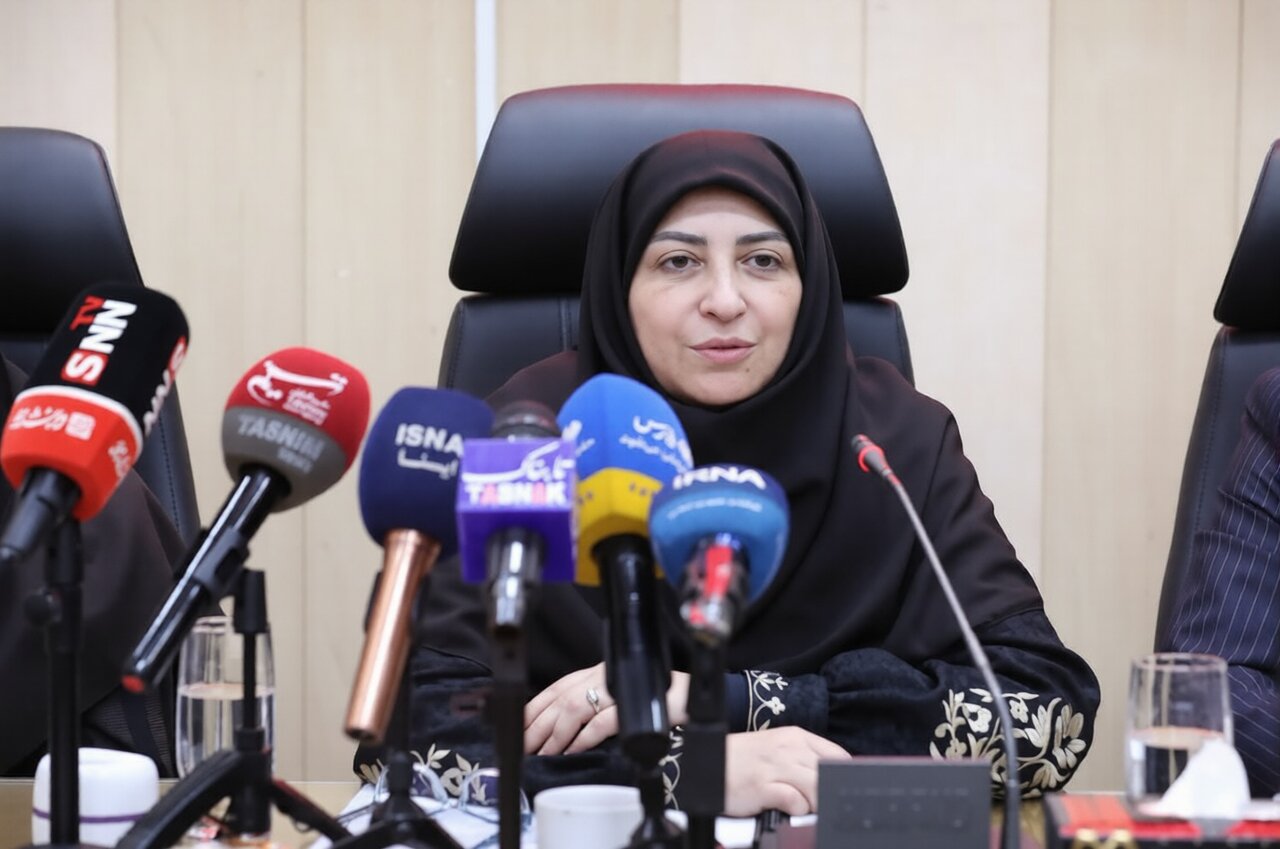
TEHRAN – Reconstruction after the war should be viewed as an opportunity not merely to restore pre-war conditions, but to promote green recovery, advance sustainable development, and address environmentally harmful development patterns, Shina Ansari, head of the Department of Environment (DOE), has said.
She stressed that the consequences of war extend far beyond the cessation of military hostilities, leaving lasting impacts on soil, water, air, forests, wetlands, and natural habitats that can persist for years and affect future generations.
The official made the remarks on Monday at an international conference titled “The Shadow of War on People and Nature in the Region.”
Ansari said designating November 6 as the International Day for Preventing the Exploitation of the Environment in War and Armed Conflict serves as a reminder that environmental protection must not be sidelined during wartime. Assessments of the environmental consequences of armed conflicts, she added, should begin during conflicts rather than be postponed until they end.
Referring to the five interconnected pillars of the United Nations Sustainable Development Agenda — people, planet, prosperity, peace, and partnership — Ansari said these dimensions could not be achieved independently. The experience of war, she noted, demonstrates that peace is the essential foundation for achieving the other dimensions of sustainable development.
Without peace, people’s security and health are endangered, natural resources and ecosystems are damaged, and opportunities for social participation and national and international cooperation are undermined.
From this perspective, peace means more than simply the absence of war; it is closely linked to human security, public health, sustainable access to resources, and the ability to live with dignity. Protecting water, soil, air, and ecosystems is therefore an integral part of human security and lasting peace, she said.
Direct, indirect consequences
Highlighting the direct and indirect environmental impacts of armed conflicts, Ansari said attacks on industrial and energy facilities, fires at fuel storage sites, pollutant emissions, damage to water and sewage infrastructure, and contamination of water and soil create interconnected environmental and public health hazards.
Many of these impacts may not be immediately visible, she noted, but can persist for years, affecting livelihoods, food chains, and the health of local communities.
The experience of conflicts in other countries also shows that environmental consequences do not end when military operations cease, Ansari said.
If environmental concerns are not given a clearly defined place in damage assessments, relief programs, and reconstruction policies, she warned, part of the cost of war will be passed on to future generations.
Iran to highlight war-related environmental damage at COP31
At the 31st Conference of the Parties to the United Nations Framework Convention on Climate Change (COP31) in Turkey, Iran plans to present documented reports on environmental damage caused by war, highlighting its impacts on infrastructure and human health. The country also aims to advance its environmental priorities, particularly those related to climate change, on the international stage.
COP31 is being held in Antalya from November 9 to 20, bringing together representatives from nearly 200 countries, government officials, experts, scientists, environmental activists, and international organizations.
Iran is participating with a delegation of experts and representatives from relevant government bodies, headed by Ansari. The Iranian delegation is focusing on issues including drought, financing for food systems, war-related environmental degradation, and the presentation of investment-ready climate adaptation projects.
For the first time, Iran has also set up a national pavilion at COP31. Its announced program focuses on issues such as the environmental consequences of war, food security, and agricultural development.
Iran’s participation in international climate conferences provides an opportunity to highlight national environmental challenges, pursue access to financial resources and technology, and strengthen regional and international cooperation on environmental protection and natural resource management.
Prolonged droughts, declining renewable water resources, land subsidence, desertification, dust storms, forest fires, and the vulnerability of wetlands are among the challenges facing the country in the context of climate change. Addressing them requires long-term planning, as well as adequate financial and technical resources.
Translating international commitments into practical and measurable action is also essential to achieving climate goals. Presenting investment-ready adaptation projects, drawing on the experiences of other countries, and pursuing climate finance mechanisms can all contribute to reducing Iran’s vulnerability to climate change.
Disclaimer : This story is auto aggregated by a computer programme and has not been created or edited by DOWNTHENEWS. Publisher: tehrantimes.com