Sponsored by Airbnb
When a mother of two needed to escape a domestic violence situation, she faced an immediate problem: where could she take her children?
“I was leaving a domestic violence situation and didn’t really know where to go, as everything happened quite quickly,” she told Griffith University researchers. “I have two children, so I wasn’t sure whether moving back in with my elderly parents would work given the family dynamics.”
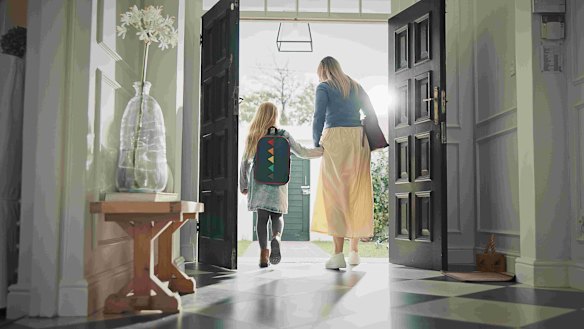
She considered hotels and caravan parks before finding a short-term rental where she and her children could feel safe and stable. The property allowed her to continue working, collect the children from school and establish a new routine.
“Knowing that I could go to work, pick up my kids and have a safe place to return to was the most important thing,” she told researchers.
Her experience is one of many documented in More Than a Bed, a Griffith University report commissioned by Airbnb, examining the role of short-term accommodation when Australians face unexpected disruptions to their lives.
Earlier research by Urbis cited in the report estimates that non-leisure travel accounts for up to 40 per cent of short-term rental demand. The Griffith study found that 15.2 per cent of surveyed non-leisure guests had used short-term rentals because of domestic and family violence. Other reasons included displacement by natural disasters, medical treatment and caring for loved ones.
For the mother and her children, the temporary accommodation provided something more important than convenience.
“It wasn’t the best time in my life. I was on edge and dealing with a lot of background stress, but I also experienced moments of complete peace and safety,” she told researchers. “For us, it was a stepping stone to other opportunities and other avenues. It was quite life-changing to be able to move into a safe home environment, just the three of us.”
A place to feel safe
Safety was paramount. She read reviews, visited the neighbourhood at different times of day and checked the property’s security features, including locks on the windows. The property offered separate bedrooms, a shared living area and privacy.
Another domestic violence survivor interviewed for the report described the emotional relief of finding somewhere safe for herself and her children.
“It was nice. It was special. It felt like home, but a home where I didn’t have to worry about what was going to happen in my own household. It was like I could breathe. I knew I had a roof over my head, and I knew my kids would be able to sleep in a bed.”
For people escaping violence, the ability to maintain everyday routines while staying somewhere secure can matter as much as finding a bed for the night.
The unexpected reasons people need somewhere to stay
The Griffith research draws on surveys of 2223 guests who used short-term rentals for non-leisure purposes between 2020 and 2026, and 420 hosts. Researchers also conducted 68 interviews with guests, hosts and organisations.
Natural hazards accounted for 16.3 per cent of the non-leisure stays reported by surveyed guests. Health and care-related reasons, including medical treatment and caregiving, accounted for 5.3 per cent.
Other reasons included property issues and renovations, moving between homes, work and education.
Some circumstances could be anticipated. Others required people to find accommodation almost immediately. Among respondents using short-term rentals because of natural hazards, 83.4 per cent booked immediately or at short notice. For domestic and family violence, the figure was 82.5 per cent.
But finding somewhere quickly is only part of the challenge. The property must also meet the needs of the people staying there.
The research found that guests valued practical features such as kitchens, laundry facilities and enough space for everyday activities, alongside privacy and a sense of independence.
When a few nights become longer
When Cyclone Alfred threatened the Gold Coast, one family headed inland to Toowoomba, taking their two cats and dog. They booked a furnished two-bedroom townhouse for about a week.
On their way home, flooding blocked the road. “We drove down the mountain range, but when we reached the valley, the road was flooded and we couldn’t get back through,” the woman told Griffith researchers.
Although they had already checked out, the host agreed to let the family return for another night rather than search for somewhere else to stay.
The experience illustrates how displacement can continue after the immediate threat has passed. Flooded roads, property damage and safety inspections may prevent people from returning home on schedule.
The report also identifies practical difficulties in finding accommodation during disasters, particularly in regional areas where available options may be limited. For families, a kitchen, separate bedrooms and room to maintain routines may be important when the length of a stay is uncertain.
Convoy of Hope Australia, which helps communities respond to disasters, told Griffith researchers that displaced households sometimes struggled to find accommodation near their homes.
“It’s not necessarily that people haven’t been able to find a place. It’s more to find a place that’s within a nice distance or a reasonable distance to where they’ve had to relocate from,” the organisation says in the report.
Q Shelter, Queensland’s peak body for housing need and homelessness, also identified the limitations of hotel accommodation for families.
“Quite often there aren’t cooking facilities in those hotels. They’re just not really equipped for small families in terms of number of bedrooms and beds and everything else,” a Q Shelter spokesperson told the report.
The people behind the bookings
The Griffith research also examines the part hosts can play when guests are dealing with circumstances beyond their control.
Some interviewees described hosts who adjusted booking arrangements, accepted pets or provided reassurance during difficult periods.
Another participant, a domestic violence survivor and mother of two sons, recalled a host who understood her circumstances.
“He said things like contact me day or night if there were any issues. He was aware that I was a single mum moving in with two kids and understood my situation. He was supportive and friendly.”
Another host described leaving toys and other small gifts for families who had experienced serious losses.
“Depending on the age of the children, we often leave out toys, such as teddy bears, for them to keep. These are items from my own children, who are now in their 20s. These people have lost absolutely everything.”
Such gestures cannot resolve the underlying causes of displacement. But the interviews suggest that flexibility and understanding can make an unfamiliar property easier to live in during a stressful period.
The Griffith survey found that 74.5 per cent of participating hosts were very or somewhat open to accommodating non-leisure guests, including those with more complex requirements.
Hosts also identified concerns about booking certainty, payment security and their ability to meet guests’ needs.
Susan Wheeldon, Airbnb’s country manager for Australia and New Zealand, says the research draws attention to people whose accommodation needs receive less attention in discussions about short-term rentals.
“These aren’t just numbers. They’re people who need a safe place to go at short notice,” she says.
Finding the next home
The report identifies a broader challenge for people who need temporary accommodation: what happens when the immediate emergency has passed but returning home is still impossible.
For some households, a few nights away becomes a longer period of uncertainty while they assess their options and arrange somewhere permanent to live.
Short-term rentals are not a substitute for specialist domestic violence services, emergency housing programs or permanent homes. The report also acknowledges the wider debate about short-term rentals and residential housing supply.
Its findings nevertheless document circumstances in which furnished accommodation can help households manage an unexpected disruption.
For the mother who fled domestic violence with her two children, the short-term rental gave them a safe place to return to each day while she worked out what came next. She described it as “a stepping stone to other opportunities and other avenues”.
“It was quite life-changing to be able to move into a safe home environment, just the three of us.”
Read Griffith University’s More Than a Bed report, commissioned by Airbnb, at airbnb.com.au/griffithreport.
Property listings
From our partners
Disclaimer : This story is auto aggregated by a computer programme and has not been created or edited by DOWNTHENEWS. Publisher: www.smh.com.au