Life as the state’s casino watchdog wasn’t always easy, but for Phil Crawford cleaning up the mess always felt like the right thing to do.
Phil Crawford has less than a month left to run on his tenure as the inaugural head of NSW’s casino watchdog, and he’s got one eye on retirement. Cleaning up one of Sydney’s dirtiest industries has left some stains on his shirtsleeves; it’s time to pull himself out of the muck and mire. But before he does, there are some things he wants to get off his chest.
To the average punter, Crawford’s is not a name widely known. To those running the state’s pubs and clubs, he is a familiar figure; at times he has proved a pain in the arse. In the casino world, he is public enemy No. 1. Neither label bothers him.
Before he was appointed to lead the state’s newly established Independent Casino Commission in 2022, he chaired the Independent Liquor and Gaming Authority (ILGA), regulating registered clubs. At the authority, he used his modest powers to make change where he could and turn a firm hand to those who deserved it. It offered him a glimpse of some of the shoddy behaviour going on unchecked in the state’s licensed venues, but it was not the firestorm he walked into as the man in charge of reining in malpractice at the state’s gambling giants: The Star and Crown casinos.
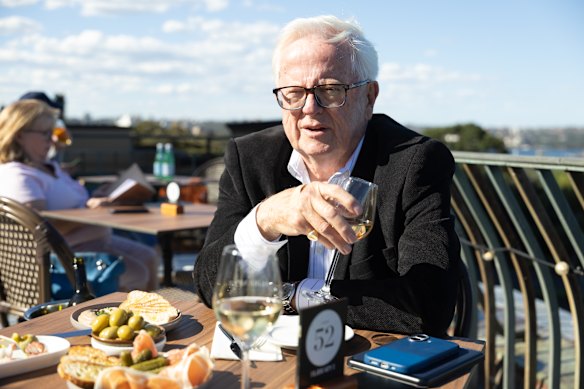
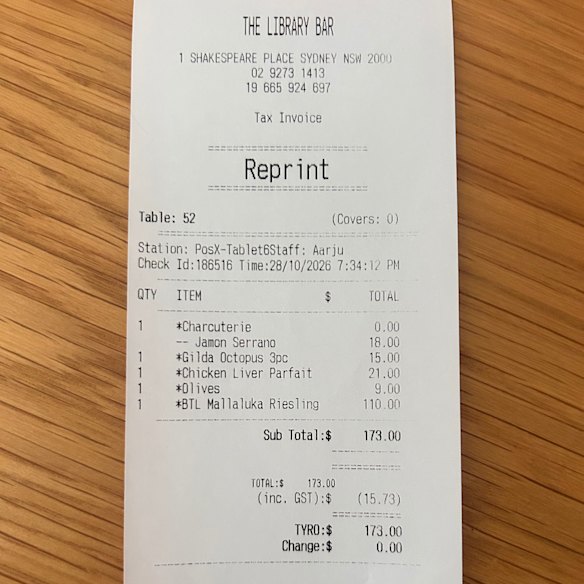
There’s not a cloud in the sky, however, as Crawford meets me at the Library Bar in late October to reflect on a decade spent trying to hold the top end of town accountable. After an afternoon here with his sons earlier in the year, it’s become one of his favourite places. Just a few storeys above street level, the view from the bar’s deck atop the State Library offers a different perspective from that on the upper floors of the high-rise corporate headquarters nearby. To get the feel of a city, Crawford says, you need to be closer to the ground. He’s a man who likes to see things for himself, including problems he’s tasked with tackling: during his tenure at the gaming authority, he introduced quarterly trips to the bush – places like Broken Hill and Wilcannia – where the impacts of problem gambling easily escape the public scrutiny they garner in the city.
After ordering lightly – we’ve pushed our lunch back to accommodate the Library Bar’s 4pm opening time so settle on small plates of cured ham, Australian olives, pickled octopus and chicken liver parfait – our attention turns sharply to the wine list. There’s talk of ordering a glass each, but Crawford has plenty to say. We opt for a bottle of riesling.

Crawford has arrived with his phone and Kindle, which he keeps close after doing away with hard copy novels about a decade ago. An avid reader and keen traveller, for years he lugged paperbacks around the world with him. “I used to stuff my bloody pockets,” he says. He’s a particular fan of Philip Kerr and Mick Herron.
Coincidentally, hours before we meet, the Federal Court hands The Star a long-awaited $260 million fine for breaching anti-money laundering and counter-terrorism financing laws. Though the case against The Star was brought by AUSTRAC, the federal government’s financial crimes watchdog, such an indictment of the casino’s longstanding failures feels like a fitting end to Crawford’s years working to upend gambling behemoths’ most harmful practices.
As chair of the liquor and gaming authority for six years Crawford was concerned enough about the state of Sydney’s casinos to commission the Bergin inquiry (into Crown) and the Bell reviews (into The Star), but even he was shocked at the levels of crookedness laid bare. “They always had a smell about them,” Crawford says of The Star. “But it was much worse than anyone realised.”
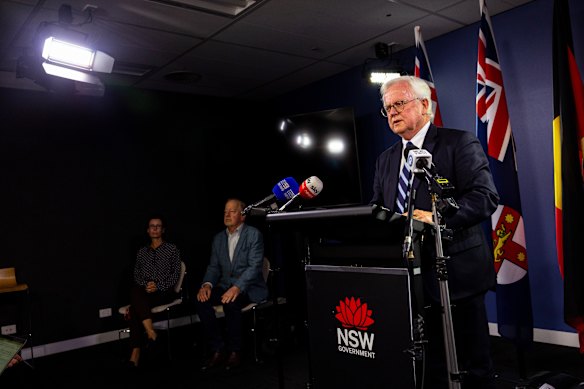
“We’ve got no idea how much money was laundered. It’d be billions. Why didn’t someone pull it up sooner? I don’t know. It just seemed so obvious to me when we stuck our nose in there.”
On the back of the revelations in the Bergin inquiry, the Perrottet government established the Independent Casino Commission, to focus solely on cleaning up the relatively new gambling palaces, and made Crawford its head.
Crawford fell into gambling regulation almost by accident. Schooled at The King’s School and the University of Sydney, he had enjoyed a busy but comfortable career as an insolvency solicitor, chair of Sydney law firm Henry Davis York, and mediator. In 2016, then-deputy NSW premier Troy Grant phoned out of the blue asking him to take on leadership of the ILGA. At the time, he says, the regulator was bogged down in administrative work and poker machine licensing applications for venues across the state; it was hardly a vehicle for change.
The turning point came in May 2018, when Gary Van Duinen, a builder and problem gambler, took his own life after a poker machine binge at Dee Why RSL Club on Sydney’s northern beaches. Van Duinen lost hundreds of thousands of dollars over several years while his wife’s pleas for the club to stop indulging him at VIP events fell on deaf ears.
“They played pass the parcel,” Crawford recalls. “They did nothing … and we thought that was pretty poor.”
The record $200,000 fine Crawford imposed shifted the dial on corporate responsibility for gambling harm. But it was the ILGA-enforced hiring of the state’s first full-time gambling marshal at the club that has had the farthest reaching impact on how venues tackle minimising harm; gaming room staff in NSW today must undergo responsible conduct training.
The job on gaming reform is far from done. Crawford has a long list of the work still needed for NSW to accomplish meaningful change. Very close to the top of that list is what NSW Premier Chris Minns has – or hasn’t done – about poker machine reform. Crawford’s wine glass goes untouched for long periods when he recounts the warnings and recommendations given to the government this term on poker machine harm.
He doesn’t pull his punches when it comes to the hospitality industry’s influence on Macquarie Street. The sector, he says, has spread what he calls its “Chicken Little mentality” that significant reforms, including mandatory cashless gaming, will have a catastrophic impact on the sector. “The sky’s not going to fall in,” he says. “It’s not going to ruin the world by bringing in some tighter rules to help people who are struggling with addiction.”

Publicly and privately he has lobbied the government to make good on major reform that Minns’ predecessor, Dominic Perrottet, vowed to enact despite pushback from within his own cabinet. “You’re offering a product that you know is addictive – the most addictive – and we stand back and say free will?” Crawford says. “What a load of bullshit.”
It’s similar to the “bullshit” pedalled by lobbyists when the state started to consider banning smoking in pubs and clubs two decades ago, he says. “Of course, that’s where we needed to go in society. There was steel and backbone in the government.”
Little gets Crawford’s goat more, though, than the free pass he believes NSW’s multimillion dollar clubs have been given when it comes to regulatory oversight: they have more poker machines than casinos, but significantly less regulator scrutiny than applied to the Crown and Star casinos.
The solution? Rewritten laws that would establish a centralised regulator to oversee pubs, clubs and casinos and expand watchdog powers to keep all venues with poker machines on a shorter leash. “The big clubs – not for profit?” he says. “Give me a break.” Legislation that applies the same rules to NSW’s mega clubs, where millions of dollars flow through pokies, and rinky-dink rural operations is no longer fit for purpose, he says.

The 72-year-old has said little publicly about the toll of taking on some of the state’s most powerful people (he and former Crown chairman and billionaire James Packer are not exactly friends), but he has had time to think about that too. He was subject to repeated attempts in sections of the media to undermine his credibility. He believes this was driven by industry figures with axes to grind.
“Sometimes they played the man and not the ball, but I knew it was really just sour grapes,” Crawford says. “I won’t name names – they know who they are – and they were pretty bitter about losing their kingdoms … the people throwing mud were people who are pretty good at it.”
His personal safety was also in question at times, particularly during the worst of the fallout from the Bell Review into The Star, and the Crawford-imposed crackdowns that followed; shining the spotlight on crooks whose best work is done in the dark is not without its consequences.
The public criticism and efforts by some journalists to unearth a skeleton in his past caught his attention but didn’t rattle him for long. What drove him, I ask, to keep fighting? “I’m not a crusader,” he says. “I wasn’t so bold as to say I’m on the side of the righteous and all that stuff, but we knew what we were doing was right. We’ve had some very good people working on our side of the fence. We weren’t going to let them get away.”
Sympathy for the rich and powerful who felt hard done by Crawford’s scrutiny is in short supply as the sun dips behind Sydney’s skyline and a chill falls over the Library Bar. “I copped a lot of shit there for a while from some areas of the press because there were people on the inside who had sour grapes, and they were well-connected,” he says. “They really had a good crack, and they’re very, very bitter about it. I am, as a citizen, appalled at the behaviour that allowed so much money laundering.”
Crawford was busy before he joined the liquor and gaming authority a decade ago, but the demands, particularly in the past five years, of keeping casinos on the straight and narrow have taken him away from his growing family. There is more golf to be played – Crawford plays off a 19 handicap he’s keen to rein in – more spy novels to read, more countries to visit, and more time to be spent with his five children and eight grandchildren.
Several personal losses in recent years, including his adored older brother Geoff – a long-serving press secretary to Queen Elizabeth and Princess Diana – have put things in perspective. Feeling that he’s given the tree a fair shake over the past decade, there are other things that require his attention.
Crawford has no qualms about the consequences of the casino inquiries – arguably what he will be most remembered for. The punishment, he says, befits the crime. “When you think about what they did, these doyens of society, they made a lot of money, they got paid really well, and they allowed these criminals,” he says. “They get everything they deserve in my view.”
Disclaimer : This story is auto aggregated by a computer programme and has not been created or edited by DOWNTHENEWS. Publisher: www.smh.com.au