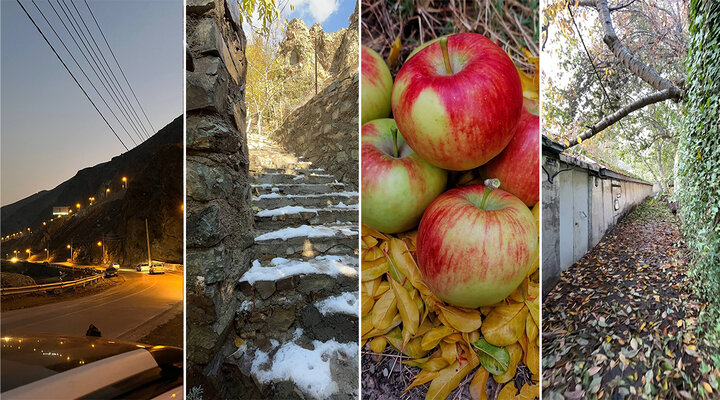
TEHRAN – About 30 kilometers northwest of Tehran, along the road to Imamzadeh Davoud and on the southern slopes of the Alborz Mountains, Sangan offers a different perspective on life beyond the capital. Its historic religious buildings, traditional basketry, fruit orchards and mountain landscapes make it an appealing destination for visitors seeking a short escape from the city.
Yet Sangan is more than a place for a day trip. The village preserves traces of centuries-old traditions, local craftsmanship and agricultural practices that have shaped its identity. It also offers opportunities to explore rural architecture, learn about nomadic culture and discover the natural attractions of the surrounding mountains.
For Tehran residents, its relatively short distance from the capital makes it an accessible destination for village tourism and nature-based excursions.
Rural tourism beyond an overnight stay
In recent years, Sangan has also been developing new forms of rural tourism, offering visitors experiences beyond conventional accommodation.
Reza Mollanorouzi, a cultural heritage activist involved in rural tourism, told the Tehran Times that villages close to Tehran provide city residents with an opportunity to experience rural lifestyles without travelling long distances.
He highlighted four types of traditional accommodation available at the Arg-e Sangi complex: wooden cabins, mud-brick cabins, stone cabins and nomadic black tents.
Each represents a different architectural tradition and way of life in Iran.
Wooden cabins are more commonly associated with the country’s northern regions, while mud-brick structures are characteristic of central and some mountainous areas. Stone cabins reflect the building traditions of mountain communities, and black tents represent the traditional dwellings of nomadic groups.
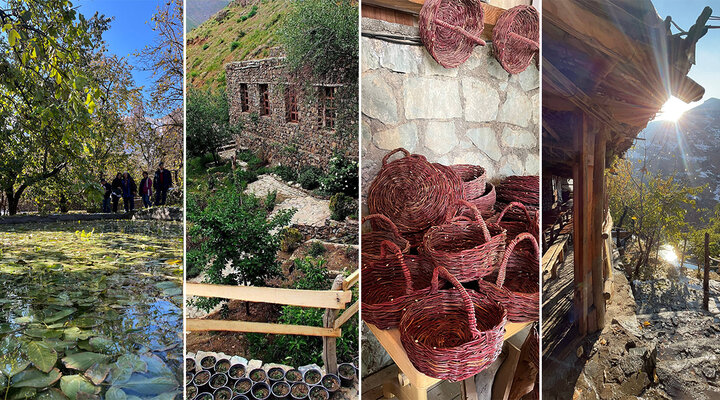
According to Mollanorouzi, the complex allows visitors to experience all four types of accommodation in one location.
He said staying in a nomadic black tent is particularly interesting for Tehran residents, who would otherwise have to travel much farther to experience this form of traditional dwelling.
The experience also has a historical dimension. Contrary to the common perception that nomadic life was largely confined to distant rural areas, parts of the Tehran region were once connected to seasonal migration routes.
Mollanorouzi said nomadic groups and livestock herders traveled through areas around Varamin and the surrounding highlands as part of their seasonal movements. Sangan was among the places familiar with this way of life.
For this reason, he believes that experiencing a black tent in Sangan can offer more than a recreated accommodation setting. It can introduce visitors to an important part of the region’s social history.
He also argues that rural tourism should go beyond overnight stays. Traditional bread-making, local food, medicinal plants, village architecture and evening gatherings can all become part of a more meaningful visitor experience.
Such activities, he said, can help preserve and transmit intangible cultural heritage while creating additional opportunities for local communities.
A historic religious complex with centuries of history
One of Sangan’s most notable heritage sites is a centuries-old Takyeh in Sangan-e Pain, a traditional religious gathering place distinguished by its wooden ceiling and historic features.
Alireza Mashhadi, a local tourism activist, told the Tehran Times that available evidence suggests the building has a history of around 700 years.
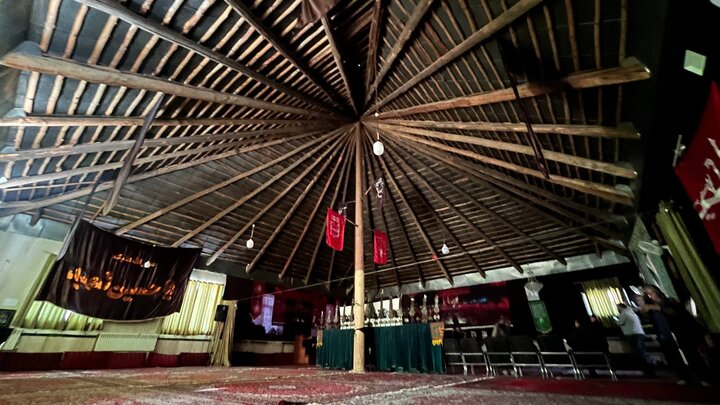
Some of the gravestones incorporated into its walls and other sections carry inscriptions dating from the Ilkhanid and Timurid periods, he said. These historical remains offer valuable clues to the village’s past and its social and religious life.
The structure has undergone changes and restoration over the centuries, particularly during the Qajar period. Therefore, not all of its present features necessarily belong to its earliest construction phase. Oral accounts among local residents also point to an older history for the site.
The Takyeh remains an important gathering place during religious occasions, in the lunar month of Muharram and Safar and the days commemorating the martyrdom of Fatima (AS), the daughter of Prophet Muhammad, to name a few.
One of its longstanding customs involves an elder or veteran religious servant offering a guest a piece of bread and some water before the main reception begins. Younger residents then prepare the communal spread, traditionally without disposable plastic tableware.
The practice reflects the close family and social ties that remain part of village life.
The Takyeh also has a connection with Iranian television history. According to Mashhadi, several scenes featuring Rais Ali Delvari, a national hero, were filmed there in 1974 during the production of the historical television series Deliran-e Tangestan.
From local apples to cherries for export
Agriculture and fruit growing have long been central to Sangan’s economy.
Although wheat and barley were once widely cultivated, orchard farming gradually became more prominent.
Among the village’s traditional products is the Sanguni apple, as well, a local variety once known for its popularity and distinctive oily skin. In the past, residents stored the apples in sand to keep them usable for longer periods.
Cherry orchards are another defining feature of the village, particularly in spring. When the trees blossom, white flowers cover the gardens and create an attractive landscape against the backdrop of the Alborz Mountains.
Today, cherries are among the village’s most important agricultural products. Local sources say they are sold in domestic markets and exported to some Persian Gulf littoral states, Russia and some European destinations.
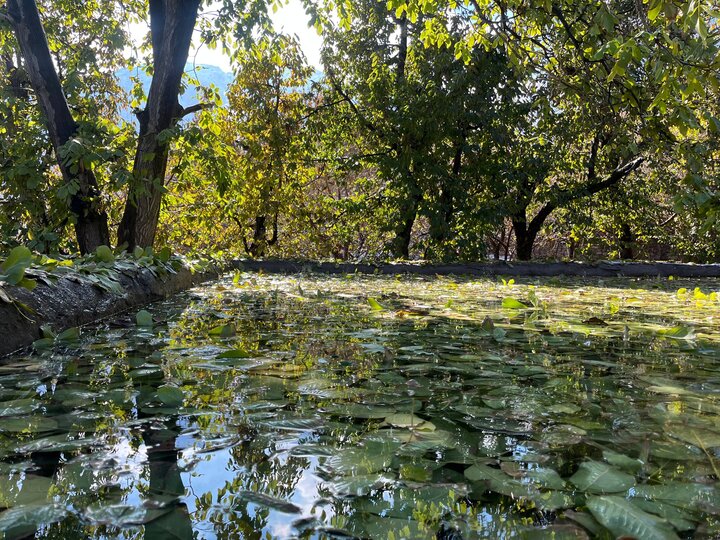
Walnuts and mulberries are also among Sangan’s notable orchard products.
Sangan basketry: A craft at risk of disappearing
Beyond its historic buildings, Sangan has a distinctive tradition of handicraft production known as Sanguni basketry.
The craft was inscribed on Iran’s National Intangible Cultural Heritage List in 2019 under registration No. 2658.
Local artisans traditionally make the baskets from willow branches collected in autumn. After preparation, the branches are woven into containers of different sizes and shapes.
In the past, these handmade products served a variety of household and agricultural purposes. They were used as strainers, rice covers, serving baskets and containers for collecting and carrying fruit.
Larger baskets, locally known as Dastareh, were particularly useful during fruit harvesting.
Basketry was once closely connected with the village economy. Farmers used large woven baskets to transport their produce, especially apples, to Tehran on pack animals.
The route reportedly passed through the historic caravanserai of Kan before reaching Gomrok district in downtown Tehran. The journey illustrates the longstanding economic connections between Sangan and the capital.
However, changing lifestyles and modern packaging methods gradually reduced demand for traditional baskets. Today, only a small number of people continue the craft.
Mashhadi believes national registration alone cannot guarantee its survival. Without active producers, a viable market and opportunities to pass the skills on to younger generations, the tradition could eventually disappear.
Sangan Waterfall: A mountain attraction in every season
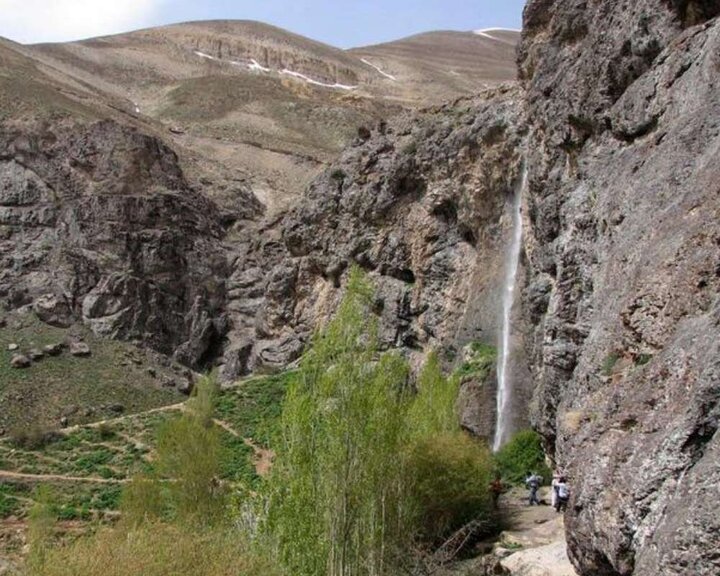
Sangan Waterfall is perhaps the village’s best-known natural attraction. It is a popular destination for hikers and nature enthusiasts around Tehran.
Estimated to be between 40 and 60 meters high, the waterfall changes considerably with the seasons.
In spring, increased water flow and green vegetation make the surrounding landscape particularly attractive. Summer and autumn offer their own mountain scenery, with changing colors and vegetation along the walking route.
Winter, however, brings the waterfall its most distinctive appearance. During periods of severe cold, flowing water freezes into enormous icicles, sometimes reaching approximately 20 to 30 meters in height. The frozen formations attract photographers, hikers and mountaineers.
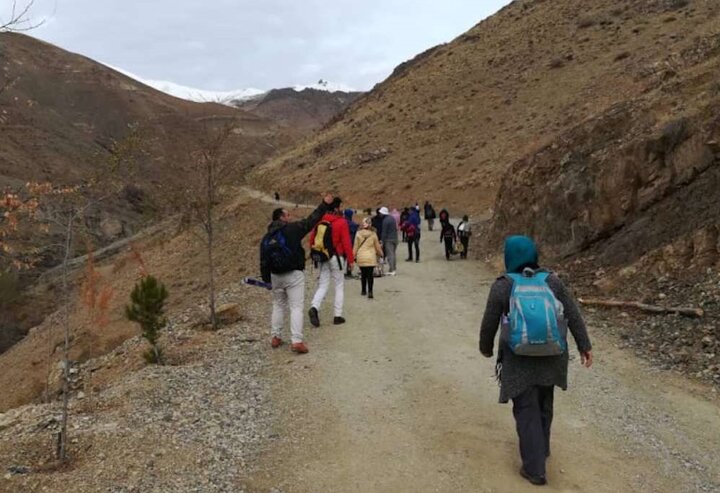
The hiking route begins near Imamzadeh Qasem in Sangan-e Bala. It passes orchards, streams and foothill trails before becoming steeper and more mountainous as it approaches the waterfall.
Reaching the site requires a mountain hike rather than a short walk. The time needed depends on fitness, weather and trail conditions, and visitors should allow several hours for the excursion.
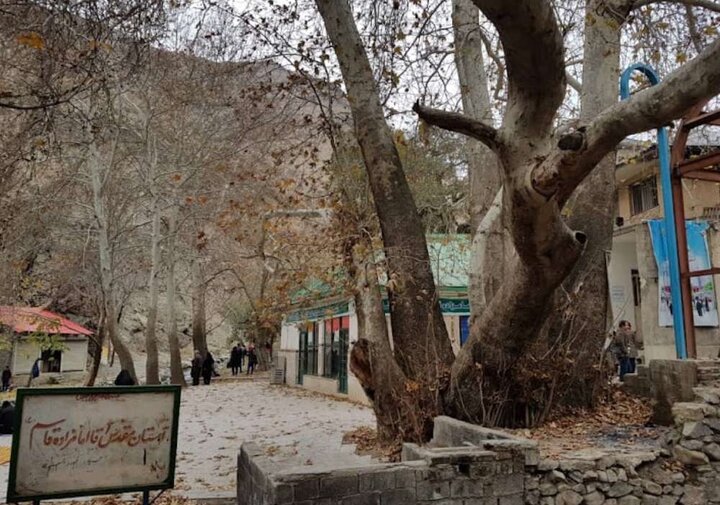
Another notable natural landmark is the old plane tree near Imamzadeh Qasem. Its age has been estimated at around 700 years, although the tree’s registration documents refer to an age of more than 400 years.
A rich variety of mountain plants
Sangan’s location on the southern slopes of the Alborz range has given it a diverse natural environment.
Thyme, mountain tea, kakuti, rhubarb and several medicinal plants grow in the surrounding highlands.
Mashhadi also points to species such as Zarrin-giah and Zaban-e Tala, which he considers botanically significant. Zaban-e Tala, in particular, is associated with habitats in the Alborz Mountains and produces distinctive flower clusters during summer.
This botanical diversity offers opportunities for nature-based tourism and environmental education. However, its potential can only be sustained through responsible tourism and protection against excessive harvesting of wild plants.
Getting to Sangan
Sangan can be reached from western Tehran through Shahran and Kuhsar Boulevard, followed by the Kan-Solqan road towards Imamzadeh Davoud. Visitors then take the turnoff for Sangan and continue through Sangan-e Pain towards the upper parts of the village.
The road becomes narrower and more winding as it climbs towards the mountain settlements. Traffic can increase considerably on weekends and during pleasant weather, making parking difficult.
Visitors planning to hike to the waterfall should allow sufficient time to find a parking space and prepare for the mountain trail. The waterfall cannot be reached by car.
Sangan comprises several traditional sections, including Sangan-e Pain, Sangan-e Vasat and Sangan-e Bala, each with its own character.
Sangan-e Pain is among the older parts of the settlement and serves as an entrance to the village. Sangan-e Bala, meanwhile, is the main starting point for visitors heading towards the waterfall and Mount Pahneh Hesar.
Imamzadeh Qasem is an important landmark in the upper village. Other religious sites in and around the area include Imamzadeh Seyyed Alaeddin and Imamzadeh Aqil.
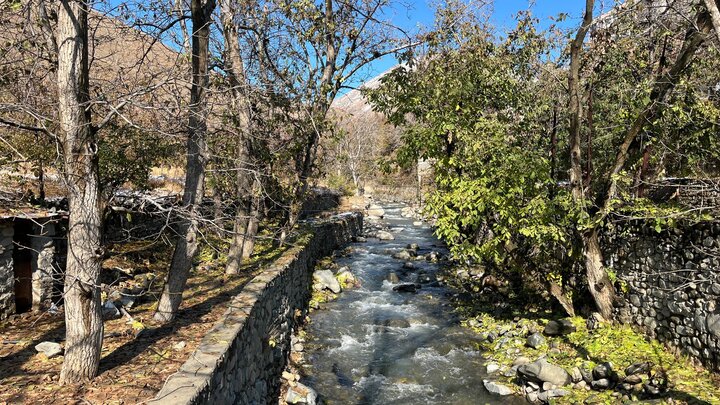
The village’s river and surrounding valleys also contribute to its appeal. The walking routes pass near orchards and mountain slopes, making the journey enjoyable even for visitors who do not intend to complete the hike to the waterfall.
Visitors should remember that many orchards and agricultural plots are private property and form part of residents’ livelihoods. Entering them or picking fruit without permission should be avoided.
AM
Disclaimer : This story is auto aggregated by a computer programme and has not been created or edited by DOWNTHENEWS. Publisher: tehrantimes.com