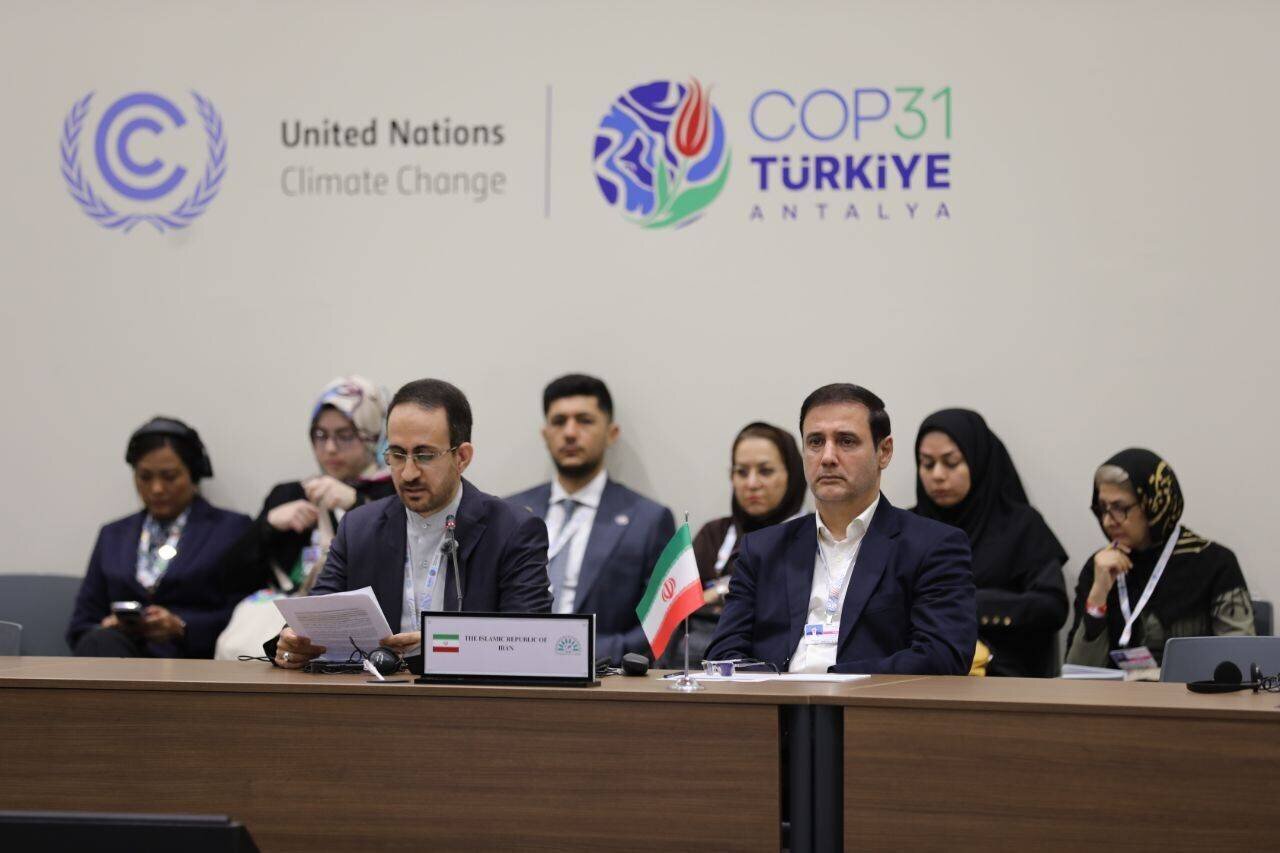
TEHRAN – Iran’s solar power capacity has increased fivefold over the past two years, reflecting the country’s determination to harness clean energy and transition toward low-carbon development, the head of the National Center for Weather and Climate Change affiliated with the Department of Environment (DOE) said.
Emphasizing the need to uphold the principles of climate justice and “common but differentiated responsibilities” in international cooperation, Ahmad Taheri said developing countries have contributed the least to global greenhouse gas emissions but are among those most severely affected by climate change, IRNA reported.
The official made the remarks while addressing the D-8 Ministerial Session on Climate Action, on the sidelines of the 31st Conference of the Parties to the United Nations Framework Convention on Climate Change (COP31), being held in the city of Antalya from November 9 to 20 in Antalya, Turkey.
The official also called for strengthening cooperation on climate among member states, and facilitating developing countries’ access to financial resources and clean technologies, noting that unilateral coercive sanctions should not hinder countries’ fair and forecastable access to climate finance, environmental technologies, and essential equipment.
Referring to the shared challenges of D-8 member states in climate change, including water scarcity, drought, desertification, extreme weather events, pressures on ecosystems, and threats to food security, Taheri said addressing these challenges requires greater solidarity, coordinated actions, and the expansion of regional cooperation.
The official went on to announce Iran’s readiness to share expertise and technical knowledge with D-8 member states, and proposed expanding ties in fields like developing clean technologies, managing water resources, enhancing the climate resilience of cities and rural communities, and implementing joint projects.
The first meeting of D-8 environment ministers was held in Istanbul on July 16–17. It was chaired by Murat Kurum, Turkey’s Minister of Environment, Urbanization and Climate Change.
The meeting brought together senior officials from all nine D-8 member states: Bangladesh, Egypt, Indonesia, Iran, Malaysia, Nigeria, Pakistan, Azerbaijan, and Turkey. The central outcome was the unanimous adoption of the “Istanbul D-8 Ministerial Declaration on Climate Action and Preparation for COP31”.
The D-8 Ministerial Session on Climate Action was held on November 17 under the theme of ‘From Istanbul to Antalya: D-8 Partnership on Climate Implementation’.
It called for a shift from climate pledges to concrete implementation through accessible finance and technology transfer.
Ministers agreed to develop a dedicated framework to guide the bloc’s cooperation on climate adaptation over the next five years.
During the session, delegations from member states also presented their respective Nationally Determined Contributions (NDCs)
COP31 is one of the most significant international gatherings on climate change, bringing together representatives from nearly 200 countries, government officials, experts, scientists, environmental activists, and representatives of international organizations.
Iran is participating in the conference with a delegation of experts and representatives from relevant government bodies, headed by Shina Ansari, the head of the Department of Environment. Iranian experts are focusing on challenges related to drought, financing food systems, war-related environmental degradation, and the presentation of investment-ready adaptation projects.
President Masoud Pezeshkian also attended the conference for the first time. This marks the first time an Iranian president participated in this international gathering at such a high level.
Iran will also present its measures to address climate change, including efforts to reduce greenhouse gas emissions, adapt to climate impacts, reduce gas flaring, adopt high-level policy documents, and implement a climate management plan, despite existing limitations and challenges.
Iranian experts are seeking to strengthen water and climate diplomacy and draw on international experience to address the impacts of climate change. This approach is particularly important given the country’s climatic conditions and growing pressure on water resources and the agricultural sector.
Ansari had also said at a meeting reviewing Iran’s main challenges and negotiating priorities ahead of COP31 that the country’s focus at the climate conference would be on highlighting the environmental consequences of war and calling for international accountability.
Highlighting war-related environmental damage at COP31, Ansari said reconstruction after the war should be viewed as an opportunity not merely to restore pre-war conditions, but to promote green recovery, advance sustainable development, and address environmentally harmful development patterns.
She stressed that the consequences of war extend far beyond the cessation of military hostilities, leaving lasting impacts on soil, water, air, forests, wetlands, and natural habitats that can persist for years and affect future generations.
The official made the remarks on Monday at an international conference titled “The Shadow of War on People and Nature in the Region.”
Ansari said designating November 6 as the International Day for Preventing the Exploitation of the Environment in War and Armed Conflict serves as a reminder that environmental protection must not be sidelined during wartime. Assessments of the environmental consequences of armed conflicts, she added, should begin during conflicts rather than be postponed until they end.
Referring to the five interconnected pillars of the United Nations Sustainable Development Agenda — people, planet, prosperity, peace, and partnership — Ansari said these dimensions could not be achieved independently. The experience of war, she noted, demonstrates that peace is the essential foundation for achieving the other dimensions of sustainable development.
Without peace, people’s security and health are endangered, natural resources and ecosystems are damaged, and opportunities for social participation and national and international cooperation are undermined.
From this perspective, peace means more than simply the absence of war; it is closely linked to human security, public health, sustainable access to resources, and the ability to live with dignity. Protecting water, soil, air, and ecosystems is therefore an integral part of human security and lasting peace, she said.
Highlighting the direct and indirect environmental impacts of armed conflicts, Ansari said attacks on industrial and energy facilities, fires at fuel storage sites, pollutant emissions, damage to water and sewage infrastructure, and contamination of water and soil create interconnected environmental and public health hazards.
Many of these impacts may not be immediately visible, she noted, but can persist for years, affecting livelihoods, food chains, and the health of local communities.
The experience of conflicts in other countries also shows that environmental consequences do not end when military operations cease, Ansari said.
If environmental concerns are not given a clearly defined place in damage assessments, relief programs, and reconstruction policies, she warned, part of the cost of war will be passed on to future generations.
MT/MG
Disclaimer : This story is auto aggregated by a computer programme and has not been created or edited by DOWNTHENEWS. Publisher: tehrantimes.com