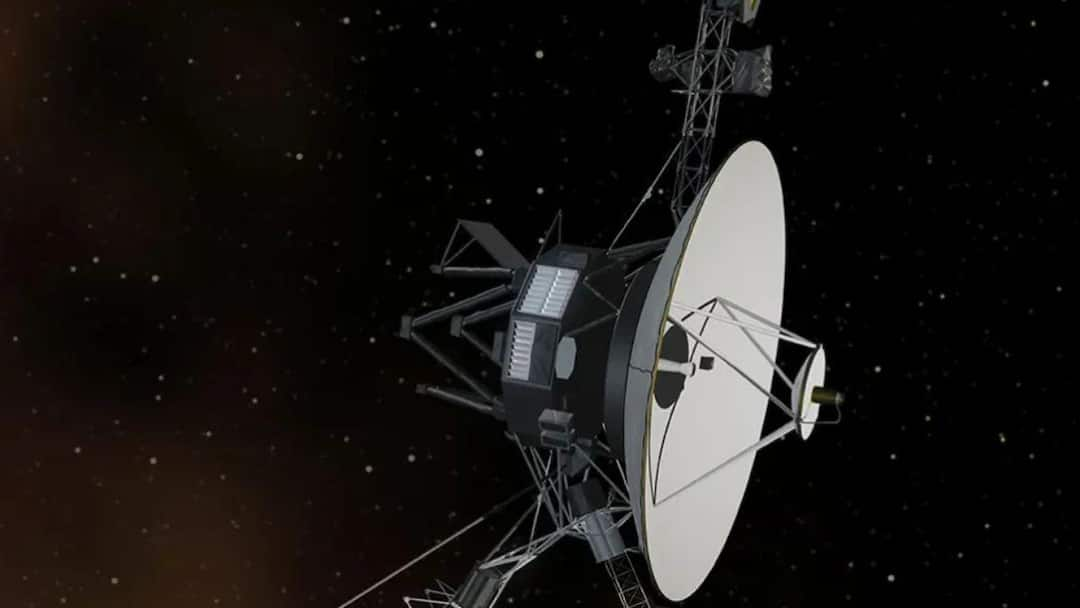
- Voyager 1 achieved one light-day distance from Earth.
- Launched 1977, signals take 24 hours to reach probe.
- Spacecraft discovered rings, moons around Jupiter and Saturn.
NASA’s Voyager 1 spacecraft has reached a historic milestone, becoming the first human-made object to travel one light-day away from Earth. The distance is so vast that signals travelling at the speed of light take a full 24 hours to reach the probe.
Launched on September 5, 1977, Voyager 1 reached the milestone on November 18 at 5:16 am EST (1016 GMT). The spacecraft is now approximately 16 billion miles (about 26 billion kilometres) from Earth.
Voyager 1 lifted off just a couple of weeks after its twin, Voyager 2. However, it followed a faster trajectory, allowing it to reach the one-light-day mark first.
The achievement highlights the ingenuity, technical expertise and creativity of NASA teams who have continued to innovate and keep the mission operational nearly five decades after its launch.
Voyager 1 Reaches 16.1 Billion Miles From Earth
Explaining the significance of the milestone, Voyager Project Scientist Linda Spilker told Space.com: “The Earth and Voyager are exactly 24 hours apart at the speed of light.”
“It’s a very special moment where Voyager 1 is about 16.1 billion miles away, and we’re celebrating that moment because it’s the first human-made object to actually reach one light-day distance.”
Voyager Spacecraft’s Historic Journey
The two Voyager spacecraft have been travelling through the solar system and beyond since their launch in 1977, with each probe undertaking a distinct and historic journey.
During its exploration of the solar system, Voyager 1 made several groundbreaking observations of planets and moons that had never been seen up close before.
The spacecraft discovered a ring around Jupiter, along with two of the planet’s moons, Thebe and Metis. It also identified five new moons and another ring around Saturn.
Disclaimer : This story is auto aggregated by a computer programme and has not been created or edited by DOWNTHENEWS. Publisher: abplive.com