A senior doctor whose evidence helped to convict Lucy Letby and who was held up by prosecutors as a pre-eminent expert was barred from treating patients during the trial over fears he posed a risk to their safety.
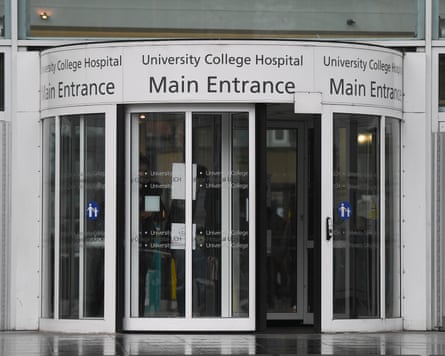
Prof Peter Hindmarsh, a specialist in hormones in children, was crucial to the crown’s argument that Letby had poisoned children by injecting insulin into fluid bags. But a Guardian investigation can reveal he was excluded from clinical practice in March 2023, five months before the end of the trial, by his employer, University College London hospitals trust (UCLH). Jurors were never told.
Among the reasons for UCLH’s decision was that his advice to child patients relating to insulin was not considered safe. A UCLH medical director told the General Medical Council, the doctors’ regulator, that the hospital could not “accept the level of risk Professor Hindmarsh appears to pose to children and young people”.
The GMC, which was already investigating Hindmarsh’s fitness to practise, subsequently applied for his registration as a doctor to be suspended. That could have resulted in his evidence in the trial of Letby – which was still in progress – being dismissed.
However, in April 2023 a medical practitioners tribunal – an independent panel that decides GMC proceedings against doctors – opted not to suspend his registration. Instead, it ordered that Hindmarsh be directly supervised in his work, to protect patient safety. That decision had no practical effect because UCLH had already barred him from practising at all.
While Hindmarsh’s ability to practise was being restricted, the trial of Letby continued at Manchester crown court. Her defence team was never informed that Hindmarsh’s hospital considered his professional judgment and practice so deficient as to be unsafe to child patients, or of the April 2023 tribunal ruling.
While Hindmarsh did inform Cheshire constabulary in December 2022 that he was subject to a GMC investigation, and in February 2023 the Crown Prosecution Service told Letby’s defence, her legal team was not made aware that he was later barred from practising on safety grounds.
Had they known, Letby’s defence team might have challenged his credibility as an expert witness and applied for the jury to be told or for his evidence to be dismissed.
Failures of disclosure are recognised as potential grounds for a CCRC referral and for convictions to be overturned.
The apparent lack of transparency could mean Hindmarsh breached legal rules requiring expert witnesses to disclose to the party instructing them any disciplinary proceedings against them and anything that may be considered to undermine their credibility. Hindmarsh declined to answer any of the Guardian’s questions about this, the hospitals’ concerns about him, or the GMC investigation.
Letby, who was a neonatal nurse at the Countess of Chester hospital, was convicted of murdering seven babies and attempting to murder seven others, and sentenced to 15 whole-life terms in prison. Court of appeal judges turned down her applications to appeal.
She has always maintained she is innocent, and her lawyer Mark McDonald has applied to the Criminal Cases Review Commission, the miscarriages of justice watchdog, to send her case back to the court of appeal.
Since the convictions, dozens of leading UK and international medical experts have argued that the prosecution’s case, including Hindmarsh’s evidence, was wrong, and produced reports submitted in support of her CCRC application.
Dr Shoo Lee, a renowned Canadian neonatologist who argues that the prosecution misrepresented his research, last year made public the summary findings of a 14-member expert panel he had convened. They found unanimously that the babies died or collapsed due to natural causes and poor medical care on the unit, and that there was no evidence of murders, insulin poisoning or any other deliberate harm.
Seven experts have contributed to reports submitted by McDonald to the CCRC, contesting Hindmarsh’s opinions. They argue that Hindmarsh’s calculations and diagnoses of the babies’ medical conditions were factuallyinaccurate in many respects, and his opinion that insulin was infused via the fluid bags is not supported by the evidence. The experts also argue that blood tests known as immunoassays, relied on by the prosecution as definitive evidence of poisoning, are known to be fallible.
Lady Justice Thirlwall, who chaired a two-year public inquiry after the convictions, refused to consider the experts’ arguments that Letby may have suffered a miscarriage of justice, or to wait for the CCRC decision. She produced a report in September making a series of recommendations for the NHS, on the basis that Letby was guilty.
The insulin expert
Hindmarsh was presented to the Letby jury throughout as a distinguished authority. The lead barrister for the Crown Prosecution Service (CPS), Nick Johnson KC, described him to jurors as “the pre-eminent expert” on insulin.
Hindmarsh was a consultant paediatric endocrinologist – a specialist in hormones, including insulin, in children – at UCLH from 1991, and a professor at UCL, with an eminent reputation.
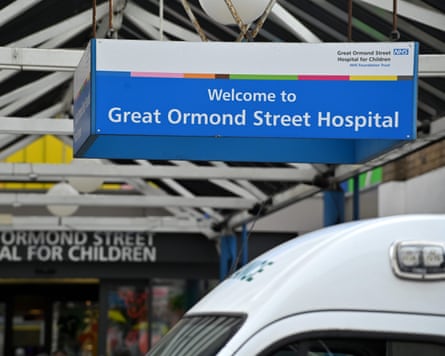
When Johnson introduced Hindmarsh at the trial, he asked if he was also an honorary consultant at Great Ormond Street. The jury was not told that four months earlier, in July 2022, Hindmarsh’s contract in that role at the children’s hospital had been terminated.
Hindmarsh asserted in his trial evidence that blood tests and the medical records of two babies being cared for at the Countess of Chester hospital showed they had been poisoned with insulin, most likely inserted into intravenous fluid bags. The prosecution alleged that Letby injected insulin into the bags, although there was no direct or forensic evidence that she or anybody else had done so.
Hindmarsh’s evidence alleging insulin poisoning was considered pivotal to the convictions. In summing up, the judge, James Goss, told the jury that if they were sure babies were being deliberately harmed, they could decide other babies were also being harmed, even if they were not sure about the precise cause.
Johnson presented the two cases of alleged insulin poisoning as incontrovertible evidence. The charges of attempted murder of those two babies were the first on which the jury reached guilty verdicts, and two of only three unanimous guilty verdicts.
‘Multiple and wide-ranging concerns’
The Guardian first revealed in March that the GMC launched an investigation into Hindmarsh on 25 November 2022, the same day he first gave evidence as an expert for the prosecution of Letby.
Great Ormond Street hospital had reported “multiple and wide-ranging concerns” to the GMC, including Hindmarsh’s “diagnosis and treatment of patients” and “cases where harm to patients has been alleged”. UCLH had been leading a formal investigation of its own into Hindmarsh, and in December 2022 it reported its similar concerns to the GMC.
Then in January 2023, while the Letby trial was still ongoing, a medical tribunal imposed orders that while the GMC investigation continued, Hindmarsh could only work at UCLH, and his clinical work had to be supervised, because otherwise he “may pose a real risk to members of the public”.
Until now, it has not been publicly known that UCLH reported further serious concerns on 15 March 2023, and informed the GMC it had excluded Hindmarsh from treating patients at all. This was less than three weeks after Hindmarsh had given his second and final day of evidence at Letby’s trial, on 24 February.
Documents seen by the Guardian show that a UCLH medical director, Dr Tim Hodgson, informed the GMC of the hospital’s decision. Hodgson wrote that Hindmarsh had breached the supervision order and given independent medical advice relating to three child patients, two involving insulin and diabetes. Hindmarsh’s medical colleagues had submitted “written concerns” about him, Hodgson said.
“On the grounds of safety UCLH are not presently in a position to allow Professor [Hindmarsh] to practice clinically even under supervision,” he wrote. “… I do not believe UCLH can accept the level of risk Professor Hindmarsh appears to pose to children and young people even with close clinical supervision.”
In two of the cases, Hodgson said Hindmarsh had independently advised the families that the children stop being given insulin at home. One of the children had an episode of diabetic ketoacidosis (DKA), a critical, life-threatening complication caused by a severe lack of insulin.
“The patient had an episode of DKA and it’s not clear whether this coincided with the alleged advice from Professor Hindmarsh,” Hodgson wrote.
In the two insulin cases, Hodgson highlighted concerns that Hindmarsh was over-focusing on rare causes of hypoglycaemia (low blood sugar) and diabetes (a cause of high blood sugar). In the first case, his colleagues believed Hindmarsh was not addressing more common causes of diabetes, and in the second, that he was “not treating high glucose levels appropriately”.
Had Letby’s defence team been informed of this, it could have strengthened the case for an application to inform the jury or exclude Hindmarsh’s evidence.
Experts who have provided reports for Letby’s CCRC application have argued that Hindmarsh’s opinion that the babies were poisoned via their fluid bags was an extremely unlikely explanation for their condition. They argue that Hindmarsh failed to recognise more common, identifiable medical causes.
Hodgson also said Hindmarsh had questioned the reliability of an insulin blood test result, sharing “his concern with the family that this was an erroneous, fallible test”.
This too could have been significant to Letby’s defence. At the trial, Johnson presented results from the immunoassay blood tests as definitive and said there was “no doubt” the two babies were poisoned.
Experts supporting Letby’s CCRC application say immunoassays are known to be fallible because they can react to antibodies in blood to give a falsely high insulin result. Hodgson’s report suggests Hindmarsh recognised that blood tests for insulin were fallible, but he never made this clear at Letby’s trial.
The duty to disclose
The GMC responded to these new concerns by applying to the tribunal for Hindmarsh’s registration as a doctor to be suspended. Hindmarsh’s barrister argued stronglythat although he would not be treating patients because UCLH had excluded him, he should be allowed to continue working as an expert witness. Suspension, she said, would impede his ability to do so.
The barrister argued to the tribunal that Hindmarsh had not breached the supervision order and “no harm has been caused to patients”.
The three-person tribunal said it could not determine whether the previous supervision order had “technically” been breached. “However, the tribunal felt that the three cases identified by UCLH did raise concerns about patient safety,” it said.
The tribunal decided that to suspend Hindmarsh would be disproportionate and explicitly allowed him to continue working as an expert witness, saying its order should not “restrict his non-clinical work”.
Instead, it imposed a tightening of the supervision requirement so that Hindmarsh from then had to be directly supervised when treating patients. This appears to have been a theoretical measure, however, because Hindmarsh was already restricted to only working for UCLH, and the hospital had barred him from treating patients at all.
Expert witnesses have a legal duty under the criminal procedure rules to tell the party instructing them – in Hindmarsh’s case, Cheshire constabulary – anything “that might reasonably be thought capable of undermining the expert’s opinion or detract from the credibility or impartiality of the expert”. This includes any disciplinary proceedings by a regulatory body.
The rules were introduced in 2014 to improve the reliability of expert evidence and guard against miscarriages of justice, after a series of wrongful convictions in the late 1990s and 2000s.
Lawyers have told the Guardian that under the rules, Hindmarsh should have told the police of the April 2023 tribunal ruling and that his hospital had barred him from clinical practice.
Tim Green KC, a specialist in disclosure, told the Guardian: “Whilst I cannot comment on the facts behind this complex and sensitive case, it is clear that the duty of an expert witness to make disclosure in a criminal or civil case of all material capable of undermining his opinion or detracting from his credibility is a continuous one.
“This duty extends after he has given evidence and through to the end of the proceedings. The duty continues through to any appeals, and arguably remains extant now, during the current considerations of the CCRC.
“Further restrictions imposed by a professional disciplinary tribunal on an expert’s right to practise, like those which can be imposed by the medical practitioners tribunal, are also disclosable in my view. Such restrictions are likely to be relevant to an assessment made by a jury or judge of an expert’s opinion evidence, competence and skill. For the same reasons, it also arguable that the information which led the tribunal to impose those restrictions in the first place is also disclosable.”
Lawyers have said Hindmarsh may have had a duty to tell the police and CPS initially, earlier in 2022, of the investigation into his practice led by UCLH, and that Great Ormond Street had terminated his contract. He does not appear to have done so.
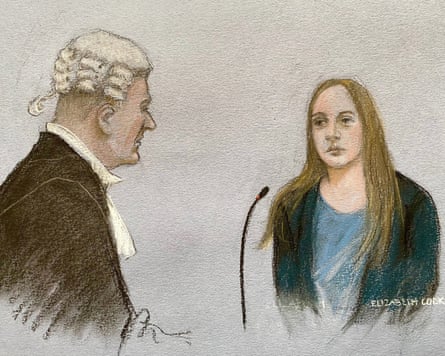
When Johnson, the lead prosecutor, first introducedHindmarsh in court on 25 November 2022, he sought to clarify that the professor had an eminent position at Great Ormond Street as well as UCLH. After two questions not answered clearly, Johnson asked Hindmarsh: “Are you an honorary consultant at Great Ormond Street hospital though?” Hindmarsh replied: “Yes. At that stage, yes.”
Hindmarsh did not say his contract at Great Ormond Street had been terminated four months earlier. That point was never clarified to the jury.
Hindmarsh was first informed of the GMC investigation into him on 30 November 2022. By this point, he had already made his first appearance in the Letby trial.
He told Cheshire constabulary two weeks later, on 14 December 2022. The CPS was informed two months later and told Letby’s then barrister, Ben Myers KC, on 20 February 2023, just four days before Hindmarsh was due to give his second day of evidence.
The CPS told Myers it would oppose the jury being told, because the GMC investigation into Hindmarsh had not reached a final adjudication. Myers did not then make an application to the judge for the jury to be informed.
On 23 February 2023, the day before Hindmarsh was due to return and give evidence, Johnson reminded the jury about him. “Professor Peter Hindmarsh will be here tomorrow to deal with the issue of insulin,” Johnson said. “And because he’s the pre-eminent expert in that narrow field, we will call him first.”
In July 2023, the judge referred to Hindmarsh’s evidence in his summing up. He did not mention Great Ormond Street at all, describing Hindmarsh as “emeritus professor of endocrinology at University College London and also a consultant paediatric endocrinologist at University College London hospitals”. Apparently unknown to the judge, UCLH had excluded Hindmarsh from practising as a consultant four months earlier.
Letby was convicted in August 2023. The GMC investigation into Hindmarsh never reached a final determination. In November 2024 Hindmarsh applied to remove himself from registration as a doctor. The GMC allowed this, a process known as “voluntary erasure”, which meant the investigation was stopped with no final adjudication.
The CPS has confirmed to the Guardian that it did not disclose to the defence anything relating to Hindmarsh being barred from clinical practice or the April 2023 tribunal ruling, because it had not been made aware of it.
Cheshire constabulary declined to provide information to the Guardian, so it is not clear whether Hindmarsh did or did not tell the police. Either way, it was not passed to the CPS, which would have disclosed it to Letby’s defence.
“Cheshire constabulary will not be commenting further in relation to this case,” a spokesperson said.
A CPS spokesperson said: “The CPS met all its disclosure obligations and no objections were raised by the defence at any stage in relation to expert evidence relied on by the prosecution.”
The CPS’ statement is made on the basis that it disclosed what it knew to the defence, and it had not been told about the tribunal ruling or that Hindmarsh was barred from treating patients. Johnson’s representatives did not reply to questions from the Guardian.
McDonald, Letby’s lawyer, said: “Peter Hindmarsh’s evidence was pivotal to the prosecution’s case against Lucy Letby. The insulin allegations were not simply another part of the prosecution’s case; they were its cornerstone, presented as scientific proof that she had deliberately poisoned babies and was capable of murder.
“It shaped the jury’s perception of Lucy and provided the lens through which they were invited to view every other allegation. This was not evidence that could be neatly confined to two convictions. Its influence permeated the entire trial. If the foundations of the insulin cases are unsafe, the consequences for the safety of the wider convictions cannot be overstated.”
The Guardian asked Hindmarsh detailed questions about the hospitals’ concerns, UCLH excluding him from clinical practice, and the GMC investigation, and put to him that he appeared not to have made adequate disclosure under the criminal procedure rules.
A representative for Hindmarsh replied: “He has no comment in relation to these questions and points.”
Disclaimer : This story is auto aggregated by a computer programme and has not been created or edited by DOWNTHENEWS. Publisher: theguardian.com