Bengaluru: Karnataka minister Rizwan Arshad has urged the Centre to review the E20 programme in consultation with states after state-run inspections and independent tests allegedly found excess ethanol in petrol samples collected from some outlets.
He sought to clarify that the state government was not opposed to ethanol blending but objected to over-blending and any compromise with consumer interests.
In a letter dated November 17 to Union Minister for Petroleum and Natural Gas Hardeep Singh Puri, the Karnataka Minister for Food, Civil Supplies and Consumer Affairs presented the findings of statewide inspections and independent laboratory tests and called for a discussion on the issue.
He said the Oil Marketing Companies (OMCs) subsequently contested the State’s findings, alleging that the samples had not been collected as per the prescribed procedure and questioning their density.
The state rejected the allegations, maintaining that authorised officers had collected the samples in accordance with Clause 8 of the Motor Spirit and High Speed Diesel (Regulation of Supply, Distribution and Prevention of Malpractices) Order, 2005. Counterpart samples were sealed and handed over on the spot, he said.
“The Ethanol Blending Programme cannot come at the cost of the citizens. A transition of this scale needs the whole ecosystem to be ready, including fuel infrastructure and ethanol-compliant vehicles, and that transition takes time,” he said.
Arshad said state officials inspected 63 retail outlets across districts in September 2026, covering those operated by Indian Oil Corporation Limited (IOCL), Bharat Petroleum Corporation Limited (BPCL), Hindustan Petroleum Corporation Limited (HPCL) and Mangalore Refinery and Petrochemicals Limited (MRPL).
Samples were sent through the OMCs’ State Level Coordinator to designated laboratories of the three public sector OMCs.
Of the 63 samples, reports for only 42 have been received so far, and none specifies the ethanol content, he said.
When the state government sought an explanation, it was told that the Research Octane Number (RON) was the parameter used to determine compliance.
However, the OMCs, in their response, acknowledged that IS 17021 mandates measurement of ethanol content in blended petrol, but no such measurement had been carried out, he said.
Arshad said reports on the remaining 21 samples were also awaited, with no reason provided for the delay.
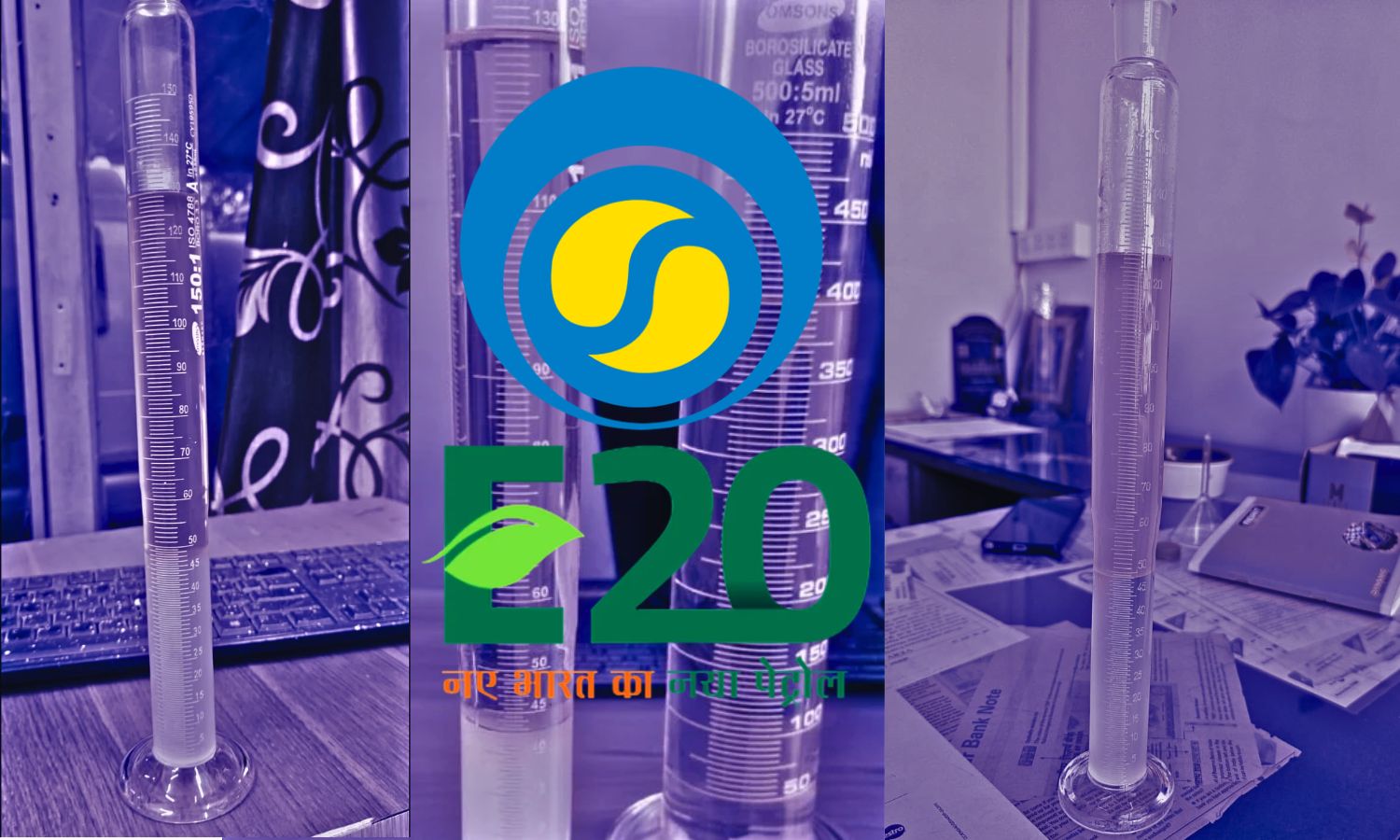
Subsequently, the Karnataka government collected fresh samples and sent them to independent laboratories accredited by the National Accreditation Board for Testing and Calibration Laboratories (NABL).
“Of the 14 samples tested, 11 were found to contain more than 20 per cent ethanol, with the highest at over 31 per cent,” he said.
Arshad further said ethanol content in the samples ranged from 13.5 per cent to 31.2 per cent, indicating significant variations from the prescribed 20 per cent blend. He raised concerns over premium high-speed petrol, sold at nearly Rs 120 to Rs 140 per litre, saying tests had found high ethanol content in these fuel grades as well.
The state government’s inspections appeared to have had a deterrent effect, with indications that the ethanol blend may have since been corrected. However, continuous compliance checks were necessary to ensure that consumers were not exposed to similar deviations again, he said.
The minister flagged concerns over the quantity of fuel dispensed at retail outlets and opposed two Central notifications, claiming they weakened existing safeguards.
The first notification, dated December 18, 2025, doubled the mandatory verification interval for petrol and diesel dispensers from 12 months to 24 months. The second, dated May 8, 2026, allowed private government approved test centres to verify fuel dispensers, a function previously performed by government inspectors.
Arshad said the state’s Department of Legal Metrology conducted a statewide inspection survey to assess the scientific basis of these changes.
A total of 101 outlets were found dispensing fuel beyond the maximum permissible error and were booked. Fines amounting to Rs 6.66 lakh were collected, he said.
The State has decided not to implement either notification and will continue annual verification of all dispensers through government inspectors, Arshad said.
He said the state government had written to Union Minister for Consumer Affairs, Food and Public Distribution Pralhad Joshi, seeking reconsideration of the two notifications.
In his letter, Arshad urged the Centre to consider five measures to protect consumers. These include prominently displaying the actual ethanol percentage of each grade of petrol at every retail outlet, printing the ethanol percentage on every fuel bill or receipt, and ensuring the availability of E10 and ethanol-free petrol alongside E20 at affordable prices until vehicles are fully compatible with higher blends.
He sought an independent random fuel-testing mechanism through NABL-accredited laboratories, with every report specifying the ethanol content, and the creation of a dedicated E20 compensation fund to compensate consumers whose vehicles suffer damage due to petrol containing ethanol above the prescribed limits.
Arshad said the implementation of the E20 policy required urgent course correction, with adequate time and support for upgrading vehicles, fuel infrastructure, dispensing units, storage and testing facilities.
“I would therefore urge you to review the implementation of the E20 programme in the light of these findings, in consultation with the States. Karnataka has now placed all its evidence before the Government of India and would welcome a detailed discussion at the earliest, so that together we can protect the people and restore public trust,” he said.
Disclaimer : This story is auto aggregated by a computer programme and has not been created or edited by DOWNTHENEWS. Publisher: deccanchronicle.com