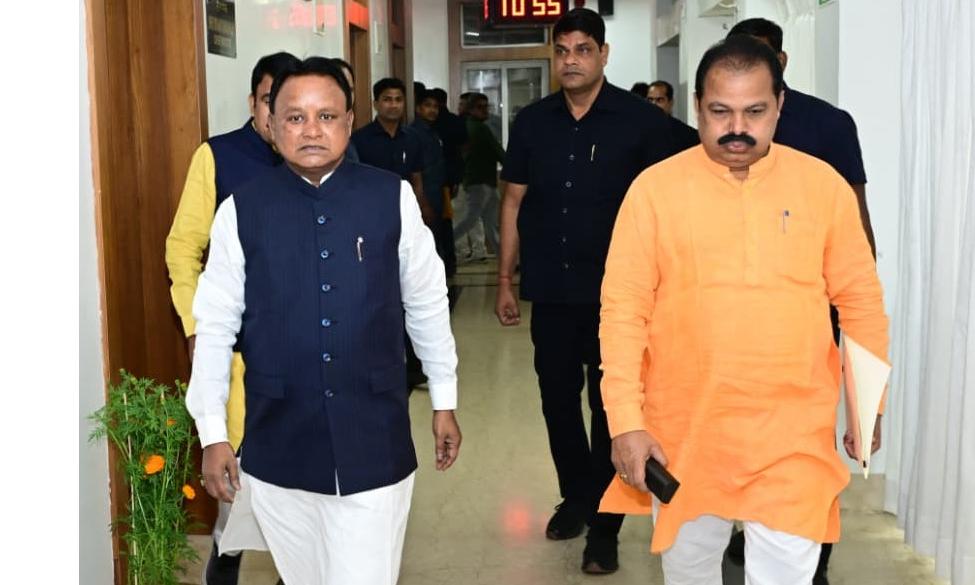
Bhubaneswar: The Odisha government on Wednesday presented a Rs 24,150-crore supplementary budget for 2026-27, with a major thrust on food security, social welfare, infrastructure development, education, healthcare and farmers’ welfare.
Chief Minister Mohan Charan Majhi laid the Supplementary Statement of Expenditure in the Legislative Assembly, seeking additional allocations to sustain ongoing development and welfare programmes and finance new initiatives.
Of the total supplementary provision, Rs 17,990 crore has been earmarked for programme expenditure, Rs 1,060 crore for administrative expenditure and Rs 5,100 crore for disaster response and relief measures.
Food security accounts for the largest allocation, with Rs 8,312 crore provided under the Mukhya Mantri Annapurna Yojana towards food subsidy. Another Rs 550 crore has been earmarked for the SUBHADRA Yojana, while Rs 697 crore has been allocated under the National Rural Livelihood Mission.
Infrastructure development has received Rs 2,359 crore, including Rs 642 crore for the Odisha Akshaya Shakti Bikash Yojana, Rs 500 crore under the Chief Minister’s Special Assistance and Rs 300 crore for sustainable groundwater extraction in water-deficit areas. Another Rs 550 crore has been provided for land acquisition for new railway lines.
The education sector has received Rs 1,715 crore, including Rs 485 crore for the Gyanodaya-Siksha ru Samruddhi KG-to-PG Free Education Scheme. Healthcare has been allocated Rs 1,246 crore, including Rs 500 crore under the National Health Mission and Rs 316 crore for public health infrastructure.
Farmers’ welfare accounts for Rs 1,606 crore, covering subsidies under the Samrudha Krushak Yojana, Shree Anna Abhiyan and other agriculture and allied-sector programmes.
The supplementary provision also includes Rs 843 crore for industries and MSMEs, Rs 733 crore for social security pensions and Rs 372 crore for urban development.
The government said the supplementary budget was compliant with the Fiscal Responsibility and Budget Management (FRBM) framework. It expects to maintain a revenue surplus, contain the fiscal deficit at around 3 per cent of GSDP and keep the debt-GSDP ratio within the mandated 25 per cent ceiling.
Disclaimer : This story is auto aggregated by a computer programme and has not been created or edited by DOWNTHENEWS. Publisher: deccanchronicle.com