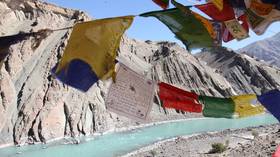
Ancient waters still sustain Pakistan’s farms and cities, even as the treaty meant to protect them is now under mounting strain
Long before modern borders divided South Asia, the Indus was shaping civilizations, sustaining communities and connecting distant lands through trade. Empires rose and disappeared along its banks, yet the river remained a constant presence in the region’s history. Today, as questions over its waters once again occupy the diplomatic agenda, that long history offers a perspective worth remembering.
Pakistan is a relatively young nation, but the land it occupies has a history stretching back thousands of years. It has witnessed the growth of ancient cities, the movement of peoples, the rise and fall of empires and the exchange of ideas, cultures and beliefs. To understand Pakistan is also to understand this remarkable historical inheritance, much of which developed around the Indus and its tributaries.
Where it begins: The Indus Valley Civilization
Long before the emergence of many of the world’s great classical civilizations, the cities of Mohenjo-daro and Harappa were flourishing in what is now Pakistan. Their carefully planned streets, sophisticated drainage systems, public wells and standardized brick structures reveal a society with an extraordinary understanding of urban life.
Unlike many ancient civilizations, the Indus Valley Civilization left behind no unmistakable royal palaces or grand monuments celebrating individual rulers. Among its most remarkable structures is the Great Bath at Mohenjo-daro, which is believed to have served a ceremonial or communal purpose.
Its script remains undeciphered, leaving important questions about its society unanswered. Yet archaeological discoveries reveal a civilization deeply connected with the wider world.
The Indus cities maintained trading links with Mesopotamia and the Persian Gulf. Seals and other archaeological evidence found across these regions point to an extensive network of commercial and cultural contacts. Mesopotamian references to a land called Meluhha, widely associated with the Indus region, offer further evidence of these early connections.
Thousands of years later, the same geographical position continues to shape Pakistan’s economic possibilities. Its ports, transport corridors and connections with Central Asia, the Persian Gulf and South Asia reflect the enduring significance of a region that has long served as a meeting point between different parts of the world.
Layers on the Indus
The decline of the great Indus cities did not mark the end of the region’s historical importance. Changing river courses, climatic shifts and other pressures transformed patterns of settlement, while successive civilizations and empires left their imprint on the land.
The Persian Empire extended its influence into the region, followed by Alexander the Great and the Greek kingdoms that emerged in his wake. Under the Mauryan and Kushan empires, Gandhara developed into a major center of Buddhist learning, art and culture.
Taxila became renowned for its intellectual and religious life, while Gandharan artists developed a distinctive artistic tradition combining influences from the Greek and Roman worlds with Buddhist themes. These traditions subsequently travelled along the Silk Road, reaching Central Asia and China.
The arrival and spread of Islam brought further cultural and political transformations. From the early Arab presence in Sindh to the Ghaznavids, Delhi Sultanate and Mughals, successive dynasties contributed to the region’s architecture, languages, literature and social traditions.
British rule introduced another chapter, particularly through the expansion of railways and irrigation networks. Yet the region’s importance as a crossroads of trade, culture and communication long predated colonial rule.
That layered history remains visible across Pakistan today: in the ancient ruins of Mohenjo-daro and Taxila, the Buddhist heritage of Gandhara, the Sufi shrines of Multan, the Mughal architecture of Lahore and the historic routes connecting South Asia with Afghanistan and Central Asia.
Through these transformations, the Indus remained a defining feature of the region’s geography and its people’s lives.
Disclaimer : This story is auto aggregated by a computer programme and has not been created or edited by DOWNTHENEWS. Publisher: rt.com