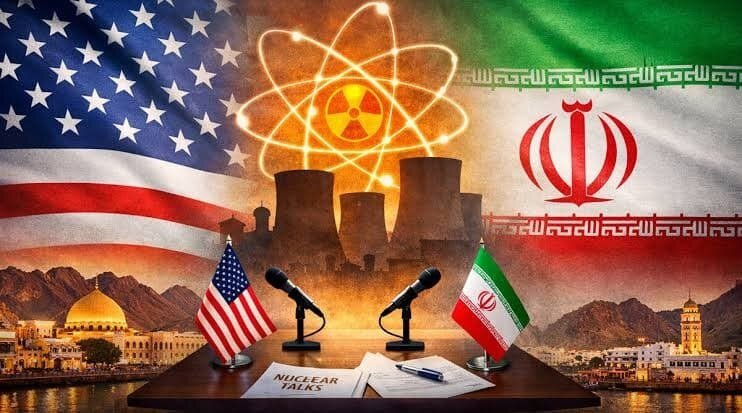
Goa, India – Enrichment is not weaponisation. A country’s technological capability is not proof of its intention to build a bomb. Yet Iran is being subjected to sanctions, military attacks, intelligence operations and international intimidation, while the nuclear double standards governing West Asia remain unchallenged.
For years, Iran has been made to live under the shadow of an impending nuclear catastrophe that has yet to materialise. Its nuclear programme is repeatedly presented as an existential threat to the world, its uranium enrichment as proof of an intention to manufacture nuclear weapons, and its technological advancement as justification for sanctions, isolation, intelligence operations and military threats. The argument is repeated so relentlessly that the distinction between what Iran is actually doing and what its adversaries allege it intends to do has almost disappeared from international discourse.
The more fundamental question is whether the nuclear controversy is really about preventing nuclear proliferation or whether it has become the convenient instrument through which Iran is denied its sovereignty, its legitimate technological aspirations and its right to determine its own political future.
Iran is not known to possess a nuclear weapon. There is no publicly established evidence that it has assembled one. Its uranium enrichment programme, including the enrichment of uranium to 60 per cent U-235, is a matter of international scrutiny and legitimate concern. But enrichment is not weaponisation. The possession of enriched uranium is not the same as manufacturing a nuclear bomb. Nor does the capacity to produce weapons-grade material automatically establish a political decision to manufacture a weapon.
The continuing attempt to collapse these distinctions is at the centre of the campaign against Iran.
The politics of a manufactured nuclear emergency
The nuclear controversy has developed against a much wider political background. Iran has been subjected to decades of American sanctions, diplomatic isolation, economic restrictions, covert operations and military intimidation. Its regional relationships have been treated as a threat to Western interests, while its independent foreign policy has frequently been presented as an unacceptable challenge to the existing geopolitical order.
The nuclear programme has provided the most convenient justification for this continuing pressure.
The irony is that the United States’ own intelligence community stated in its 2025 Annual Threat Assessment that Iran was not building a nuclear weapon and that the then Supreme Leader had not authorised the resumption of the weapons programme suspended in 2003. The assessment did not rule out the possibility of a future change in Iranian policy, particularly given the country’s expanding enrichment capabilities. But it did not substantiate the repeated claims that Iran was actively constructing a nuclear bomb.
The Congressional Research Service, in its October 2026 assessment, acknowledges that the present status of Iran’s nuclear programme is unclear following the military attacks and the disruption of international monitoring. It also records that a June 2026 memorandum of understanding between Iran and the United States included an Iranian reaffirmation that it would not procure or develop nuclear weapons.
These are important facts. They deserve far more attention than the politically convenient declarations that Iran is perpetually on the verge of producing a bomb.
There are distinct stages in the nuclear process.
Uranium enrichment, the production of weapons-grade fissile material, the engineering of a nuclear explosive device and its integration into a deliverable weapon are distinct stages of the nuclear fuel cycle and weapons development. Weapons-grade uranium is generally enriched to approximately 90 per cent U-235. These technical distinctions are essential to an accurate assessment of Iran’s nuclear programme and to avoiding the conflation of nuclear technology with the development of nuclear weapons.
The peacemaker who returned to the politics of force
Donald Trump entered his second presidency presenting himself as a leader who could end wars and bring peace through personal diplomacy and deal-making. He repeatedly claimed credit for resolving numerous international conflicts and cultivated the image of a president who would keep America out of prolonged military entanglements.
His record, however, has become increasingly difficult to reconcile with that self-image.
In January 2026, American forces conducted a military operation in Venezuela, striking targets in Caracas and capturing President Nicolás Maduro and his wife, Cilia Flores, who were transported to the United States. Trump subsequently announced that Washington would temporarily run Venezuela and spoke about exploiting the country’s enormous oil resources. The operation raised serious questions about sovereignty, international law and the legitimacy of forcibly removing a head of state through military intervention.
The assault on Iran in February 2026 took this reliance on military force to an altogether different scale.
The point is not to make Trump the central character of the Iranian nuclear controversy. His political theatrics are only one expression of a much older American approach to international relations: the assumption that military superiority, financial sanctions and diplomatic intimidation entitle Washington to determine the choices of other nations.
The speculation that Trump might seek one more decisive military confrontation before presenting himself as the president who finally brought peace to West Asia should be treated cautiously. There is no confirmed strategy of a predetermined ‘final war’. However, Washington has repeatedly threatened renewed military action, and American officials have been considering further operations even as diplomatic contacts continue.
There is a significant difference between military capability and the wisdom or political feasibility of exercising it. Trump may still order another attack, but he cannot assume that the American public will accept another prolonged war, particularly after the consequences of the existing confrontation.
The limits of American power
The United States remains a formidable military power. Its military bases, aircraft carriers, advanced weapons systems and financial influence give it the capacity to inflict immense damage. But military superiority is not the same as political authority, and the capacity to destroy is not the capacity to govern, negotiate or secure lasting obedience.
This distinction has become increasingly visible in West Asia.
Washington can impose sanctions, maintain naval blockades, launch airstrikes and threaten further military operations. What it cannot automatically do is compel Iran to surrender its sovereignty, dictate the future of its political system or secure a regional settlement entirely on American terms.
The old image of America as the indispensable global arbiter is increasingly difficult to sustain. Other countries have their own strategic interests, regional relationships and diplomatic initiatives. The current efforts by Qatar, and the parallel discussions involving regional powers, demonstrate that the diplomatic future of West Asia cannot be reduced to decisions taken in Washington.
The United States can remain an enormously consequential military actor while becoming a much less credible political broker. Its behaviour increasingly resembles that of an overbearing bully: capable of causing immense damage, but unable to guarantee that those subjected to its pressure will submit.
Iran has demonstrated precisely this limitation. It has not simply absorbed military attacks. It has retaliated and demonstrated that a prolonged confrontation carries substantial costs for its adversaries and the wider international economy. The Strait of Hormuz has become a strategic pressure point, and the disruption of shipping and energy supplies has demonstrated the vulnerability of global markets to a conflict that Washington initially expected to resolve through overwhelming military superiority.
None of this means that Iran is invulnerable, or that the war has been without enormous costs for its people and the region. But the expectation that Iran would quickly collapse or surrender under American and Israeli military pressure has not materialised.
That is the essential strategic lesson.
The American political backlash
The consequences of the Iran war have also returned to American domestic politics.
The November 3, 2026 midterm elections delivered a significant defeat to Trump’s Republican Party, with Democrats winning control of both the House of Representatives and the Senate. The outcome reflected widespread dissatisfaction with the administration on several issues, particularly the cost of living, inflation, economic insecurity and the decision to pursue the war against Iran.
Vice-President JD Vance made an unusually explicit admission of the political damage. In his assessment of the electoral defeat, he wrote: “The reason we lost is the war.” He argued that voters who had supported Trump and him in 2024 had switched allegiance partly because of the Iran conflict, the cost of living, the demand to put America first and dissatisfaction with the country’s relationship with Israel.
Trump himself acknowledged that the war had contributed to the Republican setback, although he insisted that he would have made the same decision again.
The election results should not be attributed exclusively to Iran. American voters had several grievances, and polling indicated that the economy and corruption were important factors. Nevertheless, the Iran war had become a major political liability. The conflict had pushed up fuel prices, created uncertainty in energy markets and raised questions about American casualties and the purpose of continuing military operations.
The political irony is difficult to miss. A military campaign intended to demonstrate American power and secure Trump’s international legacy instead became one of the issues that weakened his domestic political position.
Iran did not determine the American election. American voters did. But Iran’s refusal to capitulate, and Washington’s inability to secure a quick and decisive political outcome, helped turn the war into an electoral liability for Trump.
Vance’s reservations are particularly significant. He had been among the sceptics within the administration regarding the wisdom of entering the war, even though he supported the President’s decision after it was taken. His subsequent admission of the political cost indicates that important differences exist within the Republican establishment about the consequences of continuing the confrontation.
The possibility of another major military operation cannot be ruled out. But an administration that has already lost control of Congress and faces public dissatisfaction with the war cannot ignore the political consequences of escalating it further.
The inspection question: What is Iran actually refusing?
Iran is a signatory to the Nuclear Non-Proliferation Treaty (NPT) and has a comprehensive safeguards agreement with the International Atomic Energy Agency. Its obligations under this agreement are binding. The treaty recognises the right of its parties to develop nuclear energy for peaceful purposes, subject to their non-proliferation obligations.
It is important to distinguish these mandatory safeguards from the Additional Protocol, which provides enhanced inspection powers and is a voluntary instrument. Iran suspended implementation of the Additional Protocol in 2021 and also stopped providing several JCPOA-specific monitoring arrangements.
Following the military attacks on its nuclear installations in 2025 and 2026, the inspection situation deteriorated further. The IAEA has been unable to obtain the necessary access to the affected facilities and has not been able to verify the present location and status of all the enriched uranium material.
According to the IAEA’s September 2026 report, the agency has been unable to conduct on-site verification at Iran’s declared nuclear facilities during the reporting period.
Maintaining cooperation between Iran and the IAEA is important for addressing outstanding questions and ensuring transparency. At the same time, the impact of military attacks on nuclear facilities must be taken into account, as damage to these sites can make monitoring and verification more difficult.
The absence of on-site verification should not, on its own, be interpreted as evidence of nuclear weaponisation. A sustainable solution requires diplomatic engagement, respect for international safeguards and conditions that allow the IAEA to resume its work.
Israel’s nuclear exemption
The international treatment of Iran becomes even more difficult to defend when considered alongside Israel’s nuclear arsenal.
Israel is widely estimated to possess approximately 90 nuclear warheads. It maintains a policy of nuclear opacity, neither officially confirming nor denying its possession of nuclear weapons. It is not a signatory to the NPT and does not place its nuclear installations under comprehensive IAEA safeguards.
This is the most glaring double standard in the nuclear politics of West Asia.
Iran, a signatory to the NPT, is subjected to extraordinary international pressure over its enrichment programme and the possibility that it might eventually manufacture nuclear weapons. Israel, an established undeclared nuclear power, is not subjected to equivalent demands for transparency and accountability.
Why is Iran required to prove that it is not manufacturing a weapon while Israel is allowed to maintain an arsenal without comparable international scrutiny?
Why does the international community demand access to Iranian nuclear facilities but not comprehensive safeguards for Israel’s nuclear infrastructure, including the Negev Nuclear Research Centre at Dimona?
The question is not whether Iran should be exempt from its treaty obligations. It should not. The question is why the same principles are not applied to Israel.
A genuinely nuclear-free West Asia cannot be achieved by isolating one country while granting another the privilege of maintaining an undeclared nuclear arsenal.
The destruction of diplomacy
The 2015 Joint Comprehensive Plan of Action demonstrated that diplomacy could produce an internationally verifiable framework for regulating Iran’s nuclear programme. It imposed restrictions on enrichment, limited the size of uranium stockpiles, restricted centrifuge operations and provided for extensive IAEA monitoring.
The agency repeatedly verified Iran’s implementation of the agreement’s central nuclear commitments during the period when it was functioning.
The United States withdrew unilaterally from the agreement in 2018, during Trump’s first presidency, and reinstated economic sanctions. The decision undermined a diplomatic arrangement that had been painstakingly negotiated by several international powers.
Iran subsequently reduced its compliance with important restrictions, and the agreement progressively unravelled. The present crisis cannot be understood without acknowledging this history.
Diplomacy was replaced by maximum pressure, sanctions and threats. Military attacks followed. The result has been a nuclear programme that is more difficult to monitor, a region that is less secure and an international community that is increasingly exposed to the consequences of confrontation.
The failure of diplomacy cannot be blamed on Iran alone, but neither can Iran’s decisions and its subsequent restrictions on monitoring be ignored. A credible settlement requires commitments from all sides, not a unilateral demand that Tehran accept whatever terms Washington chooses to impose.
Iran and the right to determine its future
Iran has consistently maintained that its nuclear programme is intended for peaceful purposes. Its political and religious leadership has also invoked the prohibition against nuclear weapons, associated with the fatwa attributed to the late Supreme Leader Ayatollah Ali Khamenei.
This is Iran’s declared position. It should be examined alongside verifiable evidence and its international obligations. No country can demand that its intentions be accepted without scrutiny.
Equally, no country should be denied its right to peaceful scientific and technological development merely because its political relationship with powerful states is adversarial.
The right to nuclear energy for peaceful purposes is recognised under Article IV of the NPT. It is not a privilege that Washington can grant or withdraw according to its geopolitical preferences.
The larger issue is whether international law will apply equally to powerful and less powerful states, or whether it will continue to operate as an instrument through which some countries are permitted to exercise power while others are permanently required to justify their existence.
Iran’s people have already endured decades of sanctions, economic hardship, military threats and the consequences of war. They should not have to live indefinitely under the threat of annihilation because their country refuses to surrender its sovereignty to external powers.
The immediate priority must be to end the military confrontation, restore meaningful IAEA verification, lift the conditions that prevent genuine diplomacy and establish a regional security framework that applies equally to every country.
The United States must recognise that it cannot bomb its way to a political settlement. Israel must be brought into the same non-proliferation framework demanded of Iran. And Iran must be allowed to pursue peaceful nuclear development under credible international safeguards.
The nuclear question in West Asia is not simply about uranium enrichment. It is about the unequal distribution of power, the selective application of international law and the continuing attempt to subordinate the sovereignty of nations to the strategic interests of stronger states.
Iran must not be condemned for a nuclear weapon that has not been demonstrated to exist, while an actual nuclear arsenal elsewhere in the region remains beyond comparable international scrutiny. The world needs less intimidation and more diplomacy, fewer military adventures and a commitment to nuclear disarmament that applies without exception. The answer to the Iranian nuclear question cannot be the perpetual harassment of Iran. It must be a just, verifiable and region-wide commitment to peace, security and the sovereign equality of nations.
Disclaimer : This story is auto aggregated by a computer programme and has not been created or edited by DOWNTHENEWS. Publisher: tehrantimes.com