This past August, Margaux Anbouba dropped her very large, very heavy margarita machine on her left hand. “It was easily the most painful thing that’s ever happened to me,” she says. As one does in a medical emergency, Anbouba went straight to the ER. Luckily, her hand wasn’t broken—but after two follow-up appointments, her doctors decided she needed to get an MRI (which is short for magnetic resonance imaging) to take internal images to properly assess the damage. She arrived at her appointment sans jewelry, ready to be slid into the cylindrical tube, but there was one problem: Anbouba had a cat-eye manicure.
Anbouba is quite in-the-know on nail trends (she’s both a friend of Allure and serves as Vogue’s senior beauty editor), but as the style hits mainstream, more people are getting turned away from MRIs due to their aesthetic choices and documenting their experiences on social media. While some commenters say they underwent medical imaging with a metallic mani and “literally nothing happened,” the risks are a bit more complex than that.
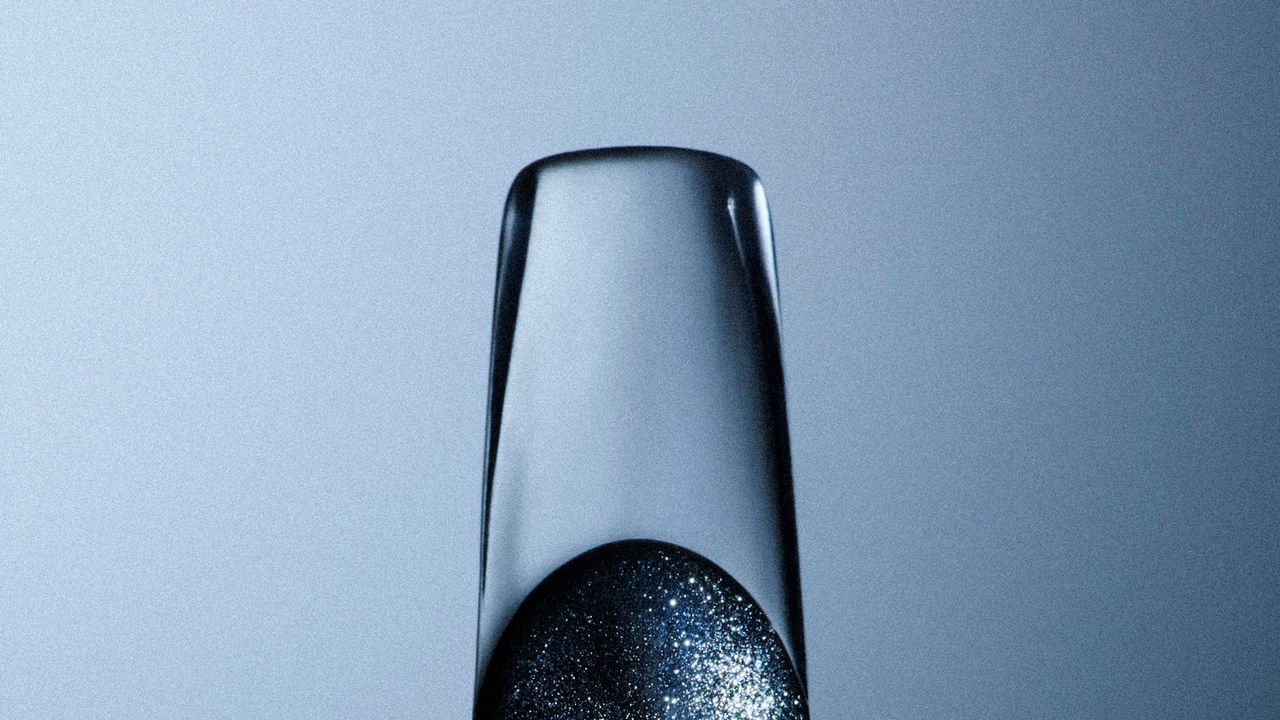
You see, the cat-eye manicure doesn’t get its velvety finish from magic—it’s thanks to microscopic metallic particles embedded within the polish, which are then manipulated with a magnet to create “depth, dimensional highlights, and a distinctive shimmering effect,” says Vikki Swan, a professional nail artist based in Los Angeles, California. “Once the desired design is achieved, the gel is cured under a UV/LED lamp to lock the particles in place.” The gel polish first took off in Korea, and has made its way into trendy nail salons across the United States in recent years.
According to the American College of Radiology’s 2026 Manual on MR Safety, any individual undergoing an MR procedure must remove all readily removable metallic personal belongings and devices. This includes devices like hearing aids and insulin pumps, as well as watches, jewelry, and body piercings. While the manual doesn’t specifically mention metallic or cat-eye nail polish, it does say to remove any cosmetics containing metallic particles and lists eye makeup, magnetic eyelashes, and hair products (some extensions and dyes may contain metallic particles).
Now, why would a simple sparkly manicure prevent someone from undergoing an MRI? While the scanner is noninvasive, MRIs use powerful magnets and computer-generated radio waves that interact with the molecules inside of your body to produce images. Metal—any amount—is prohibited from entering the cylindrical tube where the scan takes place. Larger metal pieces can physically move and become projectiles, while smaller particles have the ability to heat up, causing potential burns on the body. Metal also causes image distortion.
Disclaimer : This story is auto aggregated by a computer programme and has not been created or edited by DOWNTHENEWS. Publisher: www.allure.com