Cockatoos and jacarandas can catch the eye when leaving Thornleigh station, but a look down reveals clues about the rock-crushing industry that steamed away in the nearby valley 140 years ago.
There are stone paths that zig and zag between the Opal readers and the bitumen, and the seats are of right-angled concrete. These nods to Thornleigh’s former zig-zag railway were built into a 2023 station upgrade and designed to mark a piece of Sydney history that has almost been forgotten.
Far less famous than its longer and well-loved cousin outside Lithgow, the Thornleigh zig-zag railway was the third in NSW and operated between 1883 and 1892, helping construct the first train line from Sydney to Newcastle.
“The valley was keeping its secrets in a way,” said Tim Sowden, who pieced together the railway’s history and leads walking tours, including one on Saturday.
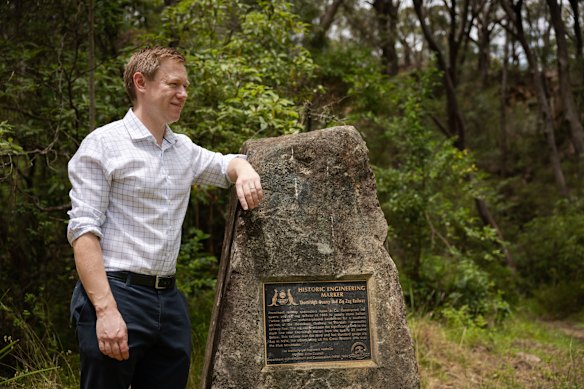
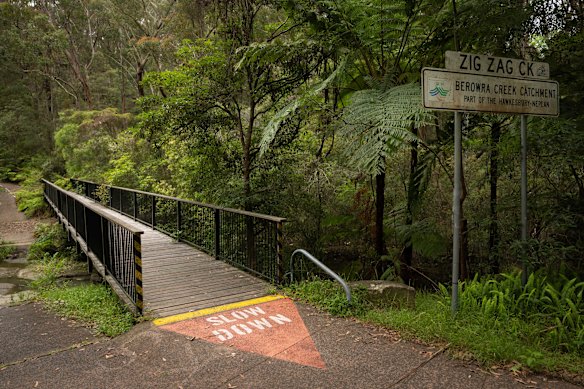
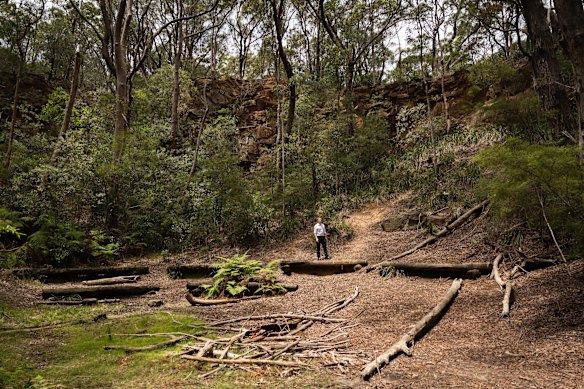
In those days, it branched from the main line and sloped down 30-35 metres in three steps to a quarry. Accounts from 1888 describe rock being poured and hauled hourly, a camp of about 300 people near the waterway now called Zig Zag Creek, and an accident where four or five uncoupled trucks crashed over the points and into the rocks below. Metal twisted, none injured.
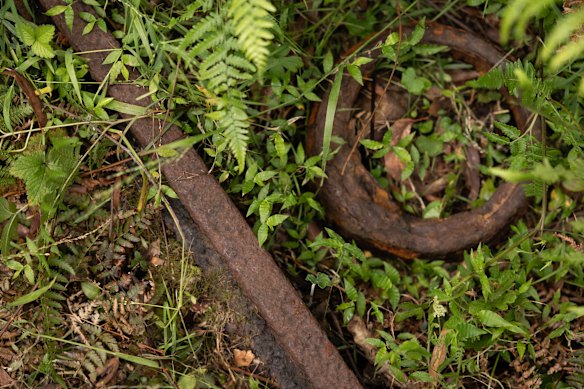
These days, much of the route is under suburban houses or overgrown by national park, but the way it carved into the hills can be seen, and bits of old track have surfaced in yards, creeks and bushland.
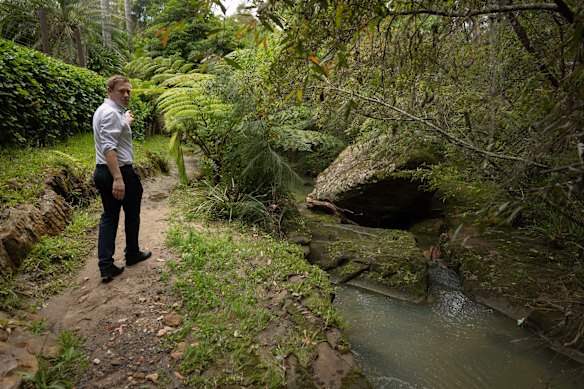
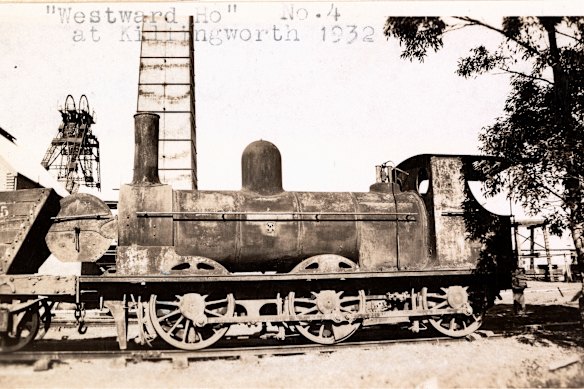
Sowden, whose book Zig Zag Away was first published by the Hornsby Shire Historical Society, remembers hearing about the railway while at Thornleigh West Public School. The sleepers used in the school garden bed were said to have come from the zig-zag railway, and he heard folklore over the years.
“The Thornleigh zig-zag railway was a really important part of building the Great Northern Railway, which connects Sydney to Newcastle,” he said.
“It’s almost forgotten and one of Sydney’s great railway mysteries hidden under streets that most people wouldn’t even know about.”
He said sandstone crushed in the quarry was taken to the main line for use as “basically the ballast, the bedrock” for the tracks to Newcastle.
“Back in the day when we had horse and cart, this was absolutely transformative infrastructure and this Thornleigh zig-zag railway … played a really important role in that.”
Despite being aware of the suburban legend from a young age, Sowden stumbled into his quest to document and preserve what remains of the railway after hours of bushwalking.
He spent time delving into state archives and railway museums, and speaking at length with railway historians and residents who “found pieces of railway in their backyard and just didn’t know where it was from”.
But he warned anyone hoping to see a locomotive climb a zig-zag to head south to Strathfield and switch to the Blue Mountains line.
“You can’t actually ride this one. You do have to use your imagination.”
Start the day with a summary of the day’s most important and interesting stories, analysis and insights. Sign up for our Morning Edition newsletter.
Disclaimer : This story is auto aggregated by a computer programme and has not been created or edited by DOWNTHENEWS. Publisher: www.smh.com.au