Germany’s main governing party is pushing changes that would severely limit dual-citizenship and tighten requirements to naturalise. The centre-left Social Democrats are said to be reviewing the plans.
Members of Germany’s conservative leadership are once again pushing to increase the requirements for naturalisation.
Specifically politicians from the Union parties (CDU/CSU) want to reinstate the eight year residency requirement, severely restrict who would be entitled to dual citizenship in Germany and also increase hurdles related to language skills and social support for applicants.
Coming from the Union parties – which head Germany’s federal government coalition along with the centre-left Social Democrats (SPD) – these demands are neither new nor surprising.
But now, according to a report by Bild published Wednesday, the tightening of citizenship rules is coming as part of a proposed reform package on asylum policy.
One way of reading this is that the conservative camp is offering the centre-left party a deal in which walking back the hard-fought liberalisation of Germany’s naturalisation policies could be traded for strengthened residency rights for foreigners in work or training.
How would the conservatives change citizenship policy?
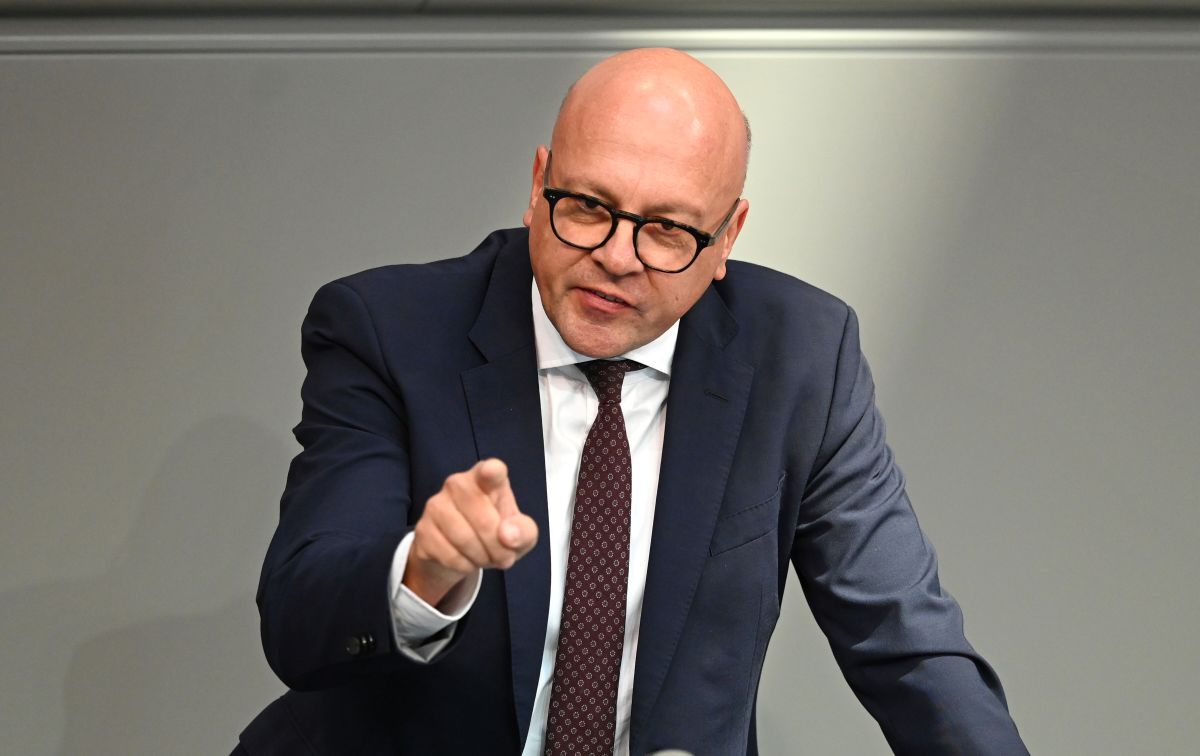
The conservatives’ proposal is being pushed by CDU/CSU parliamentary group deputy Günter Krings and CDU interior expert Alexander Throm.
The plans include four major changes to the Naturalisation Act:
- The residency requirement would be increased back to eight years. This would also apply to children born in Germany to foreign parents.
- Dual-citizenship would only be granted in exceptional cases. For most foreign nationals, surrendering their home passport would be a prerequisite for gaining a German one.
- The German language requirement would be increased to B2 level.
- Receiving social assistance would disqualify applicants from gaining citizenship without exception.
Alexander Throm (CDU/CSU parliamentary group) speaks in the plenary session of the German Bundestag. Photo: picture alliance/dpa | Elisa Schu
Pre-2024 nostalgia
The first two points listed above would effectively undo the key reforms of Germany’s Naturalisation Act which was brought by the previous traffic-light government and passed in June 2024.
That reform had cut down the residency requirement from eight years to five, and also allowed for all foreign nationals to maintain dual-citizenship rather than restricting it to certain cases. (Some foreign nationals, however, may still be restricted from achieving dual-citizenship by their home countries.)
The Union parties had been staunchly opposed to the liberalisation of Germany’s citizenship law reform from the start, and after it passed they haven’t given up on efforts to walk back the reforms.
Ahead of the last federal election in 2025 – under the leadership of now Chancellor Friedrich Merz – the CDU had set itself the goal of raising the residency requirement back to eight years.
At the time Merz himself had said that he thought the reformed naturalisation rules “create too many problems in Germany”.
Notably, citizenship policy is one place where the goals of Germany’s conservatives overlap with those of the far-right.
Earlier this year the Alternative For Germany (AfD) brought, and failed to pass, its own proposal for tightening citizenship law.
“The minimum residence period should be restored to eight years, the language test raised to B2 level, and the ability to support oneself strictly assessed,” said a statement by the AfD at the time.
READ ALSO: What political parties in Berlin say about immigration and German citizenship
The SPD will decide
While conservatives at the helm of the federal government would almost certainly undo Germany’s liberalised Naturalisation Act if they could, their Social Democrat coalition partners have so far held the line in blocking them.
The SPD sees the citizenship reforms that they passed – in partnership with the Green Party and the Free Democrats – as one of the major achievements of the previous government coalition.
In the Black-Red Coalition Agreement, negotiated after the last federal election in 2025, the Union parties and the SPD said they would retain the five year minimum residency requirement and also not change the rules for dual citizenship.
However, they did agree to scrap a “fast track” pathway to naturalisation after three years for well integrated individuals.
According to Bild, SPD leadership is now in the process of examining the Union’s proposal.
SPD deputy parliamentary group leader Sonja Eichwede and interior expert Sebastian Fiedler, are reportedly in touch with the Union side regarding the reform package.
A meeting between party leaders on the topic could be expected next week.
READ ALSO: ‘Nonsense’ – Why scrapping dual citizenship would counter the German government’s goals
Disclaimer : This story is auto aggregated by a computer programme and has not been created or edited by DOWNTHENEWS. Publisher: thelocal.de