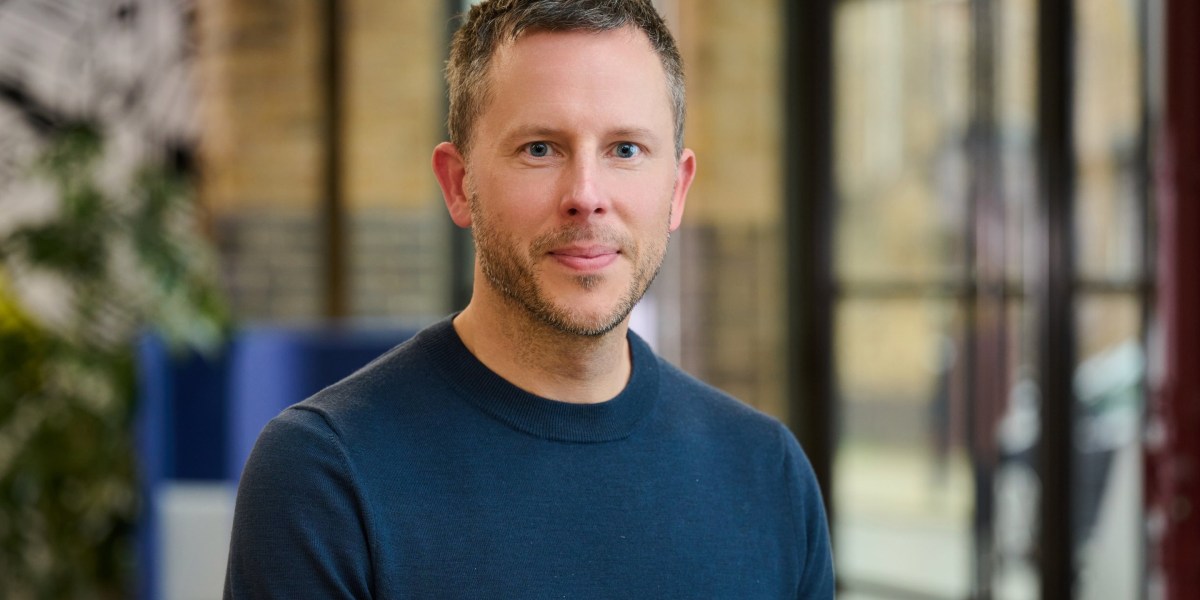
Tom Leathes and his two friends, Harry Jones and Alex Buttle were on a winning streak. Together, they built and sold office space platform Officila Space, broadband comparison site Top10.com, and LoanCube, a lead-generation site that was sold for $1 million.
“We had this run of successes and thought we could do no wrong,” Leathes told Fortune. “And then we got quite schooled.”
Their next business, a hotel recommendation app that kept the Top10 name, was their first to raise venture capital. It grew quickly, until Booking.com and the big hotel chains caught developed their own mobile apps. “All of the big hotel brands got mobile and killed us,” Leathes said.
The founders spent two years trying to rescue the business, and a sale fell through at the last minute. They shut it down in 2015. “We lost all the money for the investors,” he said, referring to the $12.4 million the company had raised from backers including Balderton Capital and Accel. “We had to let go of the whole team.” The startup had 14 employees in London when it raised its last round in 2014.
It was a “tough lesson,” Leathes admitted. The three went their separate ways, but within six months they were back together. “We had unfinished business,” he said. Their next venture, the trio agreed, had to be “the big one—the company that we can do for the next 10 or 20 years.”
Leathes, Jones, and Buttle set about developing their next business idea from a disused hospital in Camden, north London, that was scheduled to be demolished. A charity had taken over the lease and was renting out the abandoned wards to startups as cheap office space. “All this medical stuff was everywhere,” Leathes recalled, and meetings were held in the old operating theater.
Their fifth business idea proved more successful. Motorway, an online marketplace for used cars, was valued at $1 billion in 2001, following a $190 million funding round co-led by Index Ventures and Iconiq Growth. Its 2025 revenue rose 18% to £78 million ($99 million), and its operating losses fell by more than a third to about £22 million ($28 million). Leathes says the company is on track to make its first profit in 2026.
“We learned a massive amount, both through all the companies that had worked, but also the ones that didn’t,” Leathes said. “Those lessons helped us make a lot of the right decisions as we scaled Motorway.”
Don’t build a better Booking.com. Build Airbnb
Reflecting on the failure of his hotel recommendation app, Leathes said: “What we built wasn’t differentiated enough. If you want to take on Booking.com or Expedia, then you need to rethink the market and build Airbnb, not just a better version of what’s already out there.”
With Motorway, the three cofounders took a different approach. By building a marketplace that connects private sellers directly with dealers they were able to cut out the middlemen, Leathes said. The car trade “a bit of a graveyard of tech companies coming in thinking they could change it,” he added.
The best-known casualty, online car retailer Cazoo, went public in 2021. It spent heavily on marketing and expansion, then collapsed into administration in 2024.
Motorway took the opposite approach. “We cold-called dealers, stitched deals together on WhatsApp and spent much of our time driving around the country meeting [them],” Leathes said. “That’s how we learned the trade. That’s what taught us what we needed to build.”
Those early months taught him to let customers shape the business. “It’s the early customers that form the product,” he said. “That means holding the original idea quite lightly and being really willing to drop things that you feel passionate about.” Founders, he added, often need to “pivot really aggressively.”
The other lesson was focus. When COVID-19 lockdowns shut Britain’s physical car auctions, dealers flocked to Motorway. The founders raised fresh capital to scale the core business rather than chase new markets. “If you have something that’s really working, triple down on it,” Leathes said. Nearly a decade in, Motorway still operates only in the UK, although its long-term goal is global expansion.
Leathes said Motorway is open to an IPO but there are no immediate plans. What’s more, London may not be its first choice of listing venue. “At the moment it’s not attractive to scale-ups,” he said. Just eight companies listed in the U.K. in the first nine months of 2026, according to accounting firm EY.
In Europe, Germany’s Auto1, which also buys cars from private sellers and sells them on to dealers, listed in Frankfurt in 2021. Leathes believes a London float by a homegrown star such as Revolut or Monzo “would definitely help” revive the U.K.’s lackluster market.
But the bar for going public is also shifting. Leathes pointed to the AI boom, led by Anthropic, which this week raised $81.3 billion in the largest IPO on record. “This is drastically changing what good looks like in public tech companies,” he said. Investors now measure listings against AI companies growing at extraordinary speed and scale, which makes steady, near-profitable businesses a harder sell.
Disclaimer : This story is auto aggregated by a computer programme and has not been created or edited by DOWNTHENEWS. Publisher: fortune.com